
Eli Lilly's Strategic Shift in Diabetes Drug Development: A Catalyst for Obesity Market Domination and Long-Term Profitability
Eli Lilly's strategic evolution in diabetes drug development has positioned it as a formidable force in the obesity drug market, with implications that could redefine the therapeutic landscape and investor returns for decades. By leveraging blockbuster drugs like Zepbound and Mounjaro, expanding manufacturing capacity, and innovating with next-generation therapies, the company is not only addressing unmet medical needs but also securing a dominant market share in a rapidly growing sector.
Blockbuster Revenue and Market Share Projections
Eli Lilly's tirzepatide-based drugs, Zepbound and Mounjaro, have become the cornerstone of its financial success. In Q2 2025, Zepbound generated $3.38 billion in U.S. revenue—a 172% year-over-year increase—while Mounjaro's global revenue surged 68% to $5.20 billion, collectively accounting for 55% of the company's total revenue [2]. This performance has fueled projections that Eli LillyLLY-- could capture nearly 50% of the $95 billion obesity drug market by 2030 [2]. Such dominance is underpinned by the drugs' efficacy in weight loss and glycemic control, which have outperformed existing therapies and attracted both patients and payers.
Pipeline Innovations and Competitive Edge
The company's pipeline further cements its leadership. Orforglipron, an oral GLP-1 receptor agonist, is set to disrupt the market by offering a convenient alternative to injectable therapies. Clinical trials indicate it outperforms Novo Nordisk's Rybelsus in weight reduction and A1C improvement [1], addressing a key barrier to patient adherence. Regulatory submissions for orforglipron are slated for 2025 (obesity) and 2026 (type 2 diabetes), with analysts anticipating rapid adoption due to its oral formulation [2].
Beyond GLP-1 agonists, Eli LillyLLY-- is exploring novel mechanisms like bimagrumab, an investigational drug that preserves muscle mass while promoting fat loss [2]. This diversification into muscle-targeted therapies could expand its addressable market to patients with comorbidities like sarcopenia, further differentiating its portfolio.
Manufacturing Expansion and Scalability
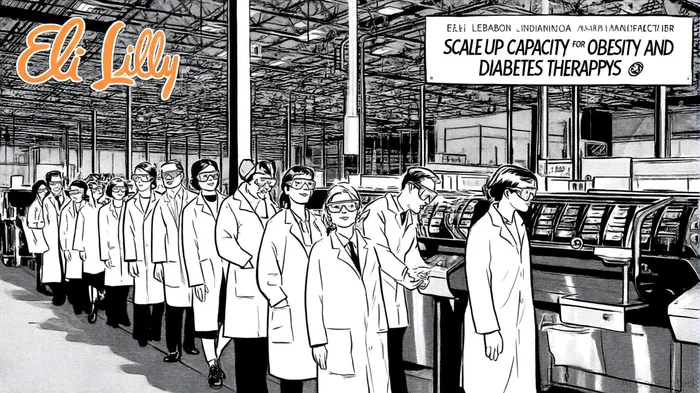
To meet surging demand, Eli Lilly has invested over $23 billion in manufacturing since 2020, with an additional $5.3 billion allocated to its Lebanon, Indiana, facility [2]. These investments are projected to increase incretin-based drug production by 80% in H2 2025 compared to H1 2024 [2], ensuring supply stability as the obesity market grows. Such scalability is critical in an industry where production bottlenecks have historically limited competitors' market penetration.
Competitive Landscape and Long-Term Profitability
While rivals like Novo Nordisk and Pfizer are advancing their own pipelines, Eli Lilly's first-mover advantage and robust manufacturing infrastructure give it a significant edge. The company's focus on oral delivery systems and muscle-preserving therapies aligns with unmet clinical needs, reducing reliance on incremental improvements in existing GLP-1 agonists. Analysts project that these strategies could drive long-term profitability, with Eli Lilly's obesity and diabetes segment expected to contribute over $40 billion annually by 2030 [2].
Conclusion: A Strategic Powerhouse for Investors
Eli Lilly's strategic shift from diabetes to obesity is not merely a product of market demand but a calculated move to leverage its scientific expertise and manufacturing prowess. With a pipeline rich in next-generation therapies, a scalable production network, and a clear vision for market leadership, the company is poised to deliver sustained profitability. For investors, this represents a compelling opportunity in a sector where innovation and demand are in perfect alignment.





Comentarios
Aún no hay comentarios