
Eli Lilly’s Strategic Position in Obesity and Diabetes Markets: Innovation as a Catalyst for Growth and Leadership
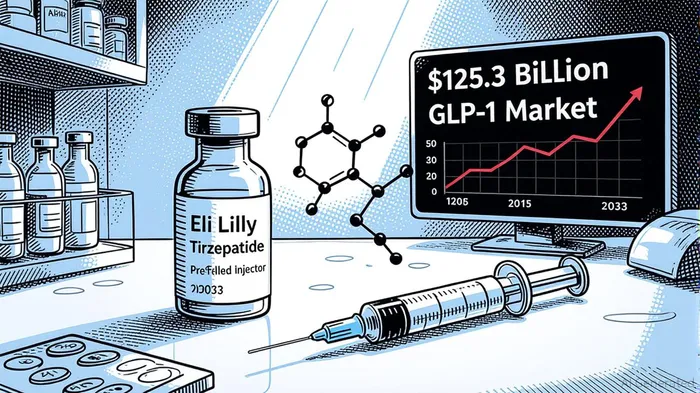
Eli LillyLLY-- (LLY) has emerged as a dominant force in the obesity and diabetes therapeutics landscape, leveraging its groundbreaking innovations in GLP-1 receptor agonists (GLP-1RAs) and small molecule alternatives to redefine treatment paradigms. With the global obesity epidemic and rising diabetes prevalence driving demand, LLY’s strategic focus on next-generation therapies—such as tirzepatide and orforglipron—positions the company to capture significant market share while addressing unmet patient needs.
Tirzepatide: A Dual-Agonyist Powerhouse
Eli Lilly’s flagship product, tirzepatide (brand names Mounjaro and Zepbound), has redefined the standard of care for obesity and type 2 diabetes. As a dual agonist of GLP-1 and gastric inhibitory peptide receptors (GIPR), tirzepatide delivers superior weight loss and glycemic control compared to monotherapies. According to a report by CoherentCOHR-- Market Insights, the global tirzepatide market is projected to grow at a compound annual growth rate (CAGR) of 6.9%, reaching $48.78 billion by 2032, with type 2 diabetes accounting for 54.6% of its 2025 market share [1].
The drug’s success is underscored by its convenience and efficacy. The single-dose pen format, which dominates 58.8% of the dosage form segment, simplifies administration for chronic conditions [1]. Moreover, LLY’s aggressive pricing and accessibility strategies—such as introducing pre-filled injectors in India and offering affordable monthly plans starting at $499—have directly challenged Novo Nordisk’s Wegovy, which costs over $1,300 per month without insurance [1]. These moves have enabled tirzepatide to secure a 223% year-on-year sales increase in 2025, cementing its role as a cornerstone of LLY’s revenue growth [3].
Orforglipron: Oral GLP-1RA Revolutionizes Patient Adherence
Beyond injectables, Eli LillyLLY-- is pioneering oral alternatives to GLP-1RAs, addressing a critical barrier to long-term adherence. Orforglipron, an oral small-molecule GLP-1RA, has demonstrated transformative potential in clinical trials. In the Phase 3 ATTAIN-2 trial, patients with obesity and type 2 diabetes taking the highest dose (36 mg) achieved an average weight loss of 10.5% and a 1.8% reduction in A1C [1]. Similarly, the ATTAIN-1 trial reported 12.4% weight loss in non-diabetic patients, while the ACHIEVE-1 trial showed up to 26% of participants achieving near-normal glycemic control (A1C <5.7%) [2].
The safety profile of orforglipron aligns with injectable GLP-1RAs, with gastrointestinal adverse events being the most common side effects [1]. By offering a once-daily oral option, LLYLLY-- is addressing patient preferences and expanding the therapeutic window for GLP-1RA adoption. Analysts project that orforglipron could capture a significant portion of the $125.3 billion GLP-1 market by 2033, particularly in regions where injection-based therapies face cultural or logistical barriers [1].
Competitive Positioning and Market Leadership
The GLP-1RA market remains fiercely competitive, with Novo NordiskNVO-- and Eli Lilly dominating 90% of the market in 2025 [3]. However, LLY’s diversified pipeline and aggressive commercialization strategies are widening its lead. For instance, tirzepatide’s first-half 2025 sales of $14.734 billion outperformed Novo Nordisk’s semaglutide ($16.632 billion) in terms of growth trajectory, driven by Zepbound’s obesity-focused expansion [3].
Moreover, LLY is investing in next-generation therapies beyond GLP-1RAs. Its Phase 3 trials for lepodisiran (a PCSK9 inhibitor) and olomorasib (a KRAS G12C inhibitor) signal a broader ambition to integrate obesity and diabetes management with cardiovascular and oncology care [2]. This cross-therapeutic approach strengthens LLY’s long-term market position by addressing comorbidities that often accompany metabolic disorders.
Long-Term Growth Drivers
Several factors position Eli Lilly for sustained leadership:
1. Market Expansion: The Asia-Pacific region, with its 25.7% share of the tirzepatide market in 2025, represents a high-growth opportunity as LLY scales access in emerging economies [1].
2. Pipeline Diversification: Beyond GLP-1RAs, LLY’s exploration of amylin, ActRII, and ACSL5 targets—acquired through strategic partnerships—ensures a pipeline of differentiated therapies [3].
3. Patient-Centric Innovation: Oral GLP-1RAs and ultra-long-acting injectables (e.g., once-monthly dosing) reduce treatment burden, enhancing adherence and long-term outcomes.
Conclusion
Eli Lilly’s strategic innovations in GLP-1RAs and small molecule therapies are not only driving immediate top-line growth but also securing its position as a long-term leader in the obesity and diabetes markets. By addressing unmet needs through oral formulations, aggressive pricing, and a robust pipeline, LLY is poised to capitalize on the $125.3 billion GLP-1 market by 2033. For investors, the company’s ability to balance short-term commercial success with long-term scientific innovation makes it a compelling play in the evolving metabolic disease landscape.
**Source:[1] Tirzepatide Market Trends, Share and Forecast, 2025-2032 [https://www.coherentmarketinsights.com/industry-reports/tirzepatide-market][2] Lilly's oral GLP-1, orforglipron, is successful in third Phase 3 trial [https://investor.lilly.com/news-releases/news-release-details/lillys-oral-glp-1-orforglipron-successful-third-phase-3-trial][3] The Next Billion-Dollar Target in the Global Weight-Loss Drug Market [https://www.linkedin.com/pulse/glp-1-competition-next-billion-dollar-target-global-weight-loss-0tnqc]







Comentarios
Aún no hay comentarios