
Eli Lilly's Neuroscience Expansion: A Strategic Bet on the Future of Brain Health
Eli Lilly's newly launched “Brain Health Matters” campaign, announced on September 9, 2025, marks a pivotal step in the company's strategic pivot toward neuroscience. Partnering with actress and advocate Julianne Moore, the initiative aims to normalize early conversations about brain health, reduce dementia stigma, and promote proactive care for conditions like Alzheimer's disease . This campaign aligns with a broader industry shift toward early intervention, as Alzheimer's pathology can begin accumulating in the brain up to two decades before symptoms emerge . For investors, the move signals Lilly's commitment to capitalizing on the explosive growth potential of the global brain health market, which is projected to expand at a compound annual growth rate (CAGR) of 6.18% to 10.4% through 2030, depending on the metric .
Market Dynamics: A $52.45 Billion Opportunity by 2030
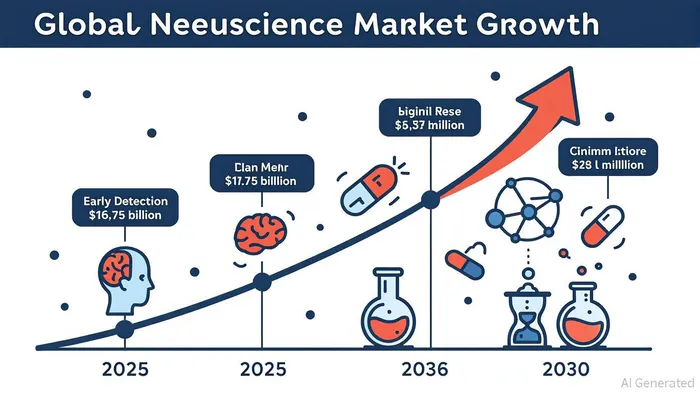
The neuroscience sector is being driven by three key forces: an aging global population, technological innovation, and rising public awareness of neurodegenerative diseases. According to Mordor Intelligence, the market size was valued at $38.86 billion in 2025 and is expected to reach $52.45 billion by 2030 . ResearchAndMarkets.com forecasts an even more aggressive CAGR of 10.4%, projecting the market to grow from $16.77 billion in 2025 to $27.45 billion by 2030 . These divergent figures underscore the sector's volatility but also its vast upside.
Lilly's campaign is strategically timed to leverage these trends. By emphasizing early detection and lifestyle modifications, the company is positioning itself at the intersection of public education and therapeutic innovation. This aligns with its recent advancements in Alzheimer's treatments, such as Kisunla (donanemab-azbt), which has demonstrated a 27% reduction in disease progression when administered early . Such therapies are critical as the U.S. alone faces a projected surge in Alzheimer's cases—from 6.2 million in 2023 to 13.8 million by 2060 .
Strategic Pillars: Manufacturing, R&D, and Global Outreach
Lilly's neuroscience expansion is underpinned by three strategic pillars:
1. Infrastructure Investment: The company is constructing four new U.S. manufacturing facilities to bolster domestic production of neuroscience therapeutics, ensuring scalability for future demand .
2. Pipeline Diversification: Beyond Alzheimer's, LillyLLY-- is advancing early-stage assets in mental health and neuroinflammation, reflecting a broadened focus on CNS disorders .
3. Global Advocacy: The “Brain Health Matters” campaign, which includes multilingual digital content and partnerships with healthcare providers, is designed to expand brain health literacy worldwide .
These initiatives are supported by Lilly's robust financial performance. In 2025, the company reaffirmed its revenue guidance of $58.0–$61.0 billion, driven by blockbuster drugs like Mounjaro and Zepbound, while allocating resources to neuroscience R&D . Analysts project a 72.3% earnings growth for 2025, with neuroscience expected to contribute significantly to this trajectory .
Risks and Mitigations: Navigating Regulatory and Market Hurdles
Despite its strengths, Lilly faces challenges. Regulatory bodies like the UK's NICE have rejected Kisunla over cost-effectiveness concerns, highlighting the need for value-based pricing strategies . Additionally, competition in the Alzheimer's space is intensifying, with rivals like BiogenBIIB-- and Eisai advancing their own therapies. However, Lilly's emphasis on patient-centric campaigns—such as tools for building cognitive health plans—differentiates it by fostering long-term trust and adherence.
Investment Implications: A Long-Term Play on Innovation
For investors, Lilly's neuroscience strategy represents a calculated bet on a sector poised for transformation. The company's dual focus on public education and therapeutic innovation aligns with the global shift toward preventive care, a trend accelerated by AI-driven diagnostics and wearable brain devices . With the U.S. government's BRAIN Initiative investing over $1 billion in neurological research and North America dominating the neuroscience market, Lilly's geographic and scientific positioning is advantageous .
While short-term risks exist, the long-term outlook is compelling. By 2030, the global neuroscience market could represent a $50+ billion opportunity, with Lilly well-positioned to capture a significant share through its pipeline, infrastructure, and advocacy efforts. For those seeking exposure to biotech's next frontier, Eli Lilly's neuroscience expansion offers a rare combination of scientific rigor, market foresight, and scalable growth.







Comentarios
Aún no hay comentarios