
Eli Lilly's Inluriyo and the Oncology Market Shift: Targeted Therapies Redefine Breast Cancer Treatment
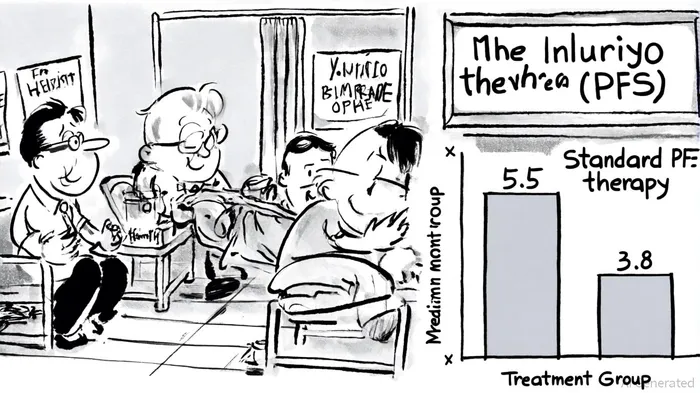
The U.S. Food and Drug Administration's (FDA) approval of Eli Lilly's Inluriyo (imlunestrant) in September 2025 marks a pivotal moment in the oncology sector, particularly for the treatment of ESR1-mutated breast cancer. This oral selective estrogen receptor degrader (SERD) has demonstrated a 38% reduction in the risk of disease progression or death compared to standard endocrine therapies in patients with estrogen receptor-positive (ER+), HER2-negative, ESR1-mutated advanced or metastatic breast cancer[1]. The Phase 3 EMBER-3 trial results, which showed a median progression-free survival (PFS) of 5.5 months for Inluriyo versus 3.8 months for standard therapies like fulvestrant or exemestane[2], underscore its potential to disrupt an already dynamic market.
A Growing Market for Precision Therapies
The ESR1-mutated metastatic breast cancer market, valued at $2.1 billion in 2024, is projected to reach $5.4 billion by 2034, driven by advancements in genomic testing and the rise of targeted therapies[3]. ESR1 mutations, present in 10–50% of metastatic, endocrine-resistant cancers, have long posed a challenge due to their association with shorter PFS and limited treatment options[4]. Inluriyo's approval as the first oral SERD for this indication positions it to capture a significant share of this expanding market.
Competitors in this space include AstraZeneca's camizestrant (AZD9833) and Arvinas-Pfizer's vepdegestrant, both in late-stage trials, as well as Orserdu (elacestrant), approved in 2023[5]. However, Inluriyo's oral formulation and robust clinical data may give it a distinct edge. Unlike injectable therapies, oral SERDs offer convenience, adherence advantages, and broader patient accessibility—factors increasingly prioritized in oncology care[6].
Strategic Implications for Eli LillyLLY-- and the Industry
Eli Lilly's entry into this niche market aligns with broader industry trends. The global breast cancer therapeutics market, valued at $32.9 billion in 2025, is expected to grow to $46.5 billion by 2030, with targeted therapies accounting for 63% of revenue in 2024[7]. This growth is fueled by the integration of AI in biomarker discovery, rising R&D investments, and the shift toward combination therapies. For instance, pairing SERDs with CDK4/6 inhibitors is being explored to overcome resistance mechanisms[8].
Inluriyo's success hinges on its ability to secure rapid adoption. The drug's companion diagnostic, Guardant360 CDx, ensures precise patient selection, a critical factor in an era where personalized medicine is the gold standard[9]. However, challenges remain. The high cost of genomic testing and potential reimbursement hurdles could slow uptake, particularly in regions with fragmented healthcare systems.
Market Share Dynamics and Investment Outlook
The approval of Inluriyo signals a broader industry shift toward targeted therapies. As of 2025, SERDs and other precision agents are projected to dominate the ESR1-mutated breast cancer market, with a compound annual growth rate (CAGR) of 9.7% through 2034[10]. Eli Lilly's first-mover advantage, combined with its strong commercial infrastructure, positions it to capture a leading share of this growth.
For investors, the key question is whether Inluriyo can maintain its edge as newer entrants emerge. While pipeline candidates like camizestrant and vepdegestrant are promising, Inluriyo's clinical differentiation—particularly its favorable safety profile (e.g., low-grade adverse events such as fatigue and musculoskeletal pain)—provides a competitive buffer[11]. Additionally, Eli Lilly's plans to study Inluriyo in the adjuvant setting for early-stage breast cancer could unlock further revenue streams[12].
Conclusion
Eli Lilly's Inluriyo represents more than a new drug—it is a harbinger of how precision oncology is reshaping market dynamics. By addressing a high-unmet-need patient population with a differentiated oral therapy, the company is poised to redefine treatment paradigms and capture a significant portion of a rapidly growing market. For investors, the approval underscores the importance of backing firms that combine clinical innovation with strategic agility in an increasingly fragmented oncology landscape.







Comentarios
Aún no hay comentarios