
Eli Lilly's Emergence as a Tech-Like Pharma Behemoth: Obesity Drugs as the New Growth Engine
Tirzepatide: A Dual-Action Catalyst for Growth
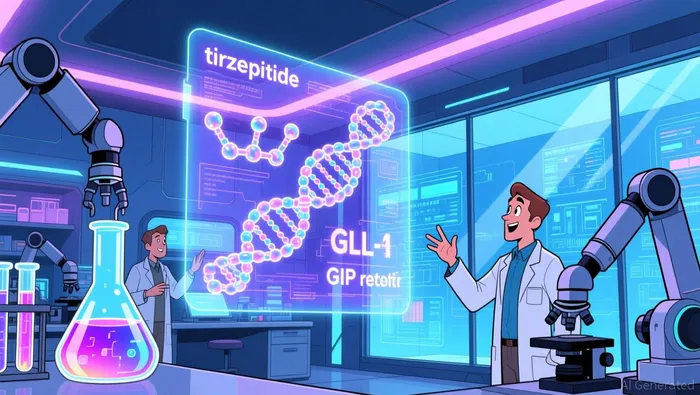 Tirzepatide's dual activation of GLP-1 and GIP receptors has positioned it as a superior alternative to existing therapies. In Q3 2025, Mounjaro and Zepbound generated combined revenue of $10.1 billion, eclipsing Merck's Keytruda, the previous top-selling drug, which earned $8.1 billion in the same period. This dominance is underpinned by clinical efficacy: Zepbound, for instance, achieved an 184% year-over-year revenue jump to $3.59 billion, driven by its ability to deliver significant weight loss in clinical trials. Analysts project that the obesity drug market will balloon to $150 billion by 2035, with tirzepatide capturing 44% of the GLP-1 segment by then, up from 0% in 2025 according to market research.
Lilly's strategic foresight extends beyond sales. The company is addressing production bottlenecks and developing an oral formulation of its drug, which could democratize access and further expand its market share. Such innovations echo the tech sector's focus on user-friendly scalability, a trait that has drawn comparisons between Lilly and high-growth tech stocks.
R&D and Partnerships: Building a Metabolic Health Ecosystem
Lilly's success is not accidental but rooted in aggressive R&D and strategic alliances. The company has raised its 2025 revenue guidance to $63–$63.5 billion, reflecting confidence in its pipeline. Beyond tirzepatide, Lilly is advancing orforglipron, a once-daily oral GLP-1 treatment in phase 3 trials, and collaborating with insitro, an AI-driven drug discovery firm, to tackle metabolic diseases like MASLD. These partnerships mirror the tech sector's reliance on data-driven innovation, blending biopharma expertise with cutting-edge computational tools.
Investor enthusiasm has mirrored this momentum. Morgan Stanley recently raised its price target for Lilly to $1,290 per share, citing the GLP-1 market's expansion and its $1 trillion valuation milestone. However, the sector is not without risks. Novo Nordisk's failed Alzheimer's trial for semaglutide-a competitor to tirzepatide-sparked a 5% drop in Lilly's stock, underscoring the fragility of investor sentiment when clinical applications extend beyond core markets.
### Tech-Like Scalability or Pharma's New Normal?
The parallels between Lilly and tech stocks are striking. Like the "Magnificent Seven," Lilly has seen its valuation soar on expectations of exponential growth, with its market cap now rivaling that of Apple or Microsoft. Yet, unlike tech firms, Lilly's scalability is grounded in tangible demand: obesity and diabetes affect over 650 million people globally according to market analysis, creating a market with inherent limits but vast untapped potential.
Critics argue that pharma's reliance on a single molecule-tirzepatide-mirrors the overconcentration risks seen in tech. However, Lilly's diversified approach-spanning injectables, oral drugs, and partnerships-suggests a more resilient model. As the obesity GLP-1 market grows at a 23.1% CAGR according to market data, Lilly's ability to innovate in delivery methods and expand into new indications (e.g., cardiovascular benefits) could sustain its tech-like trajectory.
Conclusion: Positioning for the Next Wave
For investors, the key takeaway is clear: metabolic health is the new frontier in pharma, and Lilly is its undisputed leader. While challenges like production constraints and regulatory hurdles persist, the company's R&D pipeline, market dominance, and strategic agility position it to outperform both traditional pharma peers and even some tech stocks. As Morgan Stanley notes, Lilly's $1 trillion valuation is not a fluke but a reflection of its ability to scale a high-margin, high-demand product in a rapidly evolving landscape according to market analysis.
In an era where obesity and diabetes are reshaping global healthcare, Eli Lilly's tirzepatide franchise is not just redefining pharma-it is redefining what it means to be a "tech-like" growth company.





Comentarios
Aún no hay comentarios