
Eli Lilly's $6.5 Billion Texas Plant: A Strategic Bet on Obesity Therapeutics and Biopharma Resilience
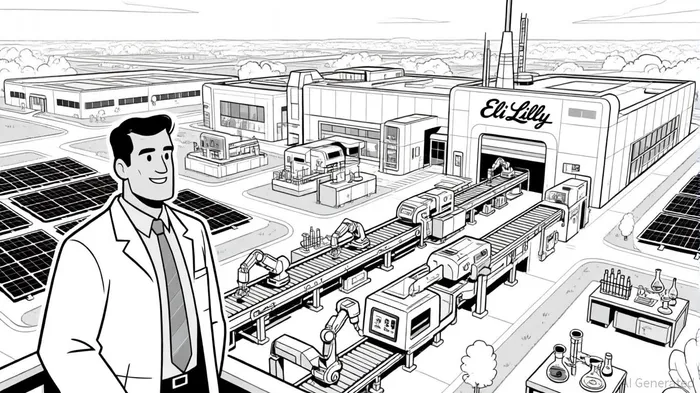
The global obesity therapeutics market is undergoing a seismic shift, driven by the explosive growth of GLP-1 receptor agonists. These drugs, initially developed for diabetes management, have emerged as groundbreaking tools for weight loss, with the global GLP-1 market projected to surge from $53.5 billion in 2025 to $268.37 billion by 2034—a compound annual growth rate (CAGR) of 17.5% [1]. At the center of this transformation is Eli LillyLLY--, whose $6.5 billion investment in a new Texas manufacturing facility underscores its commitment to dominating the obesity therapeutics space while fortifying its biopharma supply chain.
Strategic Alignment with Market Demand
The demand for GLP-1 therapies is being fueled by multiple tailwinds. According to a report by Fortune Business Insights, the global GLP-1 agonists weight loss drugs market is expected to grow at a CAGR of 18.54% from 2025 to 2030, reaching $48.84 billion by 2030 [2]. This growth is driven by the introduction of oral formulations, which expand accessibility beyond injectable therapies, and the expanding therapeutic applications of GLP-1 drugs in cardiometabolic health and beyond. North America, already accounting for 55.51% of the 2024 GLP-1 market, remains a critical growth engine due to high obesity prevalence and robust healthcare spending [3].
Eli Lilly's Texas plant, set to begin operations within five years, is strategically positioned to capitalize on this demand. The facility will produce orforglipron, the company's first oral GLP-1 therapy, which is slated for regulatory submission by late 2025 [4]. By localizing production in the U.S., LillyLLY-- aims to reduce supply chain vulnerabilities and align with U.S. trade policies that prioritize domestic manufacturing. This move also aligns with broader industry trends: as noted by Grand View Research, retail and specialty pharmacies are becoming pivotal in distributing GLP-1 therapies, necessitating a resilient and scalable production network [5].
R&D Execution and Manufacturing Resilience
Lilly's investment in Texas is not an isolated play but part of a $18 billion global manufacturing expansion strategy. The company has committed to building four new U.S. facilities, including a $5 billion plant in Virginia for advanced therapies like bioconjugate platforms and monoclonal antibodies [6]. These projects are supported by a $50 billion capital investment plan since 2020, aimed at reducing reliance on foreign suppliers and enhancing sustainability through on-site solar power and AI-driven efficiency [7].
The Texas plant will leverage cutting-edge technologies such as artificial intelligence and digital automation to optimize production quality and throughput [8]. This aligns with Lilly's broader R&D-to-market execution strength: the company recently acquired Nexus Pharmaceuticals' Wisconsin injection production plant, which now exclusively supports its GLP-1 portfolio, and has expanded capacity in North Carolina and Germany to meet global demand [9]. Despite these efforts, supply constraints are expected to persist through 2026, highlighting the urgency of scaling production to match the rapid adoption of GLP-1 therapies [10].
Long-Term Growth and Risk Mitigation
While challenges such as supply shortages and regulatory hurdles remain, Lilly's strategic investments position it to outpace competitors. The company's Texas facility alone is projected to create 615 high-wage jobs and 4,000 construction jobs, signaling a long-term commitment to U.S. manufacturing [11]. Moreover, the integration of AI and machine learning in production processes ensures agility in responding to market shifts, a critical advantage in a sector marked by rapid innovation cycles.
Conclusion
Eli Lilly's $6.5 billion Texas plant represents a masterstroke in aligning R&D innovation with manufacturing resilience. By securing domestic production of orforglipron and other therapies, the company is not only addressing the immediate demand for GLP-1 drugs but also future-proofing its supply chain against geopolitical and economic uncertainties. As the obesity therapeutics market accelerates, Lilly's strategic foresight and execution capabilities position it as a leader in a sector poised for decades of growth.





Comentarios
Aún no hay comentarios