
Elevated Risk Premium in Oil Markets: How Russian Supply Uncertainty is Reshaping Energy Investment Strategies
The oil market is in the throes of a perfect storm. Russian supply uncertainty, fueled by Ukrainian drone strikes on energy infrastructure and Western sanctions, has pushed the risk premium to stratospheric levels. This isn't just a short-term blip—it's a structural shift that's forcing investors to rethink how they value energy assets and allocate capital.
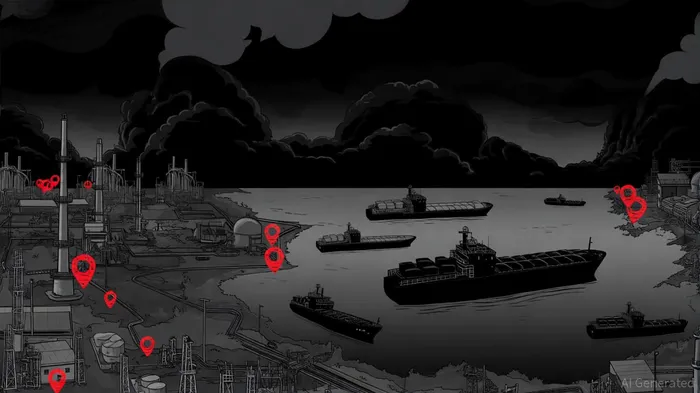
The Geopolitical Spark: How Russia's Vulnerabilities Are Pricing Inflation into Oil According to a report by Goldman SachsGS--, Ukrainian attacks on Russian refineries have slashed refining capacity by 300,000 barrels per day in 2025, while export restrictions on diesel and gasoline have further tightened global supplies[2]. These disruptions are compounded by the targeting of key export terminals like Primorsk, which aim to choke Russia's ability to sell oil abroad[2]. The result? A geopolitical risk premium now embedded in oil prices.
Brent crude and West Texas Intermediate (WTI) have surged—Brent by 4.3% and WTIWTI-- by 5.9%—for the week of September 22-26, 2025, as traders price in the likelihood of prolonged supply shocks[1]. The European Central Bank has underscored that geopolitical shocks from major producers like Russia create upward price pressure, as markets anticipate supply disruptions[4]. This isn't just about today's headlines; it's about the fear of tomorrow's black swan events.
The Shadow Fleet and Sanctions: A Double-Edged Sword Russia's reliance on a “shadow fleet” of tankers to bypass Western price caps has introduced new layers of risk. Data from Oxford Analytica reveals that 12% of Russian oil exports in August 2025 were transported via sanctioned vessels, raising concerns about environmental hazards and operational reliability[5]. While this fleet has kept exports flowing, it's a precarious lifeline—one that could snap if global enforcement of sanctions tightens.
Meanwhile, the EU's 18th sanctions package, which slashed the Russian oil price cap to $47.60 per barrel in September 2025, has squeezed Moscow's revenue streams[2]. A hypothetical $47.60 price cap would have reduced Russia's oil export revenue by 38% in August alone[1]. These measures are forcing Russia to discount crude to buyers like India, further distorting global pricing mechanisms[4].
Energy Investment Strategies: Diversification and the Geopolitical Risk Index Investors are no longer just watching the OPEC+ calendar—they're parsing geopolitical risk indices like the BlackRock Geopolitical Risk Indicator, which tracks volatility in hotspots from the Middle East to the South China Sea[5]. A KPMG survey found that 70% of energy sector leaders are accelerating investments in renewables and energy storage to hedge against fossil fuel volatility[1]. This shift isn't just about sustainability; it's about survival in a world where energy security trumps cost efficiency.
For example, European markets have slashed their reliance on Russian oil, pivoting to LNG imports from the U.S. and the Middle East[3]. This diversification is mirrored in corporate strategies: energy firms are reorienting supply chains, stockpiling critical fuels, and even investing in synthetic fuels to insulate against shocks[5].
The Road Ahead: Volatility as the New Normal The IEA's September 2025 report notes that benchmark crude prices like Brent have stabilized around $67 per barrel, but this stability is an illusion[3]. Localized price spikes—up 5–10% in Central Asia and Eastern Europe—reveal the fragility of markets dependent on Russian fuel[5]. Meanwhile, OPEC+'s ability to offset Russian supply losses is constrained by its own production unwind and limited spare capacity[1].
Investors must prepare for a world where geopolitical risk isn't a peripheral concern but a core input in asset valuation models. The ECB's analysis shows that shocks from key producers like Russia trigger the “risk channel,” where traders anticipate supply disruptions and bid up prices[4]. This dynamic will likely persist through 2026, especially if sanctions escalate or conflicts intensify.
Actionable Advice for Investors 1. Diversify Exposure: Avoid overconcentration in regions or assets tied to Russian oil. Allocate to energy transition technologies and geographically diversified energy firms. 2. Leverage Geopolitical Risk Indices: Use tools like the BlackRock Geopolitical Risk Dashboard to stress-test portfolios against potential shocks[5]. 3. Hedge with Futures: Lock in prices using oil futures to mitigate short-term volatility while maintaining long-term exposure to energy assets.
In conclusion, the elevated risk premium in oil markets isn't a temporary anomaly—it's a harbinger of a more fragmented and volatile energy landscape. Investors who ignore the geopolitical undercurrents will find themselves adrift. The time to act is now.





Comentarios
Aún no hay comentarios