
Elevance Health (NYSE: ELV) and the Medicaid Lawsuit: Legal Risks and Investment Implications
The recent class-action lawsuit against Elevance HealthELV-- (NYSE: ELV) has cast a long shadow over the company's financial and legal prospects. Filed in May 2025 under Miller v. ElevanceELV-- Health, Inc., the case alleges securities fraud tied to the company's handling of Medicaid cost trends and redeterminations. Investors who purchased shares between April 2024 and October 2024 are now navigating a complex legal landscape, with the stock having plummeted 16.4% in two major drops following disclosures of elevated Medicaid costs and missed earnings expectations [1]. This analysis examines the lawsuit's implications for Elevance's long-term investment potential, contextualized within broader healthcare industry trends and historical precedents.
The Legal Case: Misrepresentation and Market Reactions
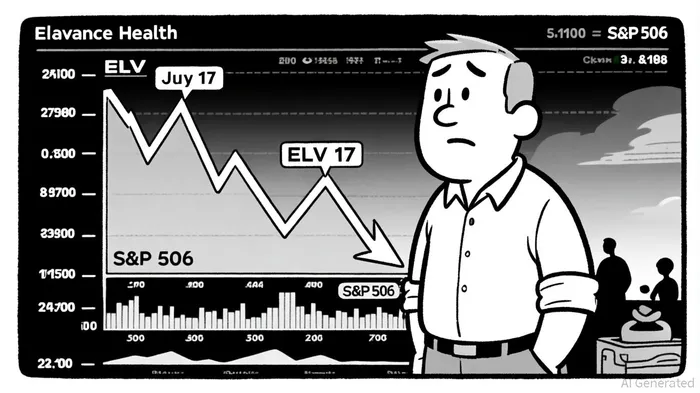
The lawsuit centers on Elevance's alleged failure to disclose the financial risks associated with Medicaid redeterminations-a process resumed after the pandemic-era moratorium. Plaintiffs argue that the company's rate negotiations with states did not account for the increased acuity and utilization of Medicaid members, leading to unanticipated costs [2]. According to a report by Bloomberg Law, the stock price fell 5.8% on July 17, 2024, after Elevance acknowledged rising Medicaid utilization, and another 10.6% on October 17, 2024, following a 13.7% earnings miss [3]. These declines, the lawsuit contends, were preceded by misleading assurances from the company, violating federal securities laws.
The legal proceedings have entered a critical phase, with July 11, 2025, marking the deadline for investors to seek appointment as lead plaintiff [4]. The court's decision to grant a joint stipulation delaying defendants' responses until after lead plaintiff selection underscores the procedural complexity of the case [5]. While Elevance maintains a strong dividend yield and robust earnings per share of $23.39, the lawsuit's outcome could impose significant financial liabilities, including potential damages and reputational harm [6].
Industry Trends: A Surge in Healthcare Securities Litigation
Elevance's case is emblematic of a broader trend in the healthcare sector. From 2020 to 2025, securities lawsuits in healthcare have surged by 40%, driven by heightened scrutiny of financial disclosures and actuarial assumptions [7]. For instance, Centene Corporation faced a 40% stock price plunge in 2024 after revealing a $1.8 billion shortfall in risk adjustment revenue, a case that shares thematic parallels with Elevance's Medicaid challenges [8]. Similarly, Nutex Health's allegations of revenue inflation through third-party billing highlight systemic governance risks in the sector [9].
Legal precedents further complicate the landscape. The Supreme Court's 2022 ruling in Gallardo v. Marstiller expanded states' ability to recoup future Medicaid costs from personal injury settlements, while Medina v. Planned Parenthood (2025) limited individual Medicaid beneficiaries' legal recourse [10]. These decisions reflect an evolving regulatory environment where state authority often supersedes individual protections, a dynamic that could influence Medicaid-related litigation outcomes.
Financial and Strategic Implications for Elevance
Elevance's financial resilience has been tested by the lawsuit. Despite a five-year total return of 42.16%, the company underperformed both the healthcare sector and the S&P 500 in the past year [11]. Its Q2 2025 benefit expense ratio of 88.9%-up 260 basis points year-over-year-signals margin compression from Medicaid and ACA health plans [12]. Analysts have set a price target of $400, implying a 14.13% upside from the October 2025 price of $336.98, but this optimism is tempered by the uncertainty surrounding the lawsuit [13].
Historical settlements in similar cases offer a cautionary framework. For example, General Electric's $362.5 million resolution for securities fraud and Centene's PBM Medicaid settlements exceeding $1 billion illustrate the potential financial toll of such litigation [14]. While Elevance's case remains unresolved, the company's exposure to Medicaid-related risks-combined with regulatory scrutiny-could erode investor confidence and depress valuation multiples.
Conclusion: Balancing Risk and Resilience
For long-term investors, Elevance Health presents a paradox: a historically strong dividend payer now entangled in a high-stakes legal battle. The lawsuit's resolution will hinge on whether the court finds material misrepresentation in the company's Medicaid cost disclosures. If the case proceeds to trial, Elevance could face substantial damages, akin to the $1.8 billion shortfall that destabilized Centene. However, the company's robust earnings and strategic focus on healthcare innovation may yet mitigate some of these risks.
In the interim, the broader healthcare sector's litigation trends suggest that transparency and governance will remain critical factors for investors. As the Miller v. Elevance case unfolds, stakeholders must weigh the company's operational strengths against the potential for prolonged legal and financial headwinds.





Comentarios
Aún no hay comentarios