
Element Solutions Insider Selling Activity and Its Implications for Shareholder Confidence
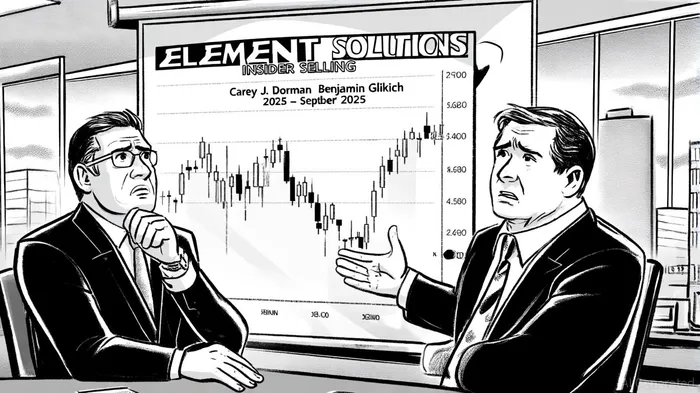
In the dynamic world of equity markets, insider trading remains a critical lens through which investors assess corporate health and future performance. Recent activity at Element SolutionsESI-- (ESI) has sparked renewed interest in how executive transactions—particularly large-scale sales—might signal shifts in shareholder confidence. This analysis examines ESI's insider selling patterns in 2025, contextualizes them within broader academic research, and evaluates their implications for investors.
ESI's Insider Selling: Routine or Red Flag?
On September 18, 2025, ESI's Chief Financial Officer, Carey J. DormanDORM--, exercised three fully vested stock options to acquire 60,704 shares, subsequently selling 40,725 of those shares at a weighted average price of $26.66 to cover costs and taxes[1]. Similarly, CEO Benjamin Gliklich sold 117,637 shares at $26.56, netting over $3.1 million[4]. These transactions, part of a broader trend of insider sales by ESIESI-- executives, align with what many analysts describe as “sell-to-cover” strategies—a common practice when insiders liquidate shares to offset the costs of exercising stock options[1].
However, the cumulative scale of these sales—exceeding $7 million in total—has raised questions about their implications. While insiders often cite personal financial planning or diversification as motivations, clustered selling by multiple executives can act as a red flag, potentially signaling concerns about near-term performance or upcoming negative news[4].
Academic Insights: Insider Trading as a Predictive Signal
Recent academic research underscores the nuanced relationship between insider trading and stock performance. Studies indicate that insider buying, particularly by top executives, often correlates with positive stock returns, as it reflects confidence in the company's intrinsic value[1]. Conversely, insider selling is more complex. While it may stem from liquidity needs or pre-arranged plans, coordinated selling by multiple insiders can precede poor earnings reports or market corrections[4].
For instance, a 2024 study on SEC Form 4 filings found that prompt reactions to insider trades can yield abnormal returns, though profitability diminishes with transaction costs[3]. Another analysis highlighted how artificial intelligence tools are increasingly used to detect irregularities in insider trading patterns, suggesting that advanced analytics could help investors distinguish between routine and opportunistic selling[2].
Implications for ESI Shareholders
Applying these insights to ESI's recent activity, the key question is whether these sales reflect routine financial planning or a lack of confidence in the company's trajectory. ESI's executives, including Dorman and Gliklich, have maintained significant ownership stakes post-sale (214,837 and 864,521 shares, respectively)[1][4], indicating alignment with long-term shareholder interests. However, the timing of these transactions—just days before the end of the third quarter—coincides with a period of heightened investor scrutiny, as companies often face pressure to meet earnings expectations.
Historical data from the Layline Insider Trading dataset further complicates the narrative. While ESI's sales exceed the median for its industry, they fall within the range of “normal” activity for firms with similar market capitalizations[4]. This suggests that while the transactions warrant attention, they may not necessarily signal distress.
Investor Takeaways
For investors, ESI's insider selling activity should be evaluated in conjunction with broader fundamentals. Key considerations include:
1. Contextual Analysis: Assess whether the sales align with the company's broader financial strategy, such as share repurchases or dividend policies.
2. Pattern Recognition: Monitor for extended sequences of insider selling, which could indicate a loss of confidence.
3. Market Sentiment: Track how the broader market reacts to these transactions, as institutional investors may interpret them differently than retail investors.
In conclusion, while ESI's insider selling activity in 2025 does not definitively signal a downturn, it underscores the importance of treating insider transactions as one of many indicators. Investors should combine these signals with rigorous fundamental and technical analysis to make informed decisions.





Comentarios
Aún no hay comentarios