
Element Fleet Management: Navigating Trade Tensions with Resilience and Strategy
In an era of escalating global trade uncertainties, Element Fleet Management has emerged as a paragon of strategic adaptability. By fortifying its operational foundations, prioritizing geographic diversification, and leveraging technological innovation, the company has not only weathered turbulence but also positioned itself to capitalize on market opportunities. Let’s dissect the key drivers behind its resilience.
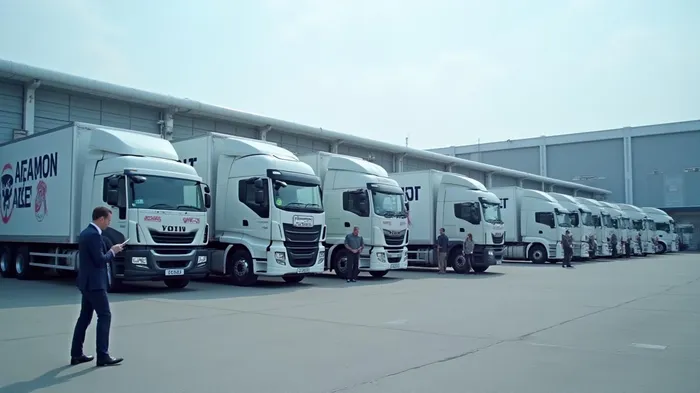
Client Resilience Amid Trade Volatility
Element’s Q1 2025 results underscore a robust demand environment, with its global order backlog soaring to $2 billion—a testament to client confidence. Despite headwinds in regions like Mexico and Australia/New Zealand, where currency depreciations eroded revenue, the U.S. and Canadian markets (comprising 79% of originations) acted as stabilizers. This geographic focus aligns with management’s emphasis on high-growth regions, while its U.S. & Canada Leasing strategic initiative—based in Ireland—has sharpened client acquisition and retention.
Proactive Capital Allocation: Patience as a Virtue
The decision to delay syndications of certain assets until 2025 reflects a deliberate stance toward capital management. By holding off until U.S. tax legislation clarifies, Element avoids potential missteps, prioritizing long-term value over short-term gains. This caution is balanced by strong demand for its assets, as highlighted by management. Meanwhile, adjusted operating margins expanded by 125 basis points (excluding prior-period adjustments), driven by cost discipline and operational leverage.
Cost Control and Margin Expansion
Adjusted operating expenses rose just 5% year-over-year, with moderation expected through 2025. Excluding the Autofleet acquisition, expenses grew only 2%, aided by a $4 million forex tailwind. This efficiency translated into a 290 basis point positive operating leverage, a critical metric for profitability. Combined with a 9% rise in adjusted free cash flow per share ($0.36), these figures signal a company mastering its cost structure.
Balance Sheet Strength and Shareholder Returns
Element’s debt-to-capital ratio of 74.9% remains within its targeted range, preserving flexibility. The company returned $77 million to shareholders in Q1—$37 million via dividends and $40 million through buybacks—while renewing its $40.4 million NCIB. This commitment to shareholder value, backed by strong free cash flow, reinforces investor confidence.
The Role of Innovation and Service Revenue
Digitization and service revenue—now at $152 million in Q1—are pivotal to Element’s future. Its capital-light structure allows it to pivot toward recurring service revenue streams, reducing reliance on volatile asset sales. This strategy aligns with broader trends in fleet management, where data-driven solutions and long-term client relationships drive growth.
Conclusion: A Fortress Balance Sheet and Strategic Clarity
Element’s ability to navigate trade tensions stems from a combination of operational rigor, geographic focus, and financial prudence. With diluted EPS up 8% year-over-year to $0.28, ROE improving to 16.7%, and a backlog exceeding $2 billion, the company is primed to sustain growth even as macro headwinds persist.
The $77 million returned to shareholders and robust free cash flow underscore management’s discipline, while its delayed syndications and cost controls reflect prudent risk management. For investors, Element’s blend of defensive balance sheet metrics, resilient client demand, and innovation-driven service revenue positions it as a compelling play in an uncertain global landscape. In a sector where adaptability is key, Element is proving that strategy—and not just luck—can turn trade tensions into an opportunity.
This analysis synthesizes Element’s financial metrics, strategic moves, and market context to highlight its readiness to thrive amid global trade challenges. The company’s focus on execution, diversification, and shareholder returns solidifies its standing as a leader in fleet management.







Comentarios
Aún no hay comentarios