
Electrolux's Q2 Earnings: Navigating Tariff Pressures and Margin Resilience in a Challenging European Market
When macroeconomic headwinds collide with geopolitical tariffs and currency volatility, the true mettle of a company is tested. Electrolux's Q2 2025 earnings report is a masterclass in resilience—showcasing how strategic pricing, relentless cost-cutting, and regional agility can offset a challenging global environment. For investors, the question is: Is this a company worth betting on in the long term, or a temporary rebound in a tough sector?
The Cost-Cutting Engine: A Lifeline in a High-Cost World
Electrolux's ability to navigate cost pressures is nothing short of remarkable. The company's cost efficiency program has delivered SEK 600 million in Q2 savings alone, with a total of SEK 2 billion in the first half of the year. These savings, achieved through product redesigns, sourcing from best-cost countries, and factory automation, are a testament to CEO Yannick Fierling's operational discipline.
But let's not conflate efficiency with short-term fixes. Electrolux is transforming its cost structure. For example, the phase-out of the Zanussi brand in Europe—a low-end line—signals a shift toward premium differentiation. This isn't just about cutting costs; it's about reallocating capital to high-margin opportunities. If you're an investor, ask yourself: Can a company that's cutting costs by SEK 3.5–4 billion annually sustain its margins in a world where tariffs and inflation are here to stay? The answer, based on Q2, is a cautious “yes.”
Pricing Power: A Double-Edged Sword
Price increases in North America and Latin America were critical to offsetting tariffs and currency depreciation. While this boosted margins, it also raises red flags. Raising prices in a mature, competitive market can backfire—customers may switch to cheaper alternatives. Yet, Electrolux's 1.8% organic growth suggests its customers are willing to pay a premium for innovation.
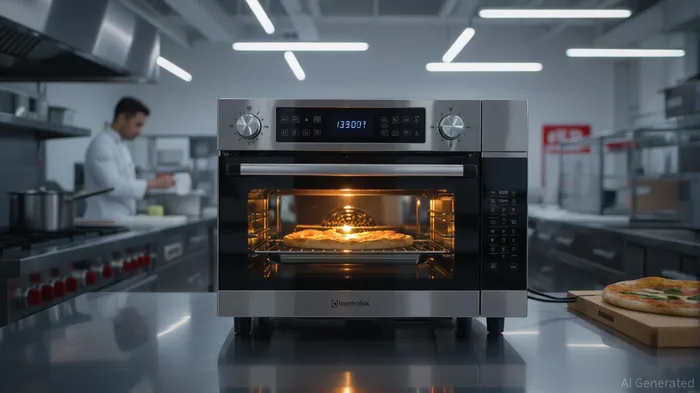
Take the pizza-cooking oven as a case study. This isn't just a gimmick—it's a product that leverages Electrolux's R&D prowess to solve a real-world problem (fast, high-quality pizza). If the product gains traction, it could become a profit engine. But investors should watch closely: Can the company replicate this innovation across its portfolio, or will it become a one-off success?
Regional Performance: North America Shines, Europe Struggles
The Q2 report paints a mixed picture. North America delivered 4.1% organic growth, outperforming the market, while Europe saw a 1% sales volume decline. The contrast is stark. Electrolux's North American strategy—leveraging its strong manufacturing footprint and pricing power—has paid off. Meanwhile, Europe's challenges are structural: a 11% market volume drop since 2019 and a subdued consumer climate.
But here's the twist: Even in Europe, Electrolux's premium brands (Electrolux and AEG) outperformed the market. The SaphirMatt induction hub, with its anti-scratch and anti-fingerprint tech, is a prime example of how differentiation can drive growth in a stagnant market. If you're an investor, this is a green flag. The company isn't just surviving; it's innovating to thrive.
The Risks: Cash Flow Woes and Strategic Overreach
No investment is without risk. Electrolux's negative operating cash flow of SEK 741 million in Q2—driven by a SEK 500 million antitrust fine in France and early tariff payments—highlights vulnerabilities. While the company's SEK 28 billion liquidity cushion is reassuring, investors should scrutinize how management deploys this cash.
Additionally, the divestiture of Kelvinator in India and the Zanussi phase-out signal a strategic pivot. But can Electrolux maintain focus as it shifts its portfolio? Diversification is good, but overextension is dangerous.
The Bottom Line: A Buy for the Long Game
Electrolux's Q2 results are a microcosm of its broader strategy: cut costs, raise prices smartly, and bet on innovation. While Europe remains a drag, North America's performance and the company's disciplined approach to capital allocation make it a compelling long-term play.
For investors, the key is to monitor two metrics:
1. Cost savings progress—Will the company hit its SEK 3.5–4 billion annual target?
2. Innovation pipeline—Can products like the pizza-cooking oven become category leaders?
If the answer to both is “yes,” Electrolux could be a standout in a sector often plagued by margin compression. But if the cost-cutting slows or innovation stalls, the stock could face headwinds.
In the end, Electrolux isn't a “buy and forget” stock—it's a company that requires active management and a long-term lens. For those willing to navigate the noise, the rewards could be substantial.







Comentarios
Aún no hay comentarios