
Electrification-Driven Automotive Innovation: A Lucrative Investment Case for High-Performance EV Platforms
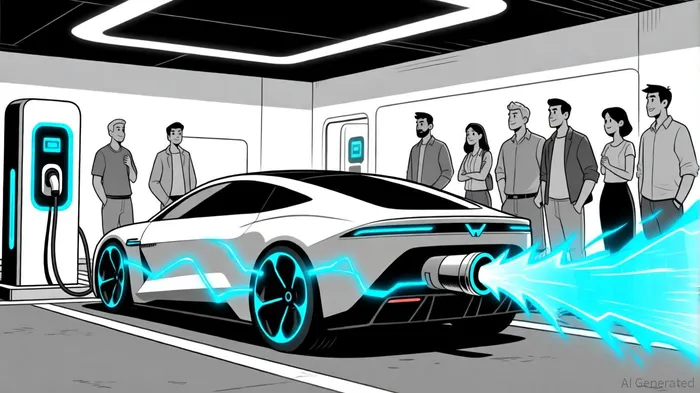
The automotive industry is undergoing a seismic shift, driven by electrification and the relentless pursuit of performance benchmarks. Awards like Wards 10 Best Engines & Propulsion Systems now serve as barometers for this transformation, with 90% of 2025's winners featuring electrified systems[1]. This trend underscores a pivotal moment for investors: high-performance EV platforms are no longer niche but central to the future of mobility. The Dodge Charger Daytona Scat Pack, a flagship example, exemplifies how electrification is redefining performance—and why now is the time to invest in EV-capable OEMs and their supply chains.
The Charger Daytona: A Case Study in Electrified Performance
The 2025 Dodge Charger Daytona Scat Pack, with its 670-horsepower all-electric system, has shattered stereotypes about EVs lacking the visceral thrill of traditional performance vehicles. Capable of accelerating from 0 to 60 mph in 3.3 seconds and completing the quarter-mile in 11.5 seconds[2], it challenges the dominance of internal combustion engines (ICEs) in the muscle car segment. Its 400-volt propulsion system, 100.5-kWh battery pack, and dual electric drive modules[2] are not just engineering feats—they signal a strategic pivot by StellantisSTLA-- to capture performance enthusiasts in the EV era.
The Charger Daytona's recognition by Wards 10 Best Engines is more than symbolic. It validates the commercial viability of electrified performance, a segment projected to grow as automakers like Ford and Volkswagen pivot toward hybrids and PHEVs to address range anxiety[3]. For investors, this signals a shift in consumer demand: performance is no longer sacrificed for sustainability. Instead, electrification is enabling a new era of power and efficiency.
Investor Trends: Electrification as a Catalyst for Valuation Growth
The 2025 Wards 10 list reflects broader industry dynamics. Hybrid systems dominate, with five hybrid or PHEV powertrains among the winners compared to four all-electric systems[1]. This balance highlights automakers' cautious approach to electrification, prioritizing affordability and flexibility. Yet, the awards also spotlight technological innovation, such as the Charger Daytona's patent-pending Fratzonic Chambered Exhaust system[2], which mimics the auditory appeal of ICEs. Such advancements are critical for winning over traditionalists and expanding EV adoption.
For OEMs, recognition in Wards 10 correlates with market relevance. Stellantis, for instance, has leveraged its Hurricane 3.0-liter High Output engine (awarded in 2024) to bolster its reputation in both ICE and EV segments[4]. While its stock has faced volatility—closing at $9.89 as of September 24, 2025, with a 6-month decline of 18.10%[5]—analysts project a 28% increase by 2026[6]. This optimism is fueled by Stellantis' $7.54 billion partnership with Samsung SDI to build EV battery plants in Indiana[7] and its $11.2 billion semiconductor ecosystem to secure critical components[8].
Supply Chain Resilience: The Hidden Goldmine
Electrification's rise is reshaping supply chains, creating opportunities for battery manufacturers, semiconductor firms, and software innovators. Chinese automakers, for example, are leveraging vertical integration and cost-efficiency to dominate EV software and E/E architecture[9]. Meanwhile, U.S.-based players like BYD Semiconductor and CRRC Times Semiconductor are capturing 49.4% of the power device market[10], signaling a shift toward domestic substitution.
Stellantis' partnerships exemplify this trend. Its collaboration with Zeta Energy to develop lithium-sulfur batteries—expected to reduce costs and reliance on cobalt and nickel—positions it to lead in sustainable energy storage[11]. Similarly, federal grants totaling $584.8 million[12] to convert Belvidere Assembly into an EV production hub underscore the U.S. government's commitment to bolstering domestic supply chains. For investors, these developments highlight the importance of diversifying portfolios to include both OEMs and their supply chain partners.
Data-Driven Insights: Electrification's Market Impact
The data is clear: electrification is not a passing trend but a structural shift. While TeslaTSLA-- dominates the U.S. EV market with 46% share in Q2 2025[13], legacy automakers are closing the gap. Ford's F-150 PowerBoost hybrid and Honda's Civic hybrid, both repeat Wards 10 winners[1], demonstrate how hybrids are bridging the gap between ICE and BEV adoption. For investors, this hybridization phase represents a transitional opportunity—supporting OEMs that balance innovation with pragmatism.
Conclusion: The Time to Invest Is Now
The Charger Daytona's success is emblematic of a larger truth: electrification is no longer about sustainability alone but about redefining performance. As Wards 10 awards increasingly honor electrified platforms, they validate the strategic investments of OEMs like Stellantis and their supply chain partners. For investors, the message is clear: high-performance EVs are the next frontier, and the companies leading this charge—whether through cutting-edge battery tech, semiconductor ecosystems, or hybrid innovation—are poised for outsized returns.
The road ahead is complex, but for those who recognize the confluence of performance, sustainability, and technological breakthroughs, the opportunities are boundless.







Comentarios
Aún no hay comentarios