
Electric Vehicle Industry Risks: Navigating Regulatory and Reputational Challenges in a Rapidly Evolving Market
The electric vehicle (EV) industry, once hailed as the uncontested future of mobility, is now grappling with a complex web of regulatory scrutiny, reputational risks, and financial volatility. As governments worldwide tighten safety standards and consumers grow increasingly wary of high-profile recalls, investors must weigh these challenges against the sector's long-term potential. This analysis examines how regulatory shifts and reputational crises are reshaping the EV landscape, using recent case studies and financial data to illuminate the stakes for manufacturers and shareholders alike.
Regulatory Tightrope: Compliance Costs and Market Realities
The National Highway Traffic Safety Administration (NHTSA) has introduced FMVSS No. 305a, a sweeping update to EV safety standards that mandates rigorous post-crash fire prevention tests and low-temperature battery performance documentation. This rule, aligned with global technical regulations, expands oversight to heavy vehicles and imposes stricter requirements on rechargeable energy storage systems (REESS). For manufacturers, compliance means higher R&D expenditures and production delays, particularly for companies scaling up battery production.
Simultaneously, state-level policies like California's zero-emission vehicle (ZEV) mandates-requiring 100% ZEV sales by 2035-are creating a patchwork of compliance demands. Automakers operating in states adopting these rules face pressure to accelerate EV development, often at the expense of cost efficiency. According to a SafetyRegulations report, these mandates could drive up vehicle pricing by 8–12% in affected regions, potentially deterring price-sensitive buyers.
Reputational Fallout: Recalls and Consumer Trust
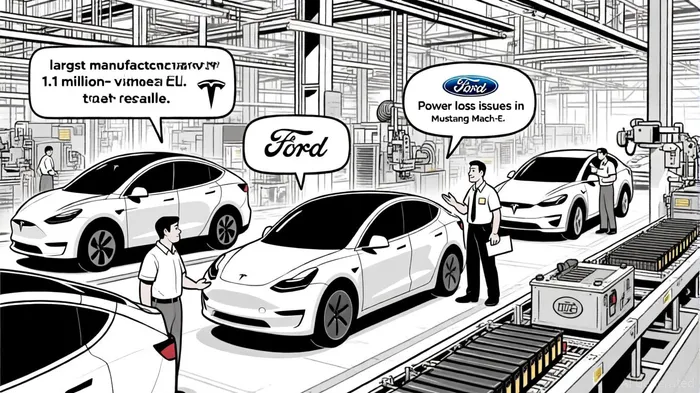
The EV industry's rapid innovation has come at a cost: battery failures, software glitches, and manufacturing defects have triggered a surge in recalls. Tesla's 2025 recall of 1.1 million vehicles to address Autopilot errors and battery overheating risks exemplifies the scale of these challenges, as documented in a PowerSearchs roundup. Similarly, Ford's Mustang Mach-E recall-linked to sudden power loss and battery sensor malfunctions-has eroded consumer confidence, with J.D. Power noting a 19% decline in EV owner satisfaction in 2025, as reported in a Newsweek report.
Hyundai and Kia's 2025 recall of 147,110 vehicles over a faulty integrated charging control unit (ICCU) further underscores the fragility of EV supply chains. These incidents highlight a broader issue: immature manufacturing processes for advanced components like lithium-ion batteries and autonomous systems. As stated by Tony Salerno of J.D. Power, "The EV industry is still in its adolescence. Every recall is a learning opportunity, but the reputational damage can linger long after the fix is applied," a point covered in the Newsweek piece.
Social media amplifies these risks. A ScienceDirect study found that negative sentiment on platforms like Twitter can accelerate reputational damage during recalls, with brands like Polestar (which recalled 27,800 vehicles for rearview camera malfunctions) experiencing a 22% drop in online brand sentiment within days of the announcement.
Financial Implications: Stock Volatility and Investor Sentiment
The financial toll of recalls is stark. Ford's stock price plummeted 15% over 12 months in 2025, partly due to $6 billion in warranty costs and a record 109 U.S. recalls, according to a Forbes analysis. The company's EV unit reported a $1.3 billion loss in Q2 2025, forcing it to scale back production of electric Cadillac SUVs. In contrast, Tesla's software-centric approach has mitigated some costs-its 2023 recall of 2.2 million vehicles was resolved via over-the-air updates, avoiding physical repairs. However, Tesla's stock still fell 45% year-to-date in 2025, reflecting broader concerns over slowing demand and expiring tax credits.
Regulatory investigations compound these pressures. Research published on ScienceDirect shows that an average recall leads to a 0.22% stock return loss, with prolonged investigations exacerbating investor anxiety. For example, General Motors' 2014 ignition switch recall cost it $81.11 million in market value, a cautionary tale for EV makers facing similar scrutiny.
Investor Considerations: Balancing Innovation and Risk
For investors, the EV sector presents a paradox: regulatory and reputational risks are rising, yet long-term growth prospects remain compelling. Companies like Volkswagen and General Motors, which have committed €35 billion and $27 billion respectively to e-mobility by 2025, are betting on innovation to offset short-term challenges, according to a QuantaIntelligence analysis. Meanwhile, firms leveraging software-driven solutions-such as Tesla's OTA updates-are better positioned to manage recall costs and maintain stock stability.
However, geopolitical factors add uncertainty. The U.S. and EU's imposition of tariffs on Chinese EVs (up to 100% in the U.S.) and debates over the Inflation Reduction Act's tax credits could disrupt supply chains and investor confidence, as noted by QuantaIntelligence. As one analyst notes, "The EV industry is at a crossroads. Those who adapt to regulatory rigor and reputational transparency will thrive; others will falter under the weight of their own complexity."
Conclusion
The EV industry's journey toward maturity is fraught with regulatory hurdles, reputational minefields, and financial volatility. While innovations like solid-state batteries and AI-driven safety systems offer hope, investors must remain vigilant. A diversified portfolio that balances exposure to pioneers like TeslaTSLA-- with traditional automakers pivoting to electrification may offer the best path forward. As the sector evolves, one truth remains: in the race to electrify transportation, safety and trust are not just compliance issues-they are the ultimate competitive advantages.







Comentarios
Aún no hay comentarios