
U.S. EIA Cushing Crude Oil Inventories: A Sector Rotation Signal for Energy Equipment and Automobiles
The U.S. Energy Information Administration's (EIA) August 2025 report on Cushing, Oklahoma crude oil inventories has sent shockwaves through energy and equity markets. . oil market. The implications are profound, triggering a sector rotation that favors Energy Equipment & Services (EES) firms while casting a shadow over the Automobile sector.
The Supply-Tightening Narrative
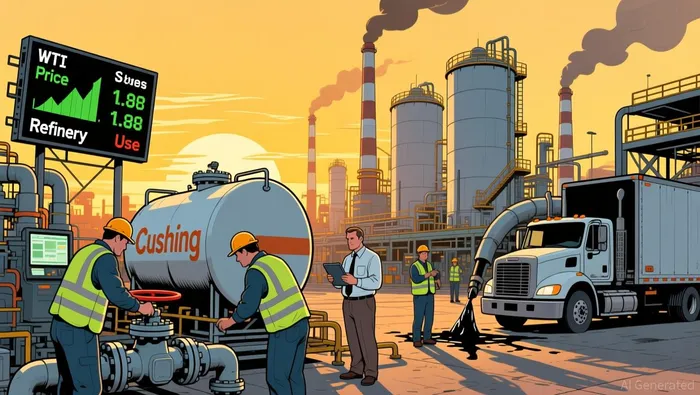
Cushing, the pricing hub for (WTI) crude, has become a barometer for global energy dynamics. . , , robust , and persistent pipeline bottlenecks. This tightening has created a stark divergence in sectoral performance, with Energy Equipment & Services firms poised to outperform while the Automobile sector faces headwinds.
Historically, , EES ETFs like IXE and XOP . The 2015 inventory low, for instance, . Today, , directly benefiting firms like HalliburtonHAL-- (HAL), Baker HughesBKR-- (BKR), and Schlumberger (SLB). , favoring players such as Enterprise Products PartnersEPD-- (EPD) and Buckeye Partners (BPL).
Automobile Sector Under Pressure
Conversely, the Automobile sector is grappling with rising crude prices. , squeezing automaker margins. Traditional automakers like FordF-- (F) and General MotorsGM-- (GM), reliant on internal combustion engines, face particular challenges. While electric vehicle (EV) producers like TeslaTSLA-- (TSLA) and RivianRIVN-- (RIVN) are gaining traction, their valuations already reflect electrification expectations, making them speculative bets.
. , dampening demand for fuel-intensive vehicles. The Cushing bottleneck—where U.S. , .
Strategic Investment Implications
For investors, the EIA data signals a critical inflection point. Energy Equipment & Services firms, particularly those with fixed-price contracts, are well-positioned to capitalize on margin expansion and infrastructure demand. Overweighting EES ETFs like IXE and XOP offers diversified exposure to this outperforming sector.
Conversely, the Automobile sector warrants a cautious underweight. While a narrowing WTI-Brent spread could eventually stabilize gasoline prices, current structural imbalances and infrastructure bottlenecks suggest near-term headwinds. Hedging against crude price volatility via futures contracts or short-term options can mitigate downside risks.
Geopolitical and Market Risks
The U.S. imposition of a 25% on Indian goods, effective August 7, 2025, adds another layer of complexity. By pressuring India to reduce Russian oil imports, this move could tighten global supply or spur U.S. , further influencing price dynamics. Investors must remain vigilant to these geopolitical shifts and their cascading effects on energy and equity markets.
Conclusion
The EIA Cushing inventory data for August 2025 highlights a pivotal moment in the energy transition. Energy Equipment & Services firms are set to benefit from structural supply-demand imbalances, while the faces near-term challenges from elevated fuel costs. A disciplined approach to sector positioning—overweighting EES and underweighting Automobiles—offers a strategic edge in navigating this evolving landscape. As infrastructure bottlenecks persist and global demand remains robust, the ability to adapt to sector rotation will be key to long-term investment success.





Comentarios
Aún no hay comentarios