
Egg Prices: Why Consumers Are Feeling the Pinch
Generado por agente de IACyrus Cole
lunes, 10 de febrero de 2025, 12:53 pm ET1 min de lectura
EGGS--
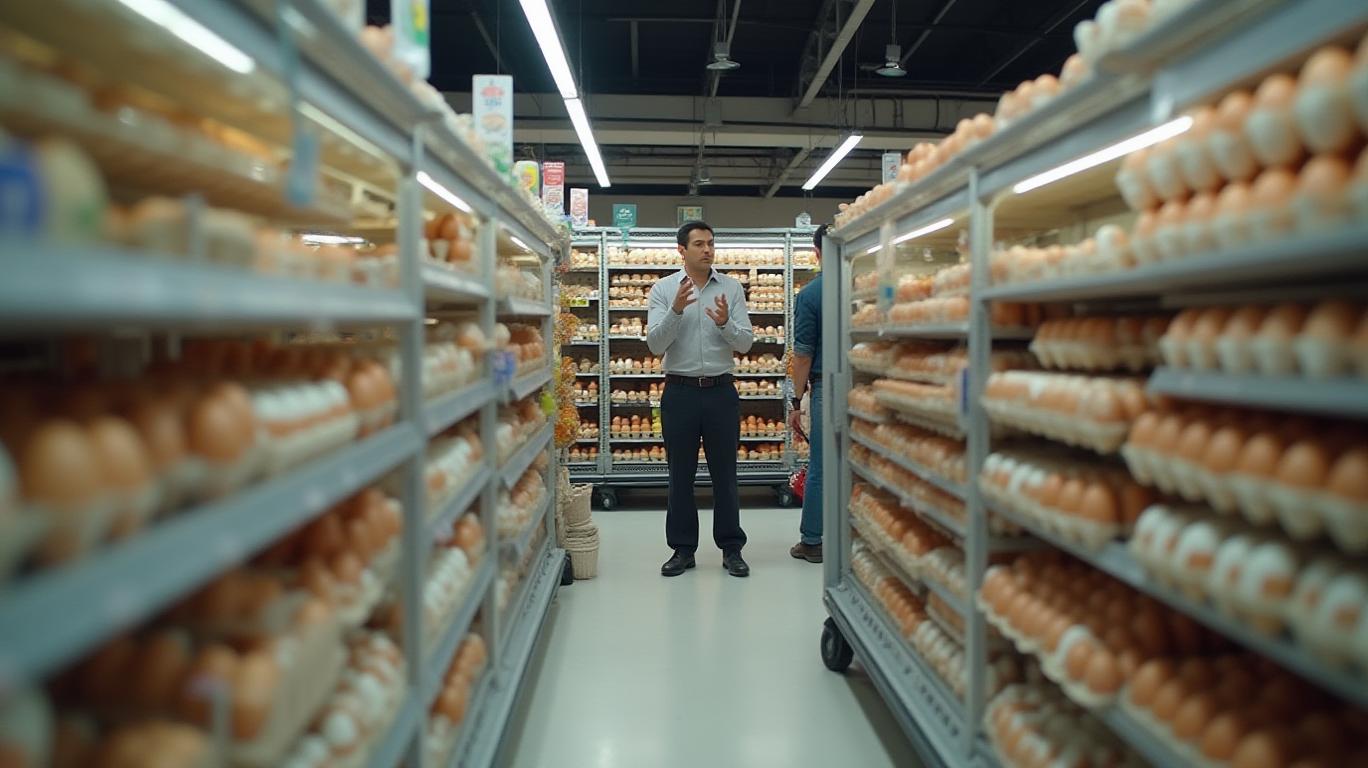
Egg prices have been soaring in recent months, leaving consumers with sticker shock at the grocery store. The average price of a dozen large, grade-A eggs reached $4.15 in December 2024, up 14% from November and more than 60% higher than the year before. In some regions, prices have even reached over $9 per dozen. Consumers are feeling the pinch, but why are egg prices surging, and when might they come down?
Avian Flu Outbreaks
The primary driver behind the recent surge in egg prices is the ongoing avian flu outbreak. The highly pathogenic avian influenza (HPAI) strain H5N1 has led to the culling of millions of commercial egg-laying hens. In December 2024 alone, 13.2 million hens were culled, and the virus continues to depopulate flocks into 2025 (Qiu, 2021). This has resulted in a severe supply shortage, as it takes approximately 19-20 weeks for hens to be ready to produce eggs after a flock is culled and replaced (USDA, 2025).
Inflationary Pressures
Higher prices for fuel, packaging, labor, and feed have also contributed to the increased cost of eggs. Emily Metz, president of the American Egg Board, noted that "inflationary pressures" are at play, with egg farmers being "price takers, not price makers" (Jan 2025). These increased production costs have been passed on to consumers, further driving up egg prices.
Steady Demand
Despite the price increases, demand for eggs has remained high. Emily Metz mentioned that retail demand for eggs has been up for 18 consecutive four-week periods, even during the summer when consumption typically decreases (Jan 2025). This steady demand, coupled with the supply shortage caused by avian flu, has led to higher prices.
Long-term Implications
Egg prices are expected to remain high throughout 2025, with the USDA predicting a further 20% increase (USDA, 2025). Consumers may face continued shortages and higher prices, potentially leading to substitution with other protein sources or changes in eating habits. However, eggs remain an affordable protein source, even at elevated prices (Metz, 2024).
Farmers are dealing with a serious blow, as the virus requires the entire flock to be slaughtered to limit its spread. Replenishing supplies is challenging, taking around 19-20 weeks for hens to be ready to produce eggs (USDA, 2025). Producers may face financial difficulties and may need to apply for financial assistance from the USDA to repopulate their flocks (USDA, 2025).
In conclusion, the recent surge in egg prices is primarily driven by the ongoing avian flu outbreak, which has led to a severe supply shortage. Inflationary pressures and steady demand have also contributed to the price increase. Consumers can expect egg prices to remain high throughout 2025, with potential long-term implications for both consumers and producers.
Egg prices have been soaring in recent months, leaving consumers with sticker shock at the grocery store. The average price of a dozen large, grade-A eggs reached $4.15 in December 2024, up 14% from November and more than 60% higher than the year before. In some regions, prices have even reached over $9 per dozen. Consumers are feeling the pinch, but why are egg prices surging, and when might they come down?
Avian Flu Outbreaks
The primary driver behind the recent surge in egg prices is the ongoing avian flu outbreak. The highly pathogenic avian influenza (HPAI) strain H5N1 has led to the culling of millions of commercial egg-laying hens. In December 2024 alone, 13.2 million hens were culled, and the virus continues to depopulate flocks into 2025 (Qiu, 2021). This has resulted in a severe supply shortage, as it takes approximately 19-20 weeks for hens to be ready to produce eggs after a flock is culled and replaced (USDA, 2025).
Inflationary Pressures
Higher prices for fuel, packaging, labor, and feed have also contributed to the increased cost of eggs. Emily Metz, president of the American Egg Board, noted that "inflationary pressures" are at play, with egg farmers being "price takers, not price makers" (Jan 2025). These increased production costs have been passed on to consumers, further driving up egg prices.
Steady Demand
Despite the price increases, demand for eggs has remained high. Emily Metz mentioned that retail demand for eggs has been up for 18 consecutive four-week periods, even during the summer when consumption typically decreases (Jan 2025). This steady demand, coupled with the supply shortage caused by avian flu, has led to higher prices.
Long-term Implications
Egg prices are expected to remain high throughout 2025, with the USDA predicting a further 20% increase (USDA, 2025). Consumers may face continued shortages and higher prices, potentially leading to substitution with other protein sources or changes in eating habits. However, eggs remain an affordable protein source, even at elevated prices (Metz, 2024).
Farmers are dealing with a serious blow, as the virus requires the entire flock to be slaughtered to limit its spread. Replenishing supplies is challenging, taking around 19-20 weeks for hens to be ready to produce eggs (USDA, 2025). Producers may face financial difficulties and may need to apply for financial assistance from the USDA to repopulate their flocks (USDA, 2025).
In conclusion, the recent surge in egg prices is primarily driven by the ongoing avian flu outbreak, which has led to a severe supply shortage. Inflationary pressures and steady demand have also contributed to the price increase. Consumers can expect egg prices to remain high throughout 2025, with potential long-term implications for both consumers and producers.

Divulgación editorial y transparencia de la IA: Ainvest News utiliza tecnología avanzada de Modelos de Lenguaje Largo (LLM) para sintetizar y analizar datos de mercado en tiempo real. Para garantizar los más altos estándares de integridad, cada artículo se somete a un riguroso proceso de verificación con participación humana.
Mientras la IA asiste en el procesamiento de datos y la redacción inicial, un miembro editorial profesional de Ainvest revisa, verifica y aprueba de forma independiente todo el contenido para garantizar su precisión y cumplimiento con los estándares editoriales de Ainvest Fintech Inc. Esta supervisión humana está diseñada para mitigar las alucinaciones de la IA y garantizar el contexto financiero.
Advertencia sobre inversiones: Este contenido se proporciona únicamente con fines informativos y no constituye asesoramiento profesional de inversión, legal o financiero. Los mercados conllevan riesgos inherentes. Se recomienda a los usuarios que realicen una investigación independiente o consulten a un asesor financiero certificado antes de tomar cualquier decisión. Ainvest Fintech Inc. se exime de toda responsabilidad por las acciones tomadas con base en esta información. ¿Encontró un error? Reportar un problema




Comentarios
Aún no hay comentarios