
Effnetplattformen's Strategic Licensing of Header Compression Technology: A Catalyst for Edge Computing Dominance
Effnetplattformen Holding AB's recent licensing of its header compression software to a U.S.-based telecom equipment company marks a pivotal moment in its strategic evolution. By embedding its technology into 4G and 5G Radio Access Network (RAN) equipment, the company is not only securing recurring revenue streams but also positioning itself at the forefront of the high-growth edge computing and data optimization markets[1]. This move leverages Effnet's decades-long expertise in standards-compliant compression protocols, aligning with global trends toward decentralized data processing and real-time analytics.
The Edge Computing Opportunity: A $424 Billion Market by 2030
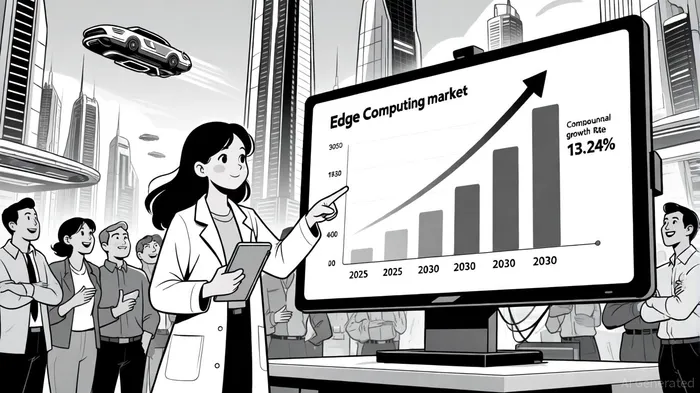
The edge computing market is projected to expand from $227.8 billion in 2025 to $424.15 billion by 2030, growing at a compound annual rate of 13.24%[1]. This surge is driven by the proliferation of IoT devices, 5G deployment, and the demand for low-latency applications in sectors like manufacturing, healthcare, and autonomous vehicles. Header compression, a critical enabler of edge computing, reduces IP traffic overhead by up to 90%, freeing bandwidth for real-time data processing[2]. For instance, Effnet's software compresses IPv4/IPv6 headers to as little as 2–5 bytes using IETF RFC 2507 standards, a feat that directly addresses the bandwidth constraints of edge networks[3].
Effnet's Competitive Edge: Standards, Efficiency, and Scalability
Effnet's header compression technology distinguishes itself through three pillars:
1. Standards Compliance: The solution adheres to IETF and 3GPP specifications, ensuring interoperability across 3G, 4G, and 5G networks. This compliance is critical for global deployment, particularly in regulated sectors like defense and industrial IoT[4].
2. High-Efficiency Performance: Unlike alternatives that rely on increasing packet sizes to reduce overhead, Effnet's RObust Header Compression (ROHC) and Ethernet Header Compression (EHC) protocols maintain interactivity and resilience in high-error environments. For example, ROHCv2 achieves 95% compression efficiency for VoLTE/VoNR traffic, even in challenging radio conditions[5].
3. Scalability: The technology operates seamlessly in resource-constrained IoT devices and high-capacity 5G base stations, making it adaptable to diverse edge computing use cases[6].
Strategic Market Positioning: From RAN to Industrial Edge
Effnet's licensing deal with the U.S. telecom equipment vendor underscores its ability to penetrate the 5G RAN market, a segment expected to grow as operators prioritize network efficiency. By integrating its software into RAN equipment, Effnet enables telecom providers to enhance user capacity and quality of service—critical for monetizing 5G's low-latency capabilities[1]. Beyond telecom, the company's EHC technology is already deployed in industrial IoT applications, where it complements ROHC to optimize Ethernet over wireless protocols. This dual-technology approach is particularly valuable in factories and smart grids, where real-time data analytics drive operational efficiency[7].
Financial Implications: Recurring Revenue and Long-Term Value
Aniruddha Kulkarni, Managing Director of Effnet AB, emphasized that the licensing agreement supports the company's strategy to build a portfolio of contracts with recurring revenue streams[1]. This model contrasts with one-time software sales, offering predictable cash flows and long-term customer relationships. Given the edge computing market's projected $327.79 billion valuation by 2033 (at a 33% CAGR)[2], Effnet's recurring revenue model positions it to capitalize on sustained demand for data optimization solutions.
Conclusion: A Leader in the Edge Computing Era
Effnetplattformen's licensing of header compression technology is more than a product sale—it is a strategic alignment with the infrastructure needs of the edge computing revolution. By combining standards compliance, technical innovation, and a recurring revenue model, the company is well-positioned to dominate a market where bandwidth efficiency and real-time processing are non-negotiable. As 5G RAN deployments accelerate and edge AI applications proliferate, Effnet's technology will likely become a foundational component of next-generation networks, delivering both operational value and shareholder returns.







Comentarios
Aún no hay comentarios