
EDF's Tokenization Strategy and Its Implications for Green Energy and Blockchain Integration
In the race to decarbonize the global economy, energy firms are increasingly turning to blockchain technology to enhance ESG compliance and operational efficiency. EDF, one of Europe's largest energy providers, has emerged as a pioneer in this space, leveraging tokenization to finance renewable projects, track environmental impact, and streamline capital flows. As the real-world asset (RWA) tokenization market surges toward $16 trillion by 2030, EDF's strategic bets on blockchain could position it as a key player in the next phase of green energy finance. This analysis evaluates EDF's tokenization initiatives, their financial implications, and the broader investment potential for energy firms adopting blockchain.
Tokenization as a Tool for ESG Compliance
EDF's 2022 collaboration with BNP Paribas to tokenize a solarSXP-- energy project bond marked a watershed moment in green finance. By embedding ESG data directly into the token, the project enabled real-time verification of investors' environmental impact, a critical feature for meeting global standards like the ISSB and TCFD. This approach not only simplifies compliance but also builds trust with stakeholders by ensuring transparency across the value chain.
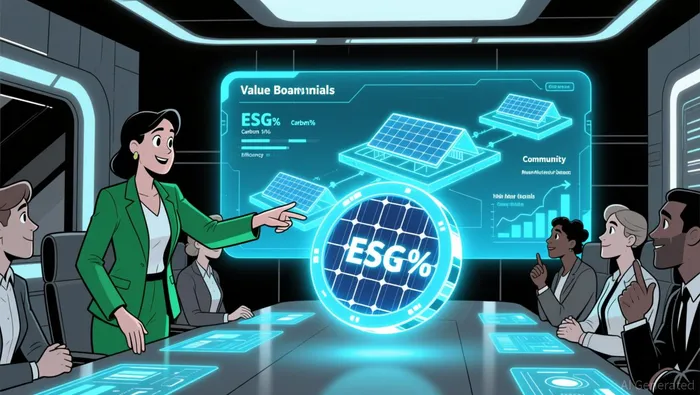
The benefits extend beyond compliance. Tokenized assets like carbon credits and renewable energy certificates (RECs) can trade 24/7 on secondary markets, unlocking liquidity for smaller investors and enabling continuous capital flows into sustainability projects. For EDF, this means scaling its renewable energy portfolio more efficiently while aligning with EU climate mandates. As regulatory frameworks evolve, tokenization could become a de facto standard for ESG reporting, further solidifying EDF's competitive edge.
Operational Efficiency and Cost Savings
Blockchain's role in reducing operational friction is another compelling angle. EDF's tokenization projects have demonstrated cost savings of up to 90% in transaction costs through smart contracts. For example, setup costs for institutional-grade tokenization initiatives range from $250,000 to $400,000, while annual operating costs for a $250 million AUM fund using tokenized solutions are estimated at $110,000 to $180,000- compared to $290,000 to $410,000 for traditional methods. These savings stem from streamlined onboarding, faster audits, and reduced manual reconciliation.
Moreover, EDF's partnerships with platforms like droppRWA in Saudi Arabia highlight its focus on leveraging blockchain to digitize energy infrastructure. By tokenizing thermal and renewable assets, EDF aims to improve inter-company transaction speeds and develop innovative carbon credit frameworks. Such initiatives align with Saudi Arabia's Vision 2030 and could serve as a blueprint for other energy markets.
Financial Performance and Strategic Partnerships
While EDF's 2025 half-year results show a reduction in net income to €5.5 billion compared to 2024, the company has maintained a positive operating cash flow of €7.9 billion and reduced net financial debt to €50 billion. These metrics underscore EDF's resilience amid volatile market conditions. Meanwhile, its blockchain-driven projects are attracting institutional interest: the tokenized solar bond raised $1.2 billion for renewable energy initiatives, and the broader green asset tokenization market is projected to reach $50 billion by year-end.
EDF's strategic partnerships further amplify its long-term potential. Collaborations with Quandela for quantum computing and LexRock AI for low-carbon document solutions position the firm at the intersection of energy and digital innovation. Additionally, its work with AtkinsRéalis on nuclear reactor projects highlights a diversified approach to decarbonization. These alliances not only diversify EDF's revenue streams but also align with global trends in AI-driven infrastructure and sustainable data centers.
Market Outlook and Investment Considerations
The tokenization market's rapid growth- reaching $24 billion in RWA value by mid-2025-suggests strong tailwinds for EDF's strategy. However, investors must weigh risks such as regulatory uncertainty and technological adoption rates. EDF's early mover advantage, combined with its focus on interoperability (e.g., convertible tokenized bonds), mitigates some of these concerns.
From a valuation perspective, EDF's EBITDA of €15.5 billion in H1 2025 reflects operational stability, while its blockchain initiatives offer incremental upside. As tokenized private credit gains traction, EDF's ability to attract institutional capital for green projects could drive earnings growth.
Conclusion
EDF's tokenization strategy exemplifies how energy firms can harness blockchain to address ESG mandates, reduce costs, and unlock new markets. While the technology is still maturing, EDF's partnerships, financial discipline, and alignment with global decarbonization goals position it as a compelling long-term investment. For investors seeking exposure to the energy transition, EDF's blockchain-driven approach offers a unique blend of innovation and pragmatism.







Comentarios
Aún no hay comentarios