
Ecopetrol's $7.2bn 2026 Capital Expenditure and Energy Transition Strategy: A Strategic Bet on Colombia's Energy Diversification and Operational Resilience
Colombia's state-owned energy giant, EcopetrolEC--, has unveiled a $7.2 billion capital expenditure plan for 2026, a blueprint that underscores its dual commitment to maintaining hydrocarbon production and accelerating the country's energy transition. The investment, ranging between COP 22 and 27 trillion, is not merely a financial allocation but a strategic pivot toward aligning with Colombia's national energy diversification goals and ensuring operational resilience in an increasingly volatile market.
Balancing Hydrocarbons and Renewables
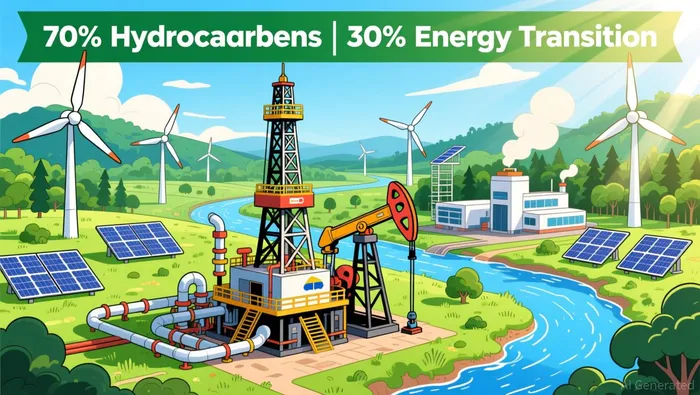
Ecopetrol's 2026 plan allocates 70% of its budget-approximately COP 17.2 trillion-to traditional upstream and midstream activities, including exploration, production, refining, and transportation. This focus aims to sustain output between 730,000 and 740,000 barrels of oil equivalent per day (boed), a critical step in securing Colombia's energy security amid global supply chain uncertainties according to the company's press release. However, the company is not shying away from the realities of climate change. According to financial analysis, a staggering 30% of the budget-COP 7.1 trillion-is earmarked for energy transition initiatives, including renewable energy, hydrogen, and carbon capture technologies. This allocation reflects a calculated balance: maintaining the backbone of Colombia's energy economy while investing in a cleaner future.
 The energy transition portion of the plan includes the addition of 750 MW of clean energy capacity by 2026, a move that directly supports Colombia's National Development Plan 2022–2026, which prioritizes decarbonization and the creation of 20,000 energy communities by 2026. Ecopetrol's solar photovoltaic projects, including the acquisition of up to 88.2 MWp in solar capacity, further cement its role in diversifying Colombia's energy matrix. These initiatives are not just symbolic; they are part of a broader strategy to reduce the company's reliance on purchased energy and achieve 900 MW of self-generated renewable capacity by 2025.
Strategic Alignment with National Goals
Ecopetrol's 2026 investments are deeply intertwined with Colombia's long-term energy strategy, particularly the "Energy that Transforms" 2040 plan, which envisions a net-zero emissions trajectory and a shift toward low-carbon technologies. The company's green hydrogen project at the Cartagena Refinery, set to become the largest in Latin America, exemplifies this alignment. By leveraging its refining infrastructure, Ecopetrol is positioning itself as a pioneer in hydrogen production, a sector critical to decarbonizing heavy industries and transportation.
Moreover, the company's refining and transport upgrades-such as emissions reductions at the Barrancabermeja and Cartagena complexes-mirror Colombia's Just Energy Transition (JET) roadmap, which seeks to phase out coal-fired power by 2036 and end new fossil fuel exploration. While these goals face economic and technical hurdles, Ecopetrol's phased approach-investing $5.2–6 billion annually by 2040 in low-emission businesses-provides a realistic pathway to achieving 30–50% of the company's EBITDA from sustainable operations.
Operational Resilience in a Challenging Market
Ecopetrol's 2026 plan also emphasizes operational resilience, a necessity in a market characterized by volatile oil prices and geopolitical risks. The company anticipates a Brent price of $60 per barrel and a COP/USD exchange rate of 4,050, metrics that inform its cost-reduction measures and focus on profitability. By drilling 380–430 development wells-95% within Colombia-and investing COP 1.5 trillion in gas projects in the Llanos Foothills and Caribbean offshore, Ecopetrol is hedging against external shocks while expanding its domestic footprint.
Transport infrastructure upgrades, including pipeline integrity improvements, further bolster resilience. These projects, accounting for 6% of the total budget, ensure the reliability of Colombia's energy networks, a priority for a country where energy access remains uneven. Meanwhile, Ecopetrol's transmission subsidiary, ISA, will receive COP 6.2–6.8 trillion to expand the power grid, a move that directly supports the PND's goal of creating energy communities in marginalized regions.
Challenges and the Path Forward
Despite its ambitious roadmap, Ecopetrol's strategy is not without risks. Colombia's energy transition faces significant financial constraints, with one study noting that achieving 100% renewable energy by 2035 would require 4–8 times the government's projected $34 billion investment according to a 2025 analysis. Ecopetrol's approach-prioritizing incremental progress over rapid transformation-may be the only viable path given these limitations.
For investors, the key takeaway is Ecopetrol's ability to navigate this duality: maintaining profitability in hydrocarbons while investing in a sustainable future. Its 2026 plan, with its disciplined capital allocation and alignment with national priorities, signals a company that is not only adapting to the energy transition but leading it. As Colombia's energy landscape evolves, Ecopetrol's strategic investments may well determine the country's ability to balance economic growth with environmental stewardship.







Comentarios
Aún no hay comentarios