
U.S. Economic Resilience and Strategic Sector Positioning for 2026
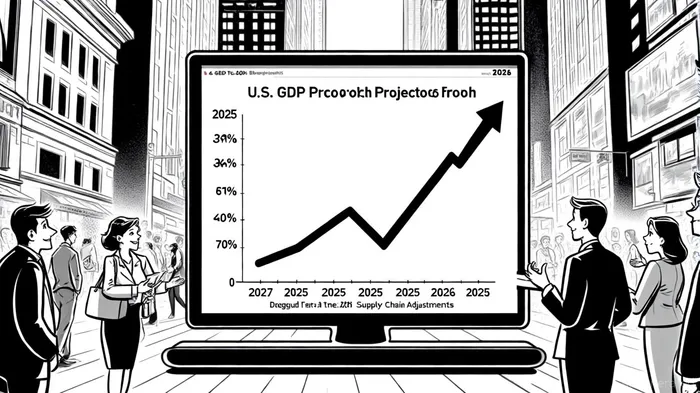
The U.S. economy's resilience in 2025 has defied expectations, with second-quarter GDP growth reaching 3.1%, far exceeding forecasts of 2.4%, according to a todayus report. This performance, driven by robust consumer spending, rising business investments, and a recovering manufacturing sector, underscores the nation's ability to adapt to global headwinds. However, the Congressional Budget Office (CBO) cautions that real GDP growth in 2025 fell short of earlier projections by 0.5 percentage points, primarily due to the drag from new tariffs and reduced net immigration. Looking ahead, the CBO projects a rebound in 2026, with growth expected to be 0.4 percentage points higher than previously estimated, as the 2025 reconciliation act's stimulus measures offset lingering challenges.
Policy Drivers and Sectoral Opportunities
The 2025 reconciliation act, which permanently extended expiring tax provisions and allowed full expensing of capital investments, is a cornerstone of this optimism. By incentivizing business spending on research and development, the act is projected to boost consumption, private investment, and federal purchases. JPMorganChase has further amplified this momentum with a $1.5 trillion initiative targeting strategic sectors critical to national economic security, including supply chain modernization, advanced manufacturing, defense and aerospace, energy independence, and frontier technologies like AI and quantum computing.
Technology and Communication Services
As CFRA research notes, the technology sector has already demonstrated strength in 2025, with AI and quantum computing emerging as transformative forces. JPMorgan's investments in these areas align with the U.S. government's push to secure quantum computing supply chains, which Moody's analysis highlights as vital for national security. According to an IBM report, quantum computing's potential to optimize logistics and risk assessment models could redefine global trade networks, while generative AI is streamlining supply chain operations, from procurement to supplier risk management.
Supply Chain and Advanced Manufacturing
Supply chain adjustments, accelerated by the CHIPS and Science Act of 2022, are another focal point. The CBO notes that clarity in trade policy will help businesses adapt to higher tariffs, though EY warns that these tariffs will increase costs for households and reduce profit margins in the short term. JPMorgan's emphasis on advanced manufacturing underscores the sector's role in mitigating these vulnerabilities, with AI-driven predictive analytics enhancing inventory management and production planning.
Defense and Aerospace
Defense and aerospace remain strategically positioned, supported by federal purchases and national security priorities. The CBO's projection of higher 2026 growth includes a boost from increased defense spending, while JPMorgan's initiative highlights the sector's importance in securing critical technologies.
Energy Independence
Energy independence is gaining traction as a pillar of resilience. The reconciliation act's incentives for clean energy investments, coupled with JPMorgan's focus on energy infrastructure, position this sector to benefit from long-term policy tailwinds.
Financial Sector
The financial sector, buoyed by a strong labor market and low unemployment, has thrived in 2025. However, the Conference Board anticipates that the Federal Reserve may resume rate cuts in December 2025, with further cuts possible if labor market conditions weaken. This could provide a tailwind for financial equities in 2026.
Challenges and Mitigants
While the outlook is cautiously optimistic, challenges persist. RBC economists note that fading one-off growth boosts and higher tariffs could weigh on economic activity in late 2025, with EY estimating that the bulk of tariff impacts will materialize in Q4 2025 and early 2026. However, the CBO and JPMorganJPM-- both argue that policy clarity and supply chain adjustments will mitigate these risks, ensuring a modest recovery in 2026.
Conclusion
The U.S. economy's resilience in 2026 will hinge on strategic sector positioning, with technology, supply chain modernization, and energy independence leading the charge. While tariffs and immigration constraints pose near-term risks, the 2025 reconciliation act and private-sector investments are expected to drive a rebound. Investors should prioritize equities in AI, quantum computing, advanced manufacturing, and defense, while remaining mindful of macroeconomic volatility. As the Conference Board notes, the path to sustained growth will require balancing short-term headwinds with long-term innovation.







Comentarios
Aún no hay comentarios