
U.S. Economic Resilience and 2026 Outlook: A Bullish Case for Fiscal Policy and Market Confidence
: A Foundation for Resilience
Bessent's optimism is rooted in the gradual rollout of the Trump administration's , which he argues are already reshaping the economic landscape. The One Big, Beautiful Bill Act, for instance, has catalyzed infrastructure spending and clean energy incentives, . This growth is fueled by demographic shifts toward the Sunbelt and robust public funding, as highlighted by CEO .
Meanwhile, the March 2025 , which averted a , has provided a critical buffer for . While the bill's passage was contentious, it granted the Trump administration greater control over , aligning with its focus on infrastructure and . Bessent's warnings about the -urged to be raised by mid-July-were heeded, that could have derailed economic momentum.
: Navigating Turbulence and Resilience
The March 2025 period saw significant , . , its lowest since 2022, reflecting widespread concerns about inflation and job security. However, this turbulence has not dampened .
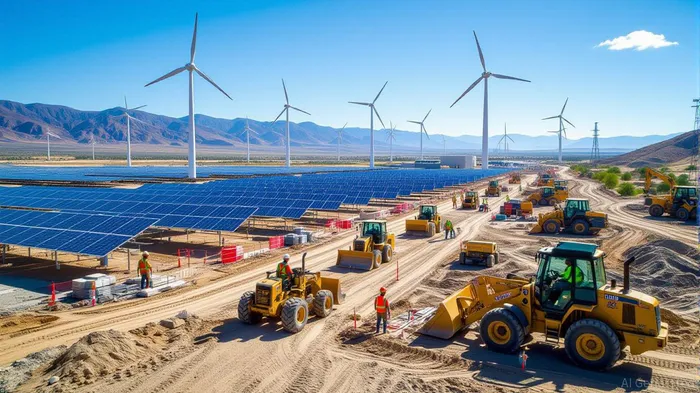 remain robust, . The , in particular, has shown surprising strength, with factory construction and durable goods orders surging. These fundamentals suggest that while short-term volatility persists, the economy's is intact.
and Public Contracts: A Growth Engine
has emerged as a cornerstone of the bullish thesis. The , a critical enabler of , , driven by mega projects in Saudi Arabia, the UAE, and Qatar. In the U.S., , leading the charge.
The One Big Beautiful Bill Act's clean energy incentives are also reshaping investment timelines. For example, Cytosorbents Corporation, a , has outlined a 2025 growth strategy , supported by cost controls and improved . Such examples underscore how are directly translating into sector-specific opportunities.
: A Hedge and a Growth Catalyst
have performed admirably in 2025, with United Fire Group Inc. . The company's net income nearly doubled year-on-year, reflecting efficient operations and strong demand for its services. This performance aligns with broader trends in inflation-linked assets, which have benefited from rising costs in the -a trend Bessent attributes to structural factors rather than Trump's tariffs.
Conclusion: A for 2026
While the March 2025 fiscal policies and trade tensions introduced short-term volatility, the underlying remain robust. Treasury Secretary Bessent's emphasis on , coupled with strong and infrastructure momentum, positions 2026 as a year of opportunity. Investors seeking long-term growth should focus on sectors directly benefiting from fiscal policy-such as infrastructure, , and inflation-linked assets-while remaining mindful of near-term .
As the Trump administration's policies continue to unfold, the key takeaway is clear: the U.S. economy's resilience, when paired with strategic , offers a compelling case for optimism.







Comentarios
Aún no hay comentarios