
The Economic Philosophy of Thomas Sowell and Its Implications for Policy-Driven Markets
Sowell's Core Principles and Market Dynamics
Sowell's seminal work, Basic Economics, argues that free markets are inherently self-regulating, with prices serving as signals that coordinate supply and demand without the need for centralized control. He critiques government interventions-such as price controls, subsidies, and anti-trust laws-for distorting these signals, often leading to resource misallocation and reduced innovation. For instance, he highlights the Soviet Union's centrally planned economy as a cautionary tale, where the absence of price flexibility resulted in systemic inefficiencies and waste. Conversely, Sowell points to the economic liberalization of India and China as evidence of the market's capacity to drive growth when freed from excessive regulation according to his analysis.
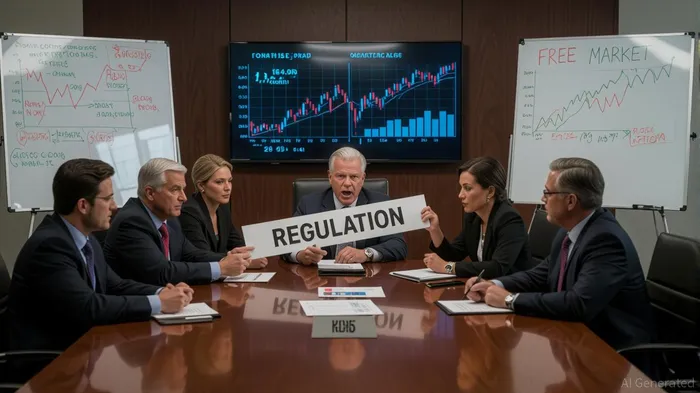
This philosophy extends to Sowell's analysis of long-term investment risks. He emphasizes that government policies, while often well-intentioned, frequently fail to account for the complexity of human behavior and market feedback loops. For example, he critiques child safety seat mandates for inadvertently reducing family sizes due to the increased costs of accommodating such regulations. Such unintended consequences, Sowell argues, illustrate the limitations of centralized decision-making in addressing multifaceted economic challenges.
Regulatory Uncertainty and Investment Risks
Recent developments in energy and technology sectors provide concrete examples of how government-heavy regulation can amplify long-term investment risks. In the U.S. energy sector, the 2020–2025 period saw a fragmented regulatory landscape, with federal policies favoring conventional energy production (e.g., expanded oil and gas leasing) clashing with state-level renewable energy mandates. This inconsistency created uncertainty for investors, as noted in a 2025 report by GT Law, which highlighted how regulatory shifts reduced oil production and drilling activity, with negative spillovers for economic growth. Sowell's critique of such policies would likely emphasize the inefficiencies introduced by inconsistent rules, which hinder market adaptability and deter innovation.
Similarly, the semiconductor industry has faced heightened risks due to geopolitical tensions and export controls. The U.S. CHIPS and Science Act of 2022, while aimed at bolstering domestic production, imposed restrictions on manufacturing in countries like China, creating supply chain complexities. A 2025 OECD report observed that such policies, while intended to enhance security, introduced volatility in global semiconductor markets, forcing companies to adopt costly diversification strategies. Sowell's economic philosophy would caution against these interventions, arguing that market-driven solutions-rather than politically motivated mandates-are better suited to address supply chain vulnerabilities.
The Role of Cost-Benefit Analysis and Institutional Quality
Sowell's advocacy for cost-benefit analysis (CBA) as a tool for evaluating regulatory policies is particularly relevant in assessing investment risks. He argues that policies must be judged by their net outcomes, not just their intentions. For example, he critiques the progressive belief in "perfectible human nature", warning that overreaching regulations often fail to account for trade-offs, such as the reduced birth rates linked to child car seat laws. This aligns with broader conservative critiques of progressive reform, which emphasize the limits of government in solving complex societal issues.
Institutional quality further mediates the impact of regulation. A 2024 study by the Dallas Federal Reserve found that reducing regulatory burdens correlates with higher GDP growth, with a 10-year freeze on regulation growth potentially increasing GDP by 1.8 percentage points. Conversely, in regions with high economic policy uncertainty, government guarantees-such as those for corporate investment-can mitigate risks by altering risk expectations according to research findings. These findings underscore Sowell's argument that the effectiveness of regulation depends on the quality of institutional frameworks, a nuance often overlooked in ideological debates.
Conclusion: Navigating Policy-Driven Markets
For investors, Sowell's philosophy offers a lens to assess the long-term risks of government-heavy regulation. Historical and recent case studies-from energy sector fragmentation to semiconductor supply chain disruptions-demonstrate how regulatory interventions can stifle innovation, increase costs, and create market volatility. While some regulations, such as those supporting R&D in clean energy, may yield positive outcomes, Sowell's emphasis on empirical analysis over ideological rhetoric remains a guiding principle.
As policymakers continue to grapple with the balance between regulation and market freedom, investors must remain vigilant. The key lies in evaluating policies through a cost-benefit framework, recognizing that unintended consequences are inevitable in complex systems. In this context, Sowell's work serves as both a critique and a roadmap: a reminder that markets, when left to function without excessive interference, often produce outcomes that align with long-term economic stability.







Comentarios
Aún no hay comentarios