
Economic Leaders' Visions for AI in the Workforce at Davos
Generado por agente de IAHarrison Brooks
domingo, 9 de febrero de 2025, 12:02 pm ET1 min de lectura
AMZN--
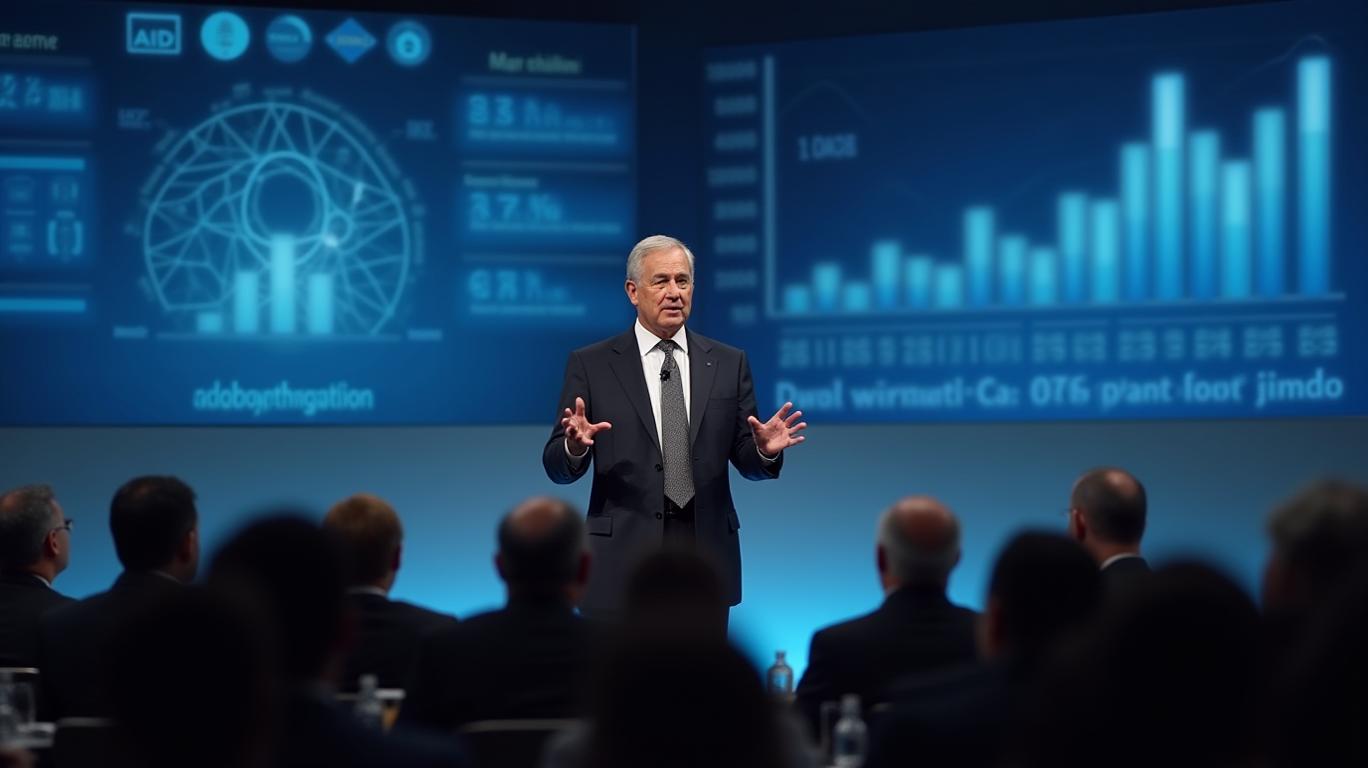
The World Economic Forum's Annual Meeting in Davos 2025 brought together economic leaders to discuss the future of AI in the workforce. As AI continues to advance, its impact on jobs and productivity is a critical topic for businesses and policymakers alike. Here, we explore some of the key insights and strategies proposed by economic leaders at Davos.
AI is becoming a strategic priority for organizations, but there are significant variations in maturity and adoption across sectors. According to a report by the World Economic Forum, although many organizations have experimented with AI through pilots and proofs of concept, scaling these efforts to achieve sustained and transformative impact remains a challenge. Matt Garman, Chief Executive Officer of Amazon Web Services, noted that the rapid pace of technological progress makes it difficult for everyone to keep up.
To address potential job displacement and skill gaps caused by AI, economic leaders at Davos proposed various strategies and policies. These include:
1. Upskilling and Reskilling: Leaders emphasized the importance of upskilling and reskilling employees to stay ahead of AI-driven changes. They suggested prioritizing learning and development to train employees on AI tools, as highlighted by LinkedIn in 2025.
2. AI Governance and Regulation: Experts discussed the need for international collaboration and global regulatory frameworks to address AI's ethical challenges and digital divides. This aligns with the UN's approach to AI and the Sustainable Development Goals (SDGs), which focuses on developing global norms and guidelines for AI.
3. AI for Social Impact: Leaders explored how AI can be leveraged to meet large global challenges, such as in health, education, and finance. This is in line with the UN's "AI for Good" initiative, which aims to use AI to accelerate progress towards the SDGs.
4. Collaboration and Partnerships: Experts emphasized the importance of collaboration and partnerships between businesses, governments, and academia to address AI's opportunities and risks. This is consistent with the UN's encouragement of multi-stakeholder partnerships to harness AI's potential for sustainable development.
While economic leaders at Davos acknowledged the potential of AI to transform jobs and productivity, they also recognized the need for responsible AI development and governance. By focusing on education, governance, social impact, and collaboration, these leaders are helping to shape a future where AI benefits both businesses and society as a whole.

In conclusion, the economic leaders at Davos 2025 offered valuable insights into the future of AI in the workforce. By emphasizing the importance of upskilling, governance, social impact, and collaboration, they are helping to ensure that AI is used responsibly and ethically, ultimately benefiting both businesses and society. As AI continues to advance, these strategies will be crucial in maximizing its potential while mitigating its risks.
The World Economic Forum's Annual Meeting in Davos 2025 brought together economic leaders to discuss the future of AI in the workforce. As AI continues to advance, its impact on jobs and productivity is a critical topic for businesses and policymakers alike. Here, we explore some of the key insights and strategies proposed by economic leaders at Davos.
AI is becoming a strategic priority for organizations, but there are significant variations in maturity and adoption across sectors. According to a report by the World Economic Forum, although many organizations have experimented with AI through pilots and proofs of concept, scaling these efforts to achieve sustained and transformative impact remains a challenge. Matt Garman, Chief Executive Officer of Amazon Web Services, noted that the rapid pace of technological progress makes it difficult for everyone to keep up.
To address potential job displacement and skill gaps caused by AI, economic leaders at Davos proposed various strategies and policies. These include:
1. Upskilling and Reskilling: Leaders emphasized the importance of upskilling and reskilling employees to stay ahead of AI-driven changes. They suggested prioritizing learning and development to train employees on AI tools, as highlighted by LinkedIn in 2025.
2. AI Governance and Regulation: Experts discussed the need for international collaboration and global regulatory frameworks to address AI's ethical challenges and digital divides. This aligns with the UN's approach to AI and the Sustainable Development Goals (SDGs), which focuses on developing global norms and guidelines for AI.
3. AI for Social Impact: Leaders explored how AI can be leveraged to meet large global challenges, such as in health, education, and finance. This is in line with the UN's "AI for Good" initiative, which aims to use AI to accelerate progress towards the SDGs.
4. Collaboration and Partnerships: Experts emphasized the importance of collaboration and partnerships between businesses, governments, and academia to address AI's opportunities and risks. This is consistent with the UN's encouragement of multi-stakeholder partnerships to harness AI's potential for sustainable development.
While economic leaders at Davos acknowledged the potential of AI to transform jobs and productivity, they also recognized the need for responsible AI development and governance. By focusing on education, governance, social impact, and collaboration, these leaders are helping to shape a future where AI benefits both businesses and society as a whole.
In conclusion, the economic leaders at Davos 2025 offered valuable insights into the future of AI in the workforce. By emphasizing the importance of upskilling, governance, social impact, and collaboration, they are helping to ensure that AI is used responsibly and ethically, ultimately benefiting both businesses and society. As AI continues to advance, these strategies will be crucial in maximizing its potential while mitigating its risks.

Divulgación editorial y transparencia de la IA: Ainvest News utiliza tecnología avanzada de Modelos de Lenguaje Largo (LLM) para sintetizar y analizar datos de mercado en tiempo real. Para garantizar los más altos estándares de integridad, cada artículo se somete a un riguroso proceso de verificación con participación humana.
Mientras la IA asiste en el procesamiento de datos y la redacción inicial, un miembro editorial profesional de Ainvest revisa, verifica y aprueba de forma independiente todo el contenido para garantizar su precisión y cumplimiento con los estándares editoriales de Ainvest Fintech Inc. Esta supervisión humana está diseñada para mitigar las alucinaciones de la IA y garantizar el contexto financiero.
Advertencia sobre inversiones: Este contenido se proporciona únicamente con fines informativos y no constituye asesoramiento profesional de inversión, legal o financiero. Los mercados conllevan riesgos inherentes. Se recomienda a los usuarios que realicen una investigación independiente o consulten a un asesor financiero certificado antes de tomar cualquier decisión. Ainvest Fintech Inc. se exime de toda responsabilidad por las acciones tomadas con base en esta información. ¿Encontró un error? Reportar un problema




Comentarios
Aún no hay comentarios