
The Economic and Investment Risks of Trump's Tariff Policies
The economic and investment risks of President Trump's 2025 tariff policies have crystallized into a formidable challenge for U.S. consumers, global trade, and financial markets. By imposing some of the highest import tariffs in modern history-pushing the weighted average applied tariff rate to 17.6% and the effective rate to 12.5%-the administration has triggered a cascade of macroeconomic and market disruptions. These policies, while framed as a strategy to protect domestic industries, have instead exacerbated inflation, stifled GDP growth, and sown uncertainty among investors.
The Burden on U.S. Consumers
The immediate and most visible impact of Trump's tariffs has been on American households. According to a report by the Tax Foundation, the average U.S. household faced an additional tax-like burden of $1,200 in 2025 due to these tariffs. This burden has translated into sharp price increases for everyday goods, with consumers paying 39% more for shoes and 37% more for apparel. The broader price level has risen by 1.8% in the short run, equivalent to a $2,400 annual income loss per household. These costs are not merely theoretical; they represent a tangible erosion of purchasing power, particularly for middle- and lower-income families.
Macroeconomic Consequences
The macroeconomic toll of these tariffs is equally concerning. 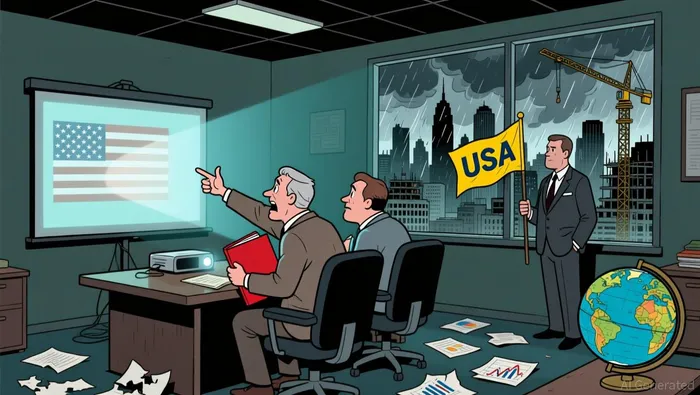 The Trump administration's trade policies are projected to reduce U.S. GDP by 0.6% in the long run before foreign retaliation, and by 0.8% when retaliatory measures are factored in. The Yale Budget Lab estimates that the U.S. economy is persistently 0.4% smaller in the long run due to these tariffs, equivalent to $125 billion in annual losses. Additionally, the unemployment rate is expected to rise by 0.3 percentage points by the end of 2025 and 0.7 percentage points by the end of 2026. These figures underscore a paradox: policies intended to bolster domestic industries are instead dampening overall economic activity and job creation.
Global Trade Disruptions
Globally, Trump's tariffs have disrupted trade flows and strained international relationships. U.S. imports dropped 5.1% to $340.4 billion in August 2025, while the trade deficit fell sharply by 24% to $59.6 billion during the same period. However, this decline masks deeper imbalances. For instance, U.S. imports from China plummeted 16.9%, reflecting the direct impact of retaliatory measures. Meanwhile, the U.S.-UK trade deal-a rare bright spot-boosted exports to the UK by 19.4%. These divergent outcomes highlight the uneven and unpredictable nature of Trump's tariff strategy, which has created winners and losers in the global trading system.
Investment Risks and Market Volatility
The investment risks associated with these policies have been profound. Trump's April 2025 tariff announcements triggered a 10% two-day drop in the S&P 500, signaling acute market volatility. This turbulence stems from uncertainty over the duration and scope of tariffs, which complicate corporate planning and investor confidence. For example, China's retaliatory 84% tariff on U.S. goods further exacerbated market declines. Institutional investors have responded by shifting capital toward sectors less exposed to tariffs, such as technology and cybersecurity, while sectors like automotive and retail face significant headwinds.
Investor confidence has also eroded. The VIX index, a key gauge of market fear, spiked to levels reminiscent of the 2008 financial crisis and the early stages of the COVID-19 pandemic. Simultaneously, the U.S. dollar depreciated by 12% against the euro, undermining its traditional role as a safe-haven asset. These developments reflect a broader reevaluation of U.S. financial assets by global investors, driven by policy uncertainty and the compounding effects of tariffs.
Long-Term Implications
The long-term implications of these policies are equally troubling. Economic models from the Federal Reserve Bank of San Francisco suggest that tariffs initially reduce inflation but eventually lead to inflationary pressures peaking three years post-implementation. This dynamic, combined with the risk of stagflation-a scenario of high inflation and stagnant growth-poses a dual threat to equities and fixed-income markets. For investors, the lesson is clear: diversification and low-volatility strategies are increasingly critical to navigating this uncertain environment.
Conclusion
Trump's 2025 tariff policies have delivered a one-two punch to the U.S. economy and global markets. While the administration's rhetoric emphasizes protectionism, the reality is a landscape of higher costs, reduced growth, and heightened volatility. For investors, the risks are manifold: from sector-specific shocks to broader macroeconomic instability. As the data from the Tax Foundation, Yale Budget Lab, and global financial institutions demonstrates, the long-term costs of these policies far outweigh their short-term benefits. In this climate, prudence and adaptability will be the hallmarks of successful investment strategies.







Comentarios
Aún no hay comentarios