
The Economic and Investment Risks of Trump’s Tariff Policies
President Donald Trump’s 2025 tariff policies, framed as a strategy to revive U.S. manufacturing, have instead triggered a cascade of economic and investment risks. The sector-specific job losses in manufacturing and trade, coupled with rising production costs and policy uncertainty, are reshaping equity and commodity markets. This analysis examines the data, implications, and broader economic consequences of these policies.
Sector-Specific Job Losses: A Manufacturing Crisis
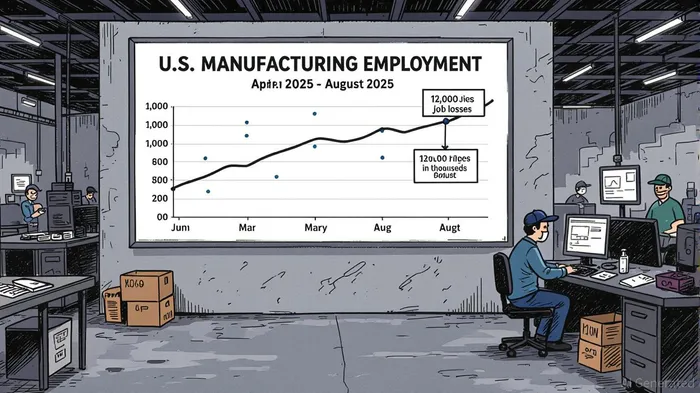
The Trump administration’s 2025 tariffs—levies as high as 50% on key trading partners—have devastated the manufacturing sector. According to a report by the Center for American Progress, U.S. manufacturing employment plummeted by 42,000 jobs since April 2025, with 12,000 lost in August alone, marking the fourth consecutive month of declines [1]. The Bureau of Labor Statistics corroborates this, noting a total of 78,000 jobs lost in the sector since August 2024 [5].
The economic rationale for these tariffs—to incentivize domestic production—has faltered. Instead, manufacturers face soaring input costs, as nearly one-third of their intermediate goods are imported [2]. For example, an electrical equipment firm cited in the Institute for Supply Management report raised prices by 24% to offset tariffs and cut 15% of its workforce [2]. The ripple effects extend to related sectors: wholesale trade lost 34,000 jobs, while transportation equipment manufacturing shed 14,500 positions due to strikes and reduced demand [4].
Equity Market Volatility and Sectoral Vulnerabilities
The equity markets have responded to these developments with heightened volatility. Tariff-driven cost inflation has squeezed manufacturing margins, prompting companies like CaterpillarCAT-- and Yum BrandsYUM-- to warn of supply chain disruptions and reduced profitability [3]. The S&P 500’s materials and industrial sectors have underperformed, reflecting investor concerns over margin compression.
Moreover, the labor market slowdown has amplified expectations for a Federal Reserve rate cut. A weak August jobs report—adding just 22,000 jobs and pushing the unemployment rate to 4.3%, the highest in nearly four years [4]—has driven 10-year Treasury yields down to 4.08% [1]. This environment has created a mixed landscape for equities: while consumer discretionary and communication services sectors have outperformed, materials and healthcare stocks have lagged [2].
Commodity Market Pressures and Inflationary Risks
Commodity markets are equally vulnerable. J.P. Morgan Global Research highlights that tariffs have disproportionately impacted base metals like copper and aluminum, which face downward pressure due to reduced industrial demand [2]. Conversely, gold prices have surged to $3,655 per ounce as a safe-haven asset, reflecting investor flight from risk amid policy uncertainty [1].
The U.S. dollar, traditionally a beneficiary of global trade tensions, faces headwinds. If growth slows further, demand for dollar-denominated assets could wane, leading to depreciation [4]. Meanwhile, crude oil prices have dipped to $61.95 per barrel, as trade restrictions dampen long-term demand [1].
Broader Economic Risks: Stagflation and Long-Term Scarring
The PennPENN-- Wharton Budget Model (PWBM) projects that Trump’s tariffs will reduce long-run GDP by 6% and wages by 5%, compounding the immediate job losses [3]. These policies have also exacerbated inflationary pressures, with the overall price level rising by 2.3% in the short term [5]. Households at the lower end of the income distribution bear the brunt, as tariffs disproportionately affect essential goods [5].
The labor market’s fragility is further underscored by stagnant wage growth. Manufacturing wages rose by just 10 cents per hour in July 2025 [1], while unemployment for Black workers has spiked [4]. Such disparities risk deepening social and economic divides, with long-term implications for consumer spending and market stability.
Investment Implications and Strategic Considerations
For investors, the key risks lie in sectoral concentration and macroeconomic volatility. Equities in manufacturing, materials, and commodity-linked industries face near-term headwinds, while defensive assets like gold and Treasury bonds may offer refuge. However, the long-term outlook remains uncertain: if trade policies stabilize, productivity gains from domestic manufacturing could eventually offset current losses.
In the commodity space, a diversified approach is prudent. While base metals may underperform, energy and precious metals could benefit from inflationary pressures and safe-haven demand. Currency hedging strategies may also be necessary to mitigate dollar depreciation risks.
Conclusion
Trump’s 2025 tariff policies have delivered a stark reminder of the unintended consequences of protectionism. The manufacturing sector’s collapse, coupled with broader labor market and inflationary risks, has created a volatile environment for equities and commodities. Investors must navigate these challenges with a focus on resilience, diversification, and macroeconomic foresight.
Source:
[1] Trump’s Trade War Squeezes Middle-Class Manufacturing Employment [https://www.americanprogress.org/article/trumps-trade-war-squeezes-middle-class-manufacturing-employment/]
[2] US Tariffs: What’s the Impact? | J.P. Morgan Global Research [https://www.jpmorganJPM--.com/insights/global-research/current-events/us-tariffs]
[3] The Economic Effects of President Trump’s Tariffs [https://budgetmodel.wharton.upenn.edu/issues/2025/4/10/economic-effects-of-president-trumps-tariffs]
[4] US Adds 22,000 Jobs in August as Labour Market Begins to Slow [https://www.aljazeera.com/economy/2025/9/5/us-job-growth-slows-as-trump-policies-weigh-on-labour-market]
[5] Where We Stand: The Fiscal, Economic, and Distributional Effects of All US Tariffs Enacted Through April 2025 [https://budgetlab.yale.edu/research/where-we-stand-fiscal-economic-and-distributional-effects-all-us-tariffs-enacted-2025-through-april]







Comentarios
Aún no hay comentarios