
The Economic and Investment Implications of a U.S. Government Shutdown
Government shutdowns in the United States, though infrequent, have historically acted as economic stress tests, exposing vulnerabilities in public services and creating ripple effects across markets. As the nation grapples with a deteriorating fiscal outlook—federal debt projected to hit 106% of GDP by 2027[1]—investors must navigate a landscape where shutdown risks and fiscal policy shifts intersect. This analysis explores sector-specific opportunities in essential services and crisis-resilient assets, drawing from historical shutdown impacts and current fiscal trends.
Historical Sector Performance During Shutdowns
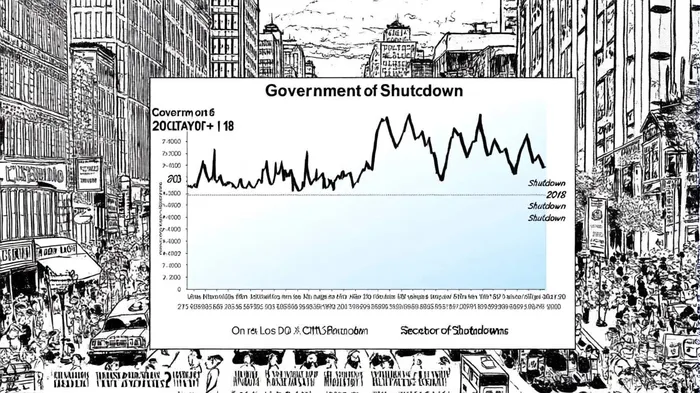
Government shutdowns disproportionately disrupt non-essential services while leaving certain sectors relatively unscathed—or even bolstered. For instance, during the 2018–2019 shutdown, the Congressional Budget Office estimated a $11 billion economic loss, including $3 billion in permanently lost GDP[2]. Yet, markets demonstrated resilience: the S&P 500 not only recovered pre-shutdown levels but outperformed expectations[3]. This duality highlights the importance of sector-specific positioning.
Healthcare and Utilities: Essential services like healthcare and utilities have historically outperformed during shutdowns. The healthcare sector, for example, has delivered an average annual return of 12.45% since 1974, with minimal negative returns[4]. Similarly, utilities, averaging 10.05% annual returns, benefit from inelastic demand and stable cash flows[4]. During the 2018 shutdown, healthcare services continued uninterrupted, while utilities maintained operations despite broader economic turbulence.
Defense and Infrastructure: Defense-related assets, often tied to industrial sectors, have shown resilience due to their reliance on long-term contracts and bipartisan funding priorities. The defense sector's average annual return of 12.97% underscores its appeal during political uncertainty[4]. Meanwhile, infrastructure—particularly crisis-resilient assets like the U.S. Postal Service—remains operational during shutdowns due to self-funding mechanisms[2]. However, broader infrastructure projects face delays, as seen in halted flood insurance processing during the 2013 shutdown[5].
Safe-Haven Assets: Gold, a classic crisis-resilient asset, has historically gained traction during shutdowns. Investor flight to safety during the 2013 and 2018 shutdowns drove gold prices upward, reflecting heightened risk aversion[3].
Current Fiscal Policy Trends and Investment Opportunities
The U.S. fiscal landscape in 2025 is shaped by two competing forces: unsustainable debt growth and a push for infrastructure modernization. Federal debt is projected to reach 200% of GDP by 2047[1], yet bipartisan support for infrastructure remains robust. The Inflation Reduction Act (IRA) and state-level initiatives like Pennsylvania's Rapid Bridge Replacement program highlight a strategic pivot toward public-private partnerships (P3s) and value capture instruments[6].
Infrastructure as a Crisis-Resilient Asset: The American Society of Civil Engineers (ASCE) estimates a $3.7 trillion investment gap to repair U.S. infrastructure[6]. P3s, which leverage private capital and expertise, are increasingly critical. For example, Pennsylvania's P3-driven bridge program repaired 558 structures in four years, demonstrating scalability[6]. Investors in infrastructure funds, such as the MSCI Private Infrastructure index, have seen stable capital growth despite macroeconomic volatility[7].
Debt Sustainability and Sector Rebalancing: As federal borrowing costs rise, sectors insulated from fiscal drag—like healthcare and utilities—become more attractive. The GAO's call for fiscal rules and tax reform[1] suggests long-term policy shifts that could favor sectors with stable cash flows over cyclical industries.
Strategic Investment Implications
- Essential Services: Prioritize healthcare and utilities, which offer defensive characteristics during shutdowns. For example, healthcare REITs and utility stocks with regulated earnings streams provide downside protection.
- Infrastructure: Allocate capital to P3-enabled projects and digital infrastructure (e.g., data centers), which are less exposed to government funding delays. The ASCE's 2025 “C” grade for U.S. infrastructure[8] signals growing demand for modernization.
- Safe-Haven Assets: Maintain a tactical allocation to gold and Treasury bonds, which historically perform well during shutdown-driven uncertainty.
Conclusion
Government shutdowns, while disruptive, create asymmetric opportunities for investors attuned to sector-specific dynamics. Essential services and crisis-resilient assets—backed by historical performance and current fiscal policy trends—offer a hedge against political uncertainty. As the U.S. navigates a fiscal crossroads, strategic allocations to healthcare, infrastructure, and safe-haven assets will be pivotal in mitigating shutdown risks while capitalizing on long-term growth.







Comentarios
Aún no hay comentarios