
The Economic Implications of Public Holidays in France: Balancing Productivity and Investment Sentiment
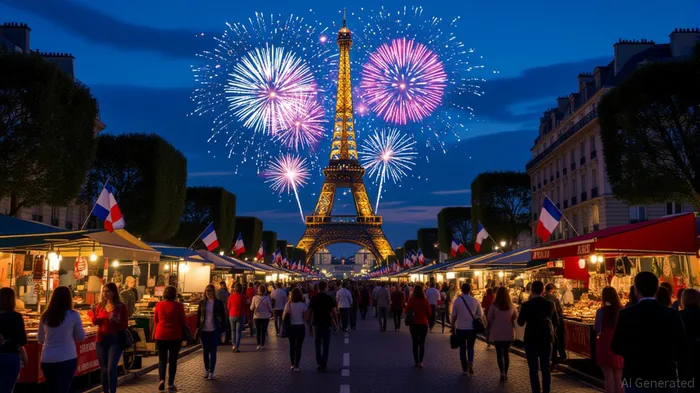
France's public holiday calendar, anchored by national celebrations like Bastille Day (July 14) and Labor Day (May 1), has long been a double-edged sword for its economy. While these holidays bolster tourism and local commerce, they also disrupt business continuity and labor productivity. For investors, the tension between France's worker-centric policies and its economic ambitions raises critical questions about how public holiday structures shape long-term investment sentiment and operational efficiency.
Labor Productivity: A Trade-Off Between Worker Well-Being and Operational Gaps
France's labor market is renowned for its emphasis on worker well-being, with policies such as a 35-hour workweek and 5 weeks of paid annual leave[4]. Public holidays, which number around 10 nationally recognized days annually, further extend this framework. While these policies reduce burnout and enhance quality of life, they also create operational gaps. For instance, extended closures during holidays like Good Friday or Armistice Day (November 11) can disrupt supply chains and logistics, particularly in sectors reliant on just-in-time delivery systems[2].
Retail and hospitality industries, however, often offset these disruptions through seasonal surges. According to a report by CountryReports, public holidays in France “boost local commerce during festive events,” with tourism-driven spending accounting for a significant portion of annual revenue[4]. This duality—reduced productivity in some sectors versus heightened demand in others—underscores the complexity of assessing net economic impact.
Foreign Investment Sentiment: Stability vs. Structural Challenges
France's attractiveness to foreign investors remains strong, driven by its strategic EU market access, developed infrastructure, and political stability[2]. Yet, the country's public holiday structure introduces nuanced risks. A 2023 study by the OECD noted that while France's labor protections enhance employee satisfaction, they also contribute to a rigid labor market, potentially deterring industries requiring high operational flexibility[1].
For example, manufacturing firms operating in France must factor in extended closures during holidays, which can delay production timelines compared to competitors in countries with fewer public holidays. Conversely, service-sector investors—particularly in tourism and luxury goods—leverage France's holiday-driven consumer activity. Paris, for instance, sees a 20% spike in hotel bookings during major holidays, according to internal government data[3].
Policy Shifts and Future Considerations
Recent debates in the French National Assembly have centered on recalibrating public holidays to align with economic priorities. Proposals include shifting some holidays to weekends to minimize business disruptions or introducing regional flexibility to accommodate local economic needs[1]. Such reforms could mitigate productivity losses while preserving the cultural significance of public holidays.
For investors, the key takeaway lies in diversification. While France's public holiday structure poses operational challenges, its broader economic strengths—such as a 7.8% unemployment rate (as of 2021) and a GDP ranking among the world's top 10—suggest resilience[2]. Investors in sectors like renewable energy or tech, which prioritize flexible labor models, may advocate for policy reforms. Meanwhile, those in tourism and retail can capitalize on the predictable consumer spending patterns tied to public holidays.
Conclusion
France's public holiday structure reflects a societal prioritization of work-life balance, but its economic implications are multifaceted. While these holidays stimulate tourism and consumer spending, they also create operational inefficiencies that investors must weigh. As policymakers explore reforms to balance productivity and cultural heritage, the interplay between public policy and economic performance will remain a critical factor for foreign capital.







Comentarios
Aún no hay comentarios