
The Economic Implications of 'Job Lock' and the Rise of Universal Healthcare on U.S. Labor and Financial Markets
The U.S. labor market is at a crossroads, with "job lock"-the phenomenon where employees remain in their positions solely to retain employer-sponsored healthcare-exerting a profound drag on workforce mobility and economic dynamism. Recent data underscores this reality: the labor market added an average of just 17,000 jobs per month in the six months leading to November 2025, a stark decline from earlier in the year. Meanwhile, employer-sponsored healthcare premiums have surged to $8,951 for single coverage and $25,572 for family coverage in 2024, creating a financial anchor that discourages job transitions. This dynamic is particularly acute for younger workers and those in smaller firms, where only 53% of employers offer health benefits.
The potential shift toward Medicare for All could disrupt this status quo. By decoupling healthcare access from employment, such a policy would reduce the economic penalty of job-hopping, thereby enhancing labor market flexibility. According to a report by the American Benefits Council, employer-sponsored healthcare reduces after-tax employee compensation significantly, reinforcing the value of employer-linked coverage as a key factor in labor market stability. If universal healthcare eliminates this dependency, workers could prioritize roles aligned with skills, innovation, or entrepreneurship rather than healthcare continuity. This could catalyze a reinvigoration of labor churn, particularly in sectors like tech and healthcare, where talent mobility is critical to growth.
Workforce Mobility and Regional Impacts
The labor market implications of Medicare for All extend beyond individual decision-making. A 2025 Deloitte global health care outlook highlights that over 70% of health system leaders prioritize improving operational efficiencies and productivity. With universal healthcare reducing the need for employers to subsidize health benefits, companies could reallocate resources toward higher-value investments, such as AI-driven automation or workforce upskilling. This shift could accelerate in regions facing acute healthcare worker shortages, such as North Carolina, which projects a significant deficit in family medicine by 2028.
Regional disparities in healthcare labor markets will also evolve. For instance, South Carolina's healthcare sector contributed $19 billion to its GDP in Q3 2024, with an aging population driving demand for nurse practitioners and home health aides. Under Medicare for All, such regions could see increased migration of healthcare professionals to areas with higher demand, though pay disparities may exacerbate shortages in lower-income regions according to 2025 projections. The rise of gig-style nursing schedules and locum tenens markets- projected to reach $19.5 billion by 2025-suggests that flexible staffing models will become essential to address these imbalances.
Investment Opportunities in Healthcare and Tech
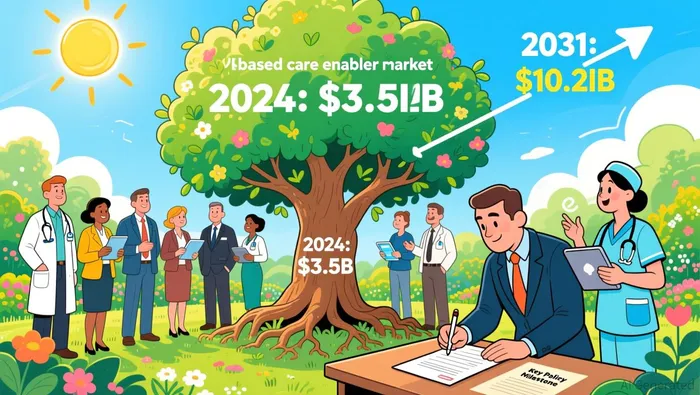
The transition to universal healthcare is poised to reshape investment landscapes in both healthcare and technology. McKinsey notes that healthcare EBITDA is projected to grow at a 7% CAGR through 2028, driven by non-acute care delivery, specialty pharmacy, and digital health. Specifically, the value-based care enabler market-focused on population health management and data interoperability-is expected to expand from $3.5 billion in 2024 to $10.2 billion by 2031. This growth is underpinned by policy mandates like CMS's push to transition all Medicare beneficiaries into value-based care by 2030.
AI and digital health represent particularly compelling opportunities. The Health Tech Investment Act (HTIA), introduced in 2025, seeks to establish a dedicated Medicare reimbursement pathway for AI-enabled medical devices. If enacted, this could accelerate adoption of tools like ambient scribing and robotic surgery, which are already generating hundreds of millions in revenue. Additionally, AI's role in administrative automation-such as reducing documentation burdens for clinicians-positions it as a strategic investment, with healthcare organizations adopting AI at twice the rate of the broader economy according to 2025 analysis.
Cybersecurity and precision medicine also offer high-growth potential. As health systems digitize, protecting sensitive data becomes paramount, while advancements in pharmacogenomics are driving demand for personalized treatments in oncology and rare diseases according to 2025 industry trends. Meanwhile, telehealth's permanence-solidified by extended Medicare coverage-will expand access to rural patients and create new revenue streams for virtual care platforms according to 2025 analysis.
For investors, balancing these risks with long-term gains will require a nuanced approach. While Medicare for All may reduce employer-sponsored healthcare's grip on labor mobility, it could also shift capital away from traditional health insurance models toward tech-driven solutions. This transition will demand patience, as regulatory hurdles and implementation delays- such as the HTIA's uncertain legislative path-could slow progress.
Conclusion
The interplay of job lock, universal healthcare, and technological innovation is reshaping the U.S. labor and financial markets. By decoupling healthcare from employment, Medicare for All could unlock unprecedented workforce mobility, particularly in tech and healthcare sectors. However, this transition will require addressing regional labor shortages, cybersecurity risks, and regulatory uncertainties. For investors, the key lies in aligning with trends that prioritize efficiency, AI integration, and value-based care-sectors poised to thrive in a post-job-lock economy.







Comentarios
Aún no hay comentarios