
The Economic Impact of US Government Shutdowns on Key Sectors: Assessing Vulnerability and Resilience in Employment and Investor Confidence
Government shutdowns in the United States have long served as a litmus test for the resilience of key economic sectors and the adaptability of both workers and investors. As the 2025 shutdowns unfolded, their dual impact on employment stability and investor confidence revealed critical vulnerabilities and adaptive strategies. This analysis examines how federal workforce disruptions and market dynamics interact, offering insights for investors navigating the uncertainty of recurring fiscal crises.
Employment Vulnerabilities: A Sector-by-Sector Breakdown
The 2025 shutdowns exposed stark disparities in employment resilience across federal agencies. Agencies such as the Environmental Protection Agency (EPA), National Institutes of Health (NIH), and Federal Aviation Administration (FAA) faced severe furloughs, with the EPA alone grounding 89% of its workforce, according to a Darden analysis. The same Darden analysis indicates that furloughed employees are 31% more likely to leave their roles within a year, with young, highly educated, and female workers disproportionately affected. For agencies reliant on mission-driven professionals, such attrition risks long-term capacity erosion, as seen in the NIH's 75% furlough rate, which jeopardized ongoing scientific research, as detailed in a Squared Compass report.
Resilience metrics, however, offer a framework to quantify preparedness. Agencies like the Department of Homeland Security demonstrated robust contingency plans, retaining 58% of staff for essential functions such as air traffic control and emergency response. Recovery time objectives (RTOs) and workforce adaptability metrics-such as trained backups for critical roles-became vital indicators of operational continuity, as outlined in resilience KPIs. Yet, the threat of permanent job cuts through Reduction in Force (RIF) plans, as hinted by the Trump administration, introduced a new layer of uncertainty, shifting the focus from temporary furloughs to structural workforce instability noted in the Squared Compass report.
Investor Confidence: Market Resilience Amid Political Turbulence
Historically, financial markets have treated government shutdowns as short-term inconveniences rather than existential threats. The S&P 500 index, for instance, has averaged a 4.4% gain during shutdown periods since 1976, according to a Morgan Stanley analysis. In 2025, stocks closed at record highs despite the shutdown, reflecting investor confidence in the eventual restoration of government operations; the Morgan Stanley analysis attributes part of this resilience to expectations of fiscal resolution. This resilience is partly attributable to the Federal Reserve's dovish monetary policy, which mitigated broader economic risks, as discussed in a MarketClutch analysis.
However, sector-specific vulnerabilities persist. Defense stocks, for example, exhibited mixed performance: while they outperformed the S&P 500 during the 2018–2019 shutdown, they lagged in 2013 due to halted contracts, a pattern highlighted by MarketClutch. Similarly, healthcare sectors faced delays in FDA drug approvals, creating ripple effects in pharmaceutical innovation, a risk emphasized in the Squared Compass report. Utilities and technology, less reliant on federal contracts, remained relatively insulated, as noted by MarketClutch.
The VIX volatility index, often dubbed the "fear gauge," spiked during shutdowns, reflecting short-term uncertainty. Yet, markets typically stabilized within days, underscoring the limited long-term impact of these events, a point MarketClutch emphasizes. Morgan Stanley economists estimate that each week of shutdown reduces quarterly GDP growth by 0.05 percentage points, but these effects are largely reversed once funding resumes, per the Morgan Stanley analysis.
Quantifying the Risks: A Data-Driven Perspective
The data underscores a critical nuance: while direct economic losses are modest, prolonged shutdowns amplify indirect risks. For instance, delayed EPA inspections and NIH research could have compounding effects on environmental and public health outcomes, a concern raised in the Darden analysis. Similarly, the FAA's furlough of 11,000 employees risked cascading disruptions in air travel, indirectly affecting tourism and logistics, as reported by Squared Compass.
Strategic Implications for Investors
For investors, the 2025 shutdowns highlight the importance of sector diversification and resilience-focused portfolios. Sectors with high operational flexibility-such as technology and utilities-appear better positioned to weather political volatility. Conversely, industries tied to federal contracts or regulatory approvals (e.g., defense, healthcare) require closer scrutiny of contingency plans and agency-specific risk profiles.
Workforce resilience metrics, such as RTO and trained backup availability, should also inform investment decisions. Agencies with robust contingency frameworks, like the FAA's emphasis on remote operations noted in the resilience KPIs, may mitigate employment-related disruptions more effectively than those lacking such preparedness.
Conclusion
The 2025 government shutdowns reaffirmed the dual nature of economic resilience: while federal employment faces acute vulnerabilities, financial markets and certain sectors demonstrate remarkable adaptability. For investors, the key lies in balancing short-term volatility with long-term structural risks, leveraging data-driven insights to navigate an increasingly politicized economic landscape. As shutdowns become more frequent, the ability to distinguish between transient shocks and enduring trends will define successful investment strategies.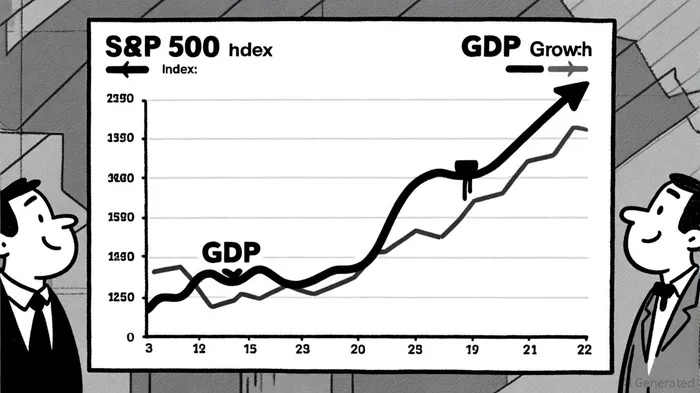







Comentarios
Aún no hay comentarios