
The Economic Fallout from Trump's Policies: Tourism Collapse and Border-State Business Crisis
The economic landscape of U.S. border states has been profoundly reshaped by the policies and rhetoric of former President Donald Trump, particularly in the tourism and hospitality sectors. From 2020 to 2025, antagonistic statements toward Canada, coupled with tariffs and trade disruptions, triggered a sharp decline in cross-border tourism. This has left small businesses in border communities reeling, while Canadian provinces have seized the opportunity to redirect investment and growth toward domestic and international tourism. For investors, the fallout presents a stark contrast: high-risk exposure in U.S. border states versus emerging opportunities in Canada's tourism-dependent sectors.
The U.S. Border-State Tourism Crisis
The U.S.-Canada border, once a bustling corridor for cross-border commerce and leisure, has become a symbol of economic fragility. According to a Bloomberg report, Trump's policies are estimated to have cost the U.S. economy $12.5 billion in tourism revenue in 2025 alone, as travelers shifted to alternative destinations. In Maine, a state heavily reliant on Canadian visitors, the impact has been devastating. Nearly 750,000 fewer land crossings were recorded through November 2025 compared to pre-Trump levels, leading to a 3.3% decline in taxable retail sales in border areas between February and August 2025. Restaurant and lodging sales in these regions fell nearly 5% year-over-year, exacerbating the struggles of small businesses already grappling with post-pandemic recovery.
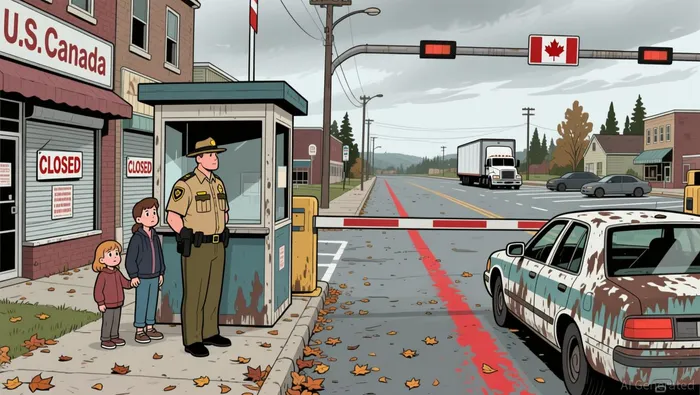
The crisis extends beyond Maine. In Vermont, Canadian credit card spending dropped 55% in September 2025 compared to 2024, while overall Canadian tourism in the state fell by nearly one-third since Trump took office. Similar patterns emerged in New Hampshire and Washington, where businesses reported "fewer tourists, higher hotel vacancy rates, and a noticeable impact on revenue streams". The U.S. Travel Association projects a $5.7 billion decline in international tourism spending in 2025, with Canadian visitors accounting for the lion's share of the loss.
Canadian Tourism's Resilience and Strategic Pivot
While U.S. border states face a tourism collapse, Canada has leveraged the crisis to strengthen its own tourism sector. Domestic travel surged as Canadians opted to explore their own provinces, with summer 2025 revenue reaching nearly $60 billion-a record high driven by domestic and international visitors. Provinces like Ontario and British Columbia capitalized on this shift, with Ontario's Indigenous tourism sector reporting increased demand for cultural experiences such as storytelling and traditional workshops.
Federal investments have further bolstered Canada's tourism resilience. The Tourism Growth Program (TGP), allocating $108 million over three years, prioritizes Indigenous-led initiatives and rural development, with 15% of funding dedicated to Indigenous tourism. Budget 2025 also introduced $570 million in Labour Market Development Agreements and $382.9 million in Workforce Alliances funding, targeting skills development in hospitality and service occupations. These measures have supported over 1.8 million jobs in 2025, underscoring tourism's role as a cornerstone of Canada's economy.
Investment Risks and Alternatives
For investors, the U.S. border-state tourism sector remains fraught with risk. Small businesses in Maine, Vermont, and Washington face prolonged revenue declines, with some reporting sales drops of up to 80%. The ripple effects extend to wineries, festivals, and educational institutions, which rely on cross-border activity for sustainability. In contrast, Canada's tourism sector offers a more stable outlook. Provinces like British Columbia have seen growth in non-U.S. international visitors from the U.K., Mexico, and China, while Indigenous and rural tourism initiatives are attracting domestic and global attention.
However, Canadian tourism is not without challenges. Indigenous tourism operators, for instance, face financial strain due to lost U.S. bookings and reduced federal funding. Yet, government campaigns like "Original Original" and the Canada Strong Pass have mitigated some of these pressures by promoting domestic travel and cultural immersion.
Conclusion
The economic fallout from Trump's policies has created a stark divide between U.S. border states and Canadian tourism markets. While the former grapple with a tourism collapse and business closures, the latter have demonstrated resilience through strategic investments and adaptive policies. For investors, the risks in U.S. border regions are clear, but so are the opportunities in Canada's tourism-dependent sectors-particularly in Indigenous and rural tourism, where growth is supported by both public and private initiatives. As global travel patterns continue to evolve, the lessons from this crisis highlight the importance of diversification and geopolitical agility in tourism-driven economies.







Comentarios
Aún no hay comentarios