
The Economic Development Catalysts in Webster, NY
The FAST NY Grant and Xerox Campus Redevelopment
The cornerstone of Webster's economic revival is the $9.8 million FAST NY grant, which funded critical infrastructure upgrades at the former Xerox campus. These improvements included road reconstruction, sewer system enhancements, and electrical grid modernization, creating a foundation for the Northeast Area for Technology (NEAT) industrial park. By addressing long-standing infrastructure deficits, the grant enabled the site to attract high-demand sectors such as food processing, semiconductor manufacturing, and logistics. A key milestone in this transformation is the planned $650 million fairlife® dairy facility, which is projected to generate 250 high-paying jobs by 2025. This project underscores how targeted infrastructure investment can unlock private-sector capital and create a ripple effect across local economies.
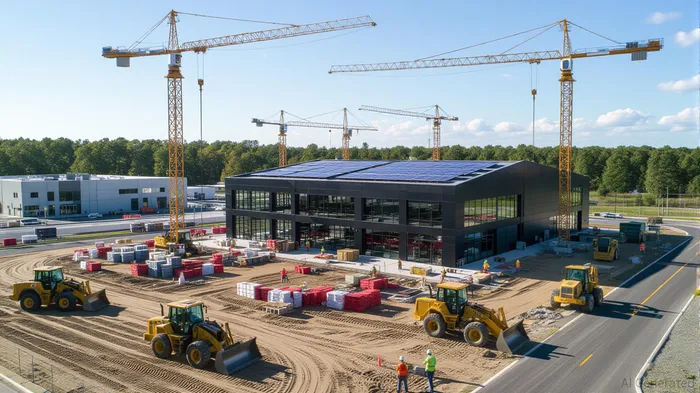 The success of the Xerox campus redevelopment is further amplified by Webster's strategic location. Proximity to Rochester International Airport and major transportation corridors has enhanced the town's appeal as a logistics and manufacturing hub. According to a 2025 report by the National League of Cities, such connectivity is a critical factor in attracting industrial investment, particularly in secondary markets where land availability and lower costs offset the challenges of aging infrastructure.
Economic Impact and Real Estate Growth
The infrastructure-driven renewal of Webster has yielded measurable economic benefits. Industrial vacancy rates at the NEAT site have plummeted to 2%, a stark contrast to the national average of 8.5% in 2025. This demand has been fueled by the influx of advanced manufacturing firms and the broader national trend of reshoring, which has increased demand for industrial real estate, particularly for smaller properties under 100,000 square feet.
Residential property values in Webster have also surged, rising by 10.1% annually since 2023. This growth reflects the symbiotic relationship between industrial development and real estate markets, where job creation and infrastructure improvements drive household income and housing demand. A 2023 Lincoln Institute of Land Policy report highlights that such synergies are increasingly common in "legacy cities" undergoing green regeneration, where climate-resilient infrastructure projects further enhance long-term value.
Broader Implications for Small-Town Industrial Hubs
Webster's experience aligns with national trends in infrastructure investment and asset allocation. While major cities continue to attract high-impact projects like data centers and public transit, secondary markets are outperforming them in industrial real estate growth. A 2025 Cushman & Wakefield analysis notes that secondary markets accounted for 45.1 million square feet of net absorption in Q3 2025, driven by lower costs and available land. This shift is particularly evident in small-town industrial hubs, where strategic infrastructure spending can bridge the gap between underutilized assets and high-demand sectors.
However, challenges persist. Nationally, infrastructure funding gaps remain significant, with wastewater and stormwater systems requiring $3.7 trillion in investment by 2025. For towns like Webster, the ability to secure grants like the FAST NY program and the NY Forward Program ($4.5 million) is critical to sustaining momentum. These programs exemplify the growing role of federal and state support in addressing infrastructure deficits, particularly in communities where local governments bear 71.6% of funding responsibilities.
Conclusion: A Model for Sustainable Development
Webster, NY, offers a blueprint for how small-town industrial hubs can leverage infrastructure investment to drive economic resilience. By transforming a brownfield into a high-tech industrial park, the town has not only attracted private capital but also stimulated residential growth and job creation. For investors, the NEAT site's projected completion by 2026 presents a limited window to acquire assets at pre-peak pricing, as infrastructure milestones drive market demand.
As the U.S. grapples with the dual challenges of aging infrastructure and shifting economic priorities, Webster's success underscores the potential of secondary markets to outperform major cities in industrial real estate. By prioritizing strategic infrastructure upgrades and fostering public-private collaboration, small-town hubs can position themselves as engines of long-term value creation in an increasingly competitive landscape.





Comentarios
Aún no hay comentarios