
The Economic Consequences of Delayed Monetary Policy Interventions: Investor Preparedness in an Era of Extended Volatility
The Federal Reserve's struggle to rein in inflation in 2024 and 2025 has underscored a timeless truth: delayed monetary policy interventions amplify market volatility and economic instability. By the start of 2025, the Fed had raised the federal funds rate to 5.5%-5.75%, a hawkish stance aimed at curbing persistent inflation above its 2% target. Yet, as a Chicago Fed analysis shows, the full effects of these tightening measures-both on GDP and inflation- have yet to materialize. About two-thirds of the policy's impact on economic output and three-quarters on inflation have already manifested, but the labor market remains a wildcard, with over half of the effects on employment still pending. This lag, combined with global spillovers from U.S. monetary policy uncertainty (MPU), has created a volatile environment for investors.
The Cost of Delayed Action
Historical and contemporary case studies confirm that delayed policy responses exacerbate economic turbulence. During the 2008 financial crisis, central banks resorted to unconventional tools like quantitative easing (QE) after initial inaction worsened the downturn, as documented in a Journal of International Economics study. Similarly, the 1970s stagflation crisis demonstrated how misaligned monetary policy-failing to address inflation promptly-led to prolonged instability. Today, the Fed's cautious approach to adjusting rates amid a flattened Phillips curve-a relationship between inflation and unemployment that has weakened-has further complicated its policy calculus, according to a Federal Reserve note.
The consequences of delayed action are not confined to the U.S. That Journal of International Economics study found that U.S. MPU shocks have amplified global volatility, particularly in economies lacking robust macroprudential policies or capital controls. For instance, emerging markets with weaker financial systems face sharper declines in equity prices and economic activity when U.S. policy uncertainty spikes. This interconnectedness underscores the need for central banks to act decisively, yet the Fed's recent tightening cycle has been marked by uncertainty about its own tools' efficacy. Research from an IMF working paper notes that U.S. monetary policy transmission weakened in early 2022, with policy shocks 25% less effective in influencing activity and inflation compared to historical norms.
Investor Preparedness: Strategies for Navigating Volatility
For investors, the lesson is clear: prepare for prolonged uncertainty. Diversification remains a cornerstone strategy. By spreading investments across asset classes, sectors, and geographies, investors can mitigate the impact of localized downturns, as the Chicago Fed analysis emphasizes. Defensive assets-such as consumer staples, utilities, and high-quality bonds-offer stability during periods of market stress, a point reinforced in a Kansas City Fed review. Tactical adjustments, like increasing bond exposure during equity declines, can further cushion portfolios.
Dollar-cost averaging, a strategy of investing fixed amounts at regular intervals, also helps smooth out market fluctuations and reduces the emotional toll of volatility by allowing investors to accumulate assets at lower prices during downturns. Maintaining liquidity through emergency cash reserves is equally critical, enabling investors to avoid selling assets at a loss during market selloffs, as noted in the Federal Reserve analysis cited above.
The Path Forward
The Fed's challenge lies in balancing inflation control with economic growth. While model estimates suggest that current tightening will bring inflation near the 2% target by mid-2024, the delayed effects of these policies will continue to weigh on markets. Investors must remain vigilant, leveraging tools like forward guidance analysis and high-frequency data to anticipate policy shifts, an approach discussed in the Kansas City Fed review referenced earlier.
Globally, the need for complementary policies-such as capital controls and macroprudential measures-has never been clearer, as highlighted by the Journal of International Economics study. For individual investors, the message is equally urgent: adaptability and discipline will be key to navigating an era of extended volatility.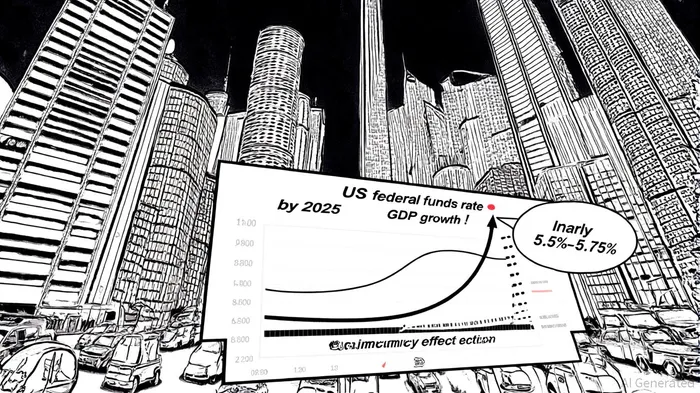







Comentarios
Aún no hay comentarios