
EchoStar Corporation: Navigating Satellite Communications and 5G Ecosystems for Long-Term Value Creation
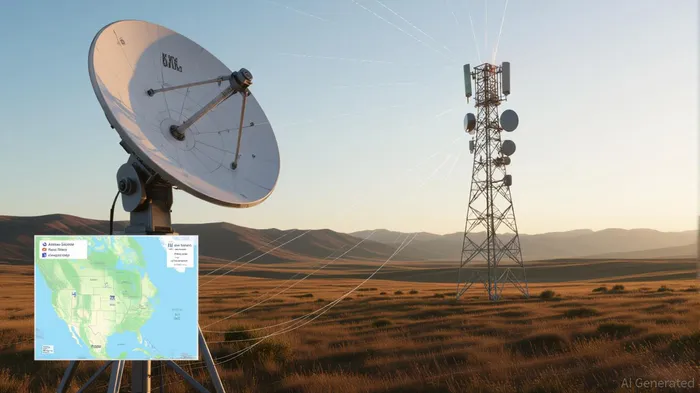
In the rapidly evolving landscape of satellite communications and 5G ecosystems, EchoStarSATS-- Corporation—parent company of DISH Network—finds itself at a critical juncture. While the company's recent special call in 2025 lacked concrete strategic announcements, broader industry trends and operational dynamics offer a framework to assess its long-term growth potential. EchoStar's ability to adapt to technological shifts, address internal challenges, and leverage partnerships will determine its role in the next phase of global connectivity.
The 2025 Satellite and 5G Convergence
The integration of satellite communications with 5G infrastructure is accelerating, driven by the need to expand broadband access to underserved regions. According to the World Economic Forum's Future of Jobs Report 2025, 86% of employers anticipate transformative changes in their sectors by 2030, with AI and data analytics amplifying demand for high-capacity networks[1]. Satellite providers are increasingly collaborating with 5G operators to deliver hybrid solutions, combining low-latency terrestrial networks with satellite coverage in remote areas. This trend aligns with global efforts to bridge the digital divide, a market projected to grow as governments and private firms prioritize universal connectivity[2].
EchoStar, with its legacy in satellite TV and broadband services, is positioned to capitalize on this shift. While the company has not yet announced 2025-specific partnerships, its technical expertise in satellite systems could make it a valuable player in hybrid 5G ecosystems. For instance, DISH Network's past explorations of mergers and spectrum acquisitions suggest a strategic intent to evolve beyond traditional satellite TV into next-generation connectivity[3].
Operational Challenges and Workforce Dynamics
Despite its technological potential, EchoStar faces significant internal hurdles. Forum discussions and employee testimonials highlight persistent issues in corporate culture and workforce retention. Customer service roles, a cornerstone of its operations in locations like Bluefield, West Virginia, and El Paso, Texas, are marked by high turnover rates and demanding shift work[4]. While the company offers competitive pay and benefits for these regions, the repetitive nature of customer interactions and rigid management practices have contributed to burnout and dissatisfaction.
These challenges are not unique to EchoStar but are amplified in industries reliant on call center operations. However, they pose a risk to long-term value creation. High turnover increases recruitment and training costs, while negative employee experiences can erode customer satisfaction. Addressing these issues—through improved workplace flexibility, better managerial training, or AI-driven customer service tools—could enhance operational efficiency and align with industry trends toward automation.
Strategic Pathways for Growth
To thrive in the 2025 ecosystem, EchoStar must pivot from its traditional satellite TV model to a more diversified connectivity strategy. Three pathways emerge:
- 5G Partnerships and Spectrum Utilization: DISH Network's ownership of a large 6 GHz spectrum block positions it to participate in terrestrial 5G networks. By integrating satellite backhaul with 5G infrastructure, EchoStar could offer seamless connectivity solutions for rural and urban markets.
- Broadband Expansion via Satellite: With companies like SpaceX and AmazonAMZN-- investing heavily in low-Earth orbit (LEO) satellite constellations, EchoStar could differentiate itself by focusing on hybrid systems that combine geostationary (GEO) and LEO satellites for reduced latency and broader coverage.
- Corporate Restructuring and Debt Management: EchoStar's financial health has been a point of concern, with reports of debt burdens and restructuring efforts. A leaner capital structure, coupled with strategic divestitures or mergers, could free resources for innovation and R&D.
Risks and Considerations
The road ahead is not without risks. EchoStar's reliance on customer service labor exposes it to labor market volatility, while its debt load constrains agility. Additionally, the satellite communications sector is becoming increasingly competitive, with tech giants and startups vying for market share. Without clear differentiation—whether through technology, partnerships, or operational efficiency—EchoStar risks obsolescence.
Conclusion: A Company at a Crossroads
EchoStar Corporation stands at a crossroads. Its historical strengths in satellite infrastructure and broadband delivery position it to benefit from the 5G-satellite convergence, but internal challenges and financial pressures demand urgent attention. For long-term value creation, the company must balance operational improvements with strategic innovation. Investors should monitor two key indicators: (1) progress in restructuring and debt reduction, and (2) the formation of high-impact partnerships in 5G and hybrid connectivity. If EchoStar can navigate these challenges, it may yet emerge as a pivotal player in the next era of global communications.





Comentarios
Aún no hay comentarios