
ECB's Tightrope: Balancing Credibility and Policy Flexibility in a Low-Inflation Eurozone
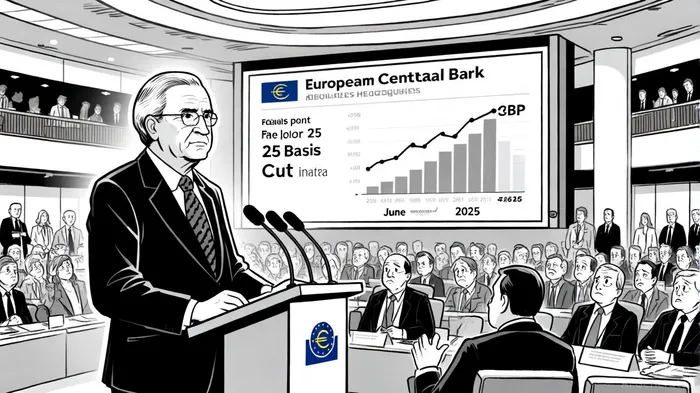
The (ECB) finds itself walking a tightrope in 2025. On one side, it must uphold its symmetric 2% , a cornerstone of its credibility. On the other, it faces a low-inflation environment where structural shifts—geopolitical tensions, , and climate policy—threaten to destabilize its carefully calibrated strategy. The ECB's recent 25 basis point in June 2025, bringing the deposit facility rate to 2%, underscores its cautious approach to navigating this delicate balance[1]. Yet, as investors scrutinize the bank's next moves, the question looms: Can the ECB maintain its credibility without overreacting to short-term volatility?
The ECB's Strategy: Anchoring Expectations in a Shifting Landscape
The ECB's 2025 strategy assessment reaffirmed its commitment to a symmetric 2% , emphasizing that both positive and negative deviations from this goal are equally undesirable[1]. This stance is critical for anchoring long-term inflation expectations, . , , , with non-energy components gradually declining due to a stronger euro and easing labor costs[2].
However, the ECB's flexibility is not without risks. While it retains tools like asset purchases and forward guidance, its data-dependent, meeting-by-meeting approach has left markets guessing about the path forward. For instance, the December 2024 policy meeting revealed internal divisions over the size of rate cuts, with some policymakers fearing aggressive action could undermine credibility[4]. This uncertainty is compounded by the ECB's roadmap to include (OOH) in the Harmonised Index of Consumer Prices (HICP), a move that could complicate inflation measurement and policy calibration[4].
Credibility at Stake: Communication and Public Perception
Central bank credibility hinges on consistent communication and the ability to . The ECB's 2025 strategy assessment highlighted the importance of explaining policy decisions to the public, a lesson drawn from research showing that transparency boosts credibility even when inflation remains elevated[5]. Yet, the ECB's 2021 strategy review—a major overhaul of its inflation-targeting framework—was largely ignored by non-expert audiences, revealing gaps in its outreach[5].
This challenge is amplified in a low-inflation environment. While current inflation is near target, upside risks persist due to energy prices and global food commodity shocks[3]. The ECB's September 2025 decision to hold rates steady, despite expectations of a dovish pivot, signals its reluctance to pre-commit to a rate-cutting path[6]. Such caution is prudent, but it also tests the market's trust in the ECB's ability to adapt to evolving conditions without losing sight of its mandate.
Market Expectations: A Clash of Optimism and Caution
Investors are split on the ECB's next steps. Some argue that the Eurozone's resilient economy, especially as the neutral rate midpoint remains a key reference point[3]. Others contend that inflationary pressures are easing, , warranting further cuts to support growth.
The ECB's fragmented global policy landscape adds another layer of complexity. While the U.S. Federal Reserve hints at aggressive rate cuts, the ECB's September 2025 rate hold highlights a to managing inflation and growth[6]. This divergence could strain cross-border capital flows and test the Eurozone's financial architecture, particularly as the ECB pushes for a digital euro and a completed banking union[1].
Investment Implications: Positioning for Uncertainty
For investors, the ECB's balancing act presents both opportunities and risks. Sectors sensitive to interest rates—such as financials and real estate—could benefit from a prolonged pause in rate cuts, while consumer staples may thrive in a low-inflation environment[2]. Conversely, overexposure to sectors reliant on aggressive ECB easing (e.g., high-yield bonds) could backfire if inflation surprises to the upside or geopolitical tensions escalate[3].
The key takeaway? Stay nimble. Monitor the ECB's communication closely—its ability to explain policy choices in plain language could be as valuable as its rate decisions[5]. Also, keep an eye on inflation expectations and the ECB's progress in integrating OOH into HICP, as these factors will shape the bank's long-term credibility[4].
In the end, the ECB's 2025 strategy is a masterclass in central banking: a blend of caution, adaptability, and a relentless focus on credibility. For investors, the lesson is clear—navigate the Eurozone's monetary maze with a mix of skepticism and trust, and always keep the 2% target in sight.







Comentarios
Aún no hay comentarios