
ECB's December Rate Cut: Inflation's Path to Recovery
Generado por agente de IAWesley Park
lunes, 25 de noviembre de 2024, 1:44 am ET1 min de lectura
The European Central Bank (ECB) has hinted at a potential interest rate cut in December, as inflation continues to move in the right direction. ECB President Christine Lagarde recently expressed optimism about the trajectory of inflation, signaling a possible easing of monetary policy. This article explores the factors behind the ECB's optimism and the implications of a potential rate cut.
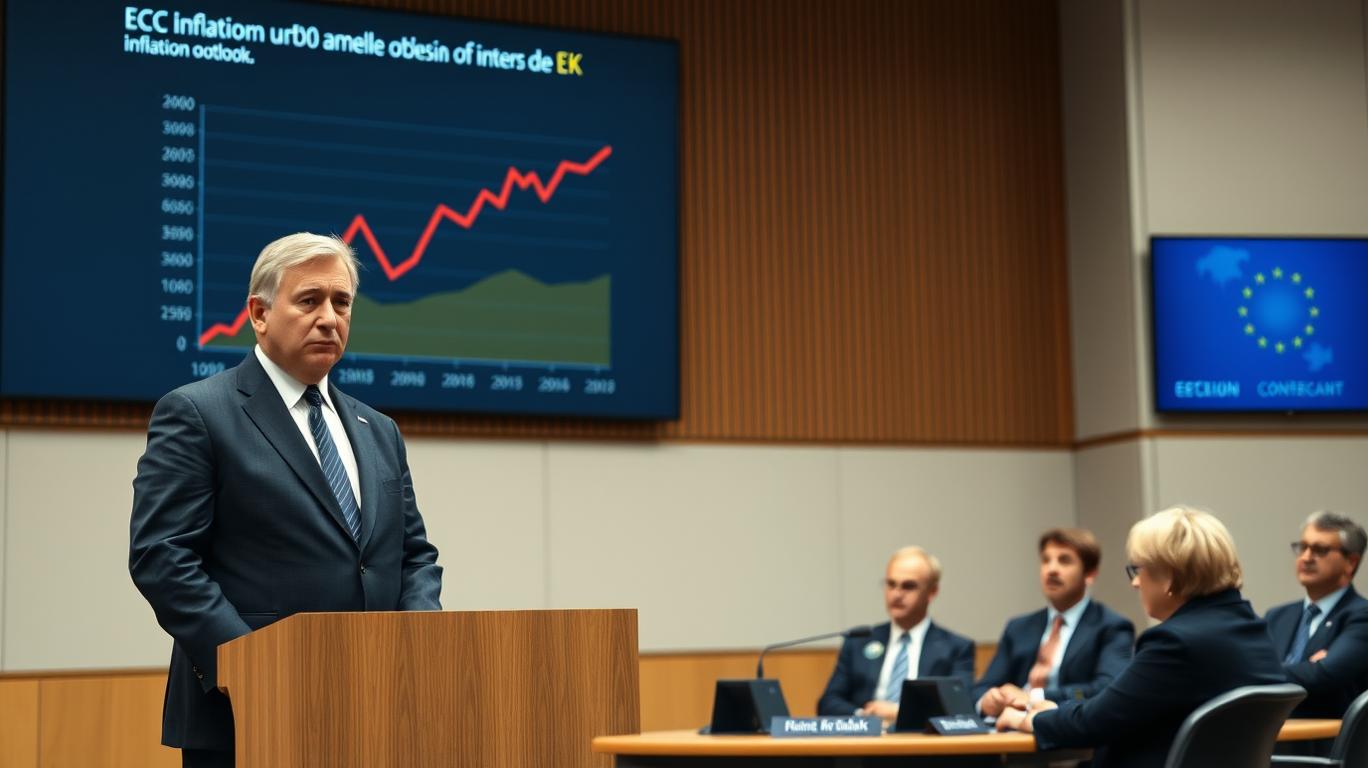
The ECB's recent projections indicate a decline in headline inflation from 5.4% in 2023 to 2.3% in 2024, 2.0% in 2025, and 1.9% in 2026. This outlook reflects the ECB's assessment that inflation will move in the right direction, driven by fading cost pressures and the impact of its monetary policy. The expectation of a sustained decline in inflation is primarily due to the fading of cost pressures, the impact of ECB's monetary policy, and the expected recovery of household income.
services inflation, which accounts for 70% of headline inflation, remains stubbornly high at 4.1%. While goods inflation has fallen back to its pre-pandemic average, services inflation remains high, with broad-based price pressures and strong wage growth contributing to elevated inflation levels. The ECB acknowledges that services inflation needs to return to a level consistent with underlying inflation of 2% over the medium term for price stability to be restored sustainably.
The ECB's interest rate decision in December will be influenced by external factors such as labor market dynamics and geopolitical tensions. The current labor market dynamics in the euro area are tight, with unemployment rates falling to pre-pandemic levels. However, wage growth has been strong, contributing to persistent price pressures in the services sector. Geopolitical tensions, particularly those affecting semiconductor supply chains, could also impact the ECB's decision.
A potential rate cut in December could have implications for various sectors. Lower interest rates could boost economic activity, encouraging businesses to invest and expand. This, in turn, could lead to increased demand for goods and services, supporting economic growth. However, a rate cut could also have negative consequences, such as encouraging riskier borrowing and potentially contributing to asset price bubbles.
The ECB's recent projections indicate a decline in headline inflation from 5.4% in 2023 to 2.3% in 2024, 2.0% in 2025, and 1.9% in 2026. This outlook reflects the ECB's assessment that inflation will move in the right direction, driven by fading cost pressures and the impact of its monetary policy. The expectation of a sustained decline in inflation is primarily due to the fading of cost pressures, the impact of ECB's monetary policy, and the expected recovery of household income.
services inflation, which accounts for 70% of headline inflation, remains stubbornly high at 4.1%. While goods inflation has fallen back to its pre-pandemic average, services inflation remains high, with broad-based price pressures and strong wage growth contributing to elevated inflation levels. The ECB acknowledges that services inflation needs to return to a level consistent with underlying inflation of 2% over the medium term for price stability to be restored sustainably.
The ECB's interest rate decision in December will be influenced by external factors such as labor market dynamics and geopolitical tensions. The current labor market dynamics in the euro area are tight, with unemployment rates falling to pre-pandemic levels. However, wage growth has been strong, contributing to persistent price pressures in the services sector. Geopolitical tensions, particularly those affecting semiconductor supply chains, could also impact the ECB's decision.
A potential rate cut in December could have implications for various sectors. Lower interest rates could boost economic activity, encouraging businesses to invest and expand. This, in turn, could lead to increased demand for goods and services, supporting economic growth. However, a rate cut could also have negative consequences, such as encouraging riskier borrowing and potentially contributing to asset price bubbles.



Divulgación editorial y transparencia de la IA: Ainvest News utiliza tecnología avanzada de Modelos de Lenguaje Largo (LLM) para sintetizar y analizar datos de mercado en tiempo real. Para garantizar los más altos estándares de integridad, cada artículo se somete a un riguroso proceso de verificación con participación humana.
Mientras la IA asiste en el procesamiento de datos y la redacción inicial, un miembro editorial profesional de Ainvest revisa, verifica y aprueba de forma independiente todo el contenido para garantizar su precisión y cumplimiento con los estándares editoriales de Ainvest Fintech Inc. Esta supervisión humana está diseñada para mitigar las alucinaciones de la IA y garantizar el contexto financiero.
Advertencia sobre inversiones: Este contenido se proporciona únicamente con fines informativos y no constituye asesoramiento profesional de inversión, legal o financiero. Los mercados conllevan riesgos inherentes. Se recomienda a los usuarios que realicen una investigación independiente o consulten a un asesor financiero certificado antes de tomar cualquier decisión. Ainvest Fintech Inc. se exime de toda responsabilidad por las acciones tomadas con base en esta información. ¿Encontró un error? Reportar un problema


SOBRE NOSOTROS
Nuestra historiaAutores de noticiasBase de conocimientosPolítica de privacidadTérmino de usoDescargo de responsabilidad de corretaje de tercerosTérminos de uso de AIMEDivulgaciones de riesgos de AInvest AICarrerasCONTÁCTENOS
Email: support@ainvest.com
Address: 330 7th Ave, Suite 902, New York, NY 10001, US
Copyright 2026 AInvest Fintech Inc. All rights reserved.


Comentarios
Aún no hay comentarios