
The ECB's Dovish Pivot: A Catalyst for European Risk-On Sentiment and Strategic Asset Reallocation
The European Central Bank's (ECB) 25-basis-point rate cut in June 2025 marked a pivotal shift in monetary policy, signaling a deliberate dovish pivot amid evolving economic and geopolitical dynamics. By lowering key rates to 2.00% for the deposit facility, 2.15% for main refinancing operations, and 2.40% for the marginal lending facility, the ECB aimed to stabilize inflation around its 2% target while cushioning the eurozone from trade policy uncertainties. This move has catalyzed a surge in risk-on sentiment, triggering a strategic reallocation of capital across European equities and fixed income markets.
Assessing the ECB's Dovish Pivot: A Strategic Recalibration
The ECB's decision reflects a nuanced response to a dual challenge: disinflationary pressures and the risk of trade-related growth shocks. With inflation stabilizing at 2%, the central bank has shifted from a hawkish stance to a neutral position, prioritizing flexibility over pre-commitments. This dovish pivot has been amplified by the U.S.-Japan trade deal finalized in July 2025, which redirected global capital flows away from traditional safe havens like Japanese government bonds and toward higher-yielding assets in Europe and the U.S.
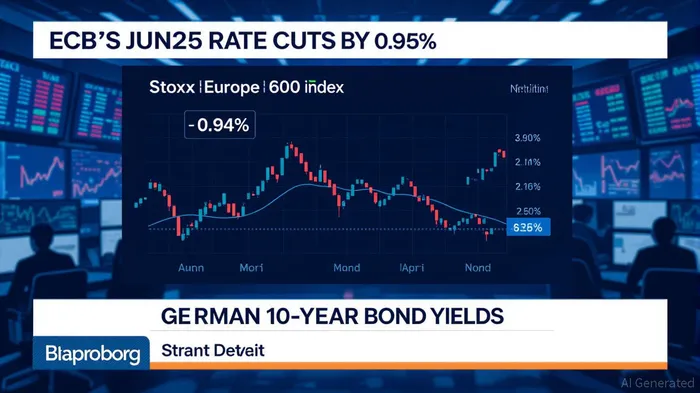
Investors are now rebalancing portfolios to capitalize on this shift. German 10-year bond yields (DE10YT=RR) rose 3 basis points to 2.62% post-deal, signaling reduced demand for low-risk assets. Meanwhile, European equities have rallied, with the Stoxx Europe 600 index climbing 0.9% as traders bet on accommodative policy and resilient corporate earnings. The ECB's emphasis on a “meeting-by-meeting” approach has further bolstered risk appetite, as markets anticipate potential further easing in September if trade tensions persist.
Risk-On Sentiment and Sectoral Reallocation
The ECB's dovish pivot has accelerated capital flows into sectors poised to benefit from lower borrowing costs and structural demand. Energy and infrastructure equities, in particular, have attracted investor attention. The normalization of Japanese bond yields (up 9 basis points to 1.585%) has prompted a search for higher returns, with European investors favoring corporate bonds in sectors like green energy and digital infrastructure. These areas are well-positioned to capitalize on Eurozone projects and global competition for tech and infrastructure investment.
Fixed income markets have also seen strategic reallocations. Investors are shortening bond durations to mitigate interest rate volatility, favoring 5- to 7-year maturities over longer-term bonds. High-quality corporate debt, especially in energy and infrastructure, is now a focal point for risk-adjusted returns. This shift is evident in tightening spreads for peripheral Eurozone bonds, as demand for resilient assets outpaces caution in government debt.
Navigating Uncertainty: Policy Risks and Opportunities
While the ECB's pivot supports risk-on sentiment, investors must remain vigilant. The 48% probability of a September rate cut hinges on trade policy outcomes, particularly the U.S. tariffs on EU exports. A failure to resolve trade tensions could trigger a sharper easing cycle, while a resolution might limit further cuts. Additionally, the ECB's Transmission Protection Instrument (TPI) remains a critical tool for managing market dislocations, ensuring monetary policy transmission remains unimpeded.
Investment advice for the coming months should prioritize:
1. Sectoral Exposure: Overweight sectors with strong earnings visibility, such as energy and infrastructure, while underweighting trade-sensitive industries.
2. Duration Management: Shorten bond portfolios to 5–7 years to hedge against rate volatility, while selectively increasing allocations to high-quality corporate debt.
3. Geopolitical Vigilance: Monitor U.S.-EU trade developments and ECB policy signals, particularly in August and September, to adjust risk exposure dynamically.
Conclusion: A Balancing Act for Investors
The ECB's dovish pivot has created a favorable environment for risk-on assets, but its success depends on navigating trade policy uncertainties and maintaining inflationary stability. By strategically reallocating capital to sectors with structural growth potential and adopting a flexible duration strategy, investors can capitalize on the ECB's accommodative stance while mitigating downside risks. As the Eurozone's open economy faces ongoing global challenges, agility and foresight will remain critical for capitalizing on the evolving investment landscape.







Comentarios
Aún no hay comentarios