
Just Eat Takeaway.com's Strategic Shift Post-Prosus Takeover and Leadership Transition: Assessing Long-Term Value and Operational Direction
The acquisition of Just Eat Takeaway.com (JET) by Prosus in 2025 marks a pivotal moment in the European food delivery sector, reshaping the company's strategic trajectory and operational framework. With Prosus now holding 98.19% of JET's shares and initiating a statutory squeeze-out to secure full ownership, the integration of JET into the Prosus ecosystem signals a bold move to consolidate market dominance and drive technological innovation. This analysis evaluates the implications of this takeover, the leadership transition, and the operational changes for long-term shareholder value and JET's future direction.
Strategic Rationale: From Food Delivery to Tech-Driven Ecosystem
Prosus's acquisition of JET is not merely a financial transaction but a strategic pivot to position JET as a "European tech champion," leveraging AI and logistics expertise to expand beyond food delivery into groceries, fintech, and other adjacencies according to industry analysis. CEO Fabricio Bloisi emphasized that the merger would accelerate innovation in customer segmentation, personalization, and AI-powered logistics, aligning with broader industry trends toward technology-first platforms as reported. This shift mirrors Prosus's success with iFood, where AI-driven operations transformed the company into a regional leader.
The European Commission's conditional approval of the deal-requiring Prosus to reduce its stake in Delivery Hero-underscores regulatory scrutiny of market concentration. While these constraints limit Prosus's ability to dominate the sector, they also ensure competitive dynamics remain intact, preserving consumer choice according to EU regulatory sources. For JET, this means navigating a 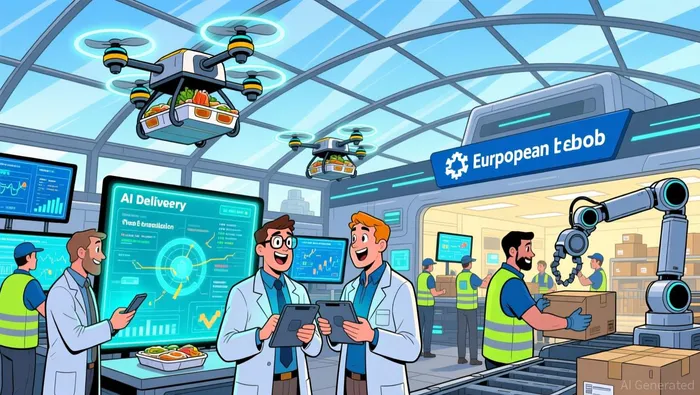 regulatory landscape that balances growth ambitions with antitrust compliance, a challenge that could test its long-term adaptability.
Operational Efficiency and Cost Optimization
Operational changes under Prosus's ownership have already yielded measurable results. JET's implementation of a single delivery model in the UK and Ireland reduced order fulfillment costs and boosted adjusted EBITDA by 32% year-on-year in H1 2025. Prosus aims to scale these efficiencies across its European footprint while investing in AI-driven logistics to enhance delivery speed and reliability. Such improvements are critical for maintaining profitability in a sector characterized by razor-thin margins and intense competition.
However, the transition to a fully integrated tech platform carries risks. For instance, the delisting of JET from Euronext Amsterdam on November 17, 2025, removes the company from public market scrutiny, potentially obscuring transparency about operational challenges. Investors must weigh the benefits of streamlined decision-making against the lack of real-time financial disclosure.
Leadership Transition: A New Era for JET
The leadership transition adds another layer of complexity. Jitse Groen, JET's founder and CEO for 25 years, stepped down following the acquisition, with Roberto Gandolfo-Prosus's head of Europe-set to assume the role as announced. Groen's departure marks the end of an era for JET, which he transformed from a student-led startup into a global food delivery giant. Gandolfo's appointment reflects Prosus's intent to embed its corporate culture and strategic priorities into JET's operations.
While Gandolfo's experience in scaling tech-driven businesses is a positive signal, his success will depend on balancing Prosus's global ambitions with JET's regional brand identity. The challenge lies in maintaining JET's customer-centric ethos while accelerating expansion into adjacent sectors like groceries-a market where competition from Amazon and Zalando is intensifying according to market analysis.
Shareholder Value: Mixed Reactions and Long-Term Prospects
Investor reactions to the acquisition have been mixed. Prosus's stock fell 6.92% in the week following the announcement, reflecting skepticism about the deal's strategic value amid broader economic uncertainties according to financial reports. Conversely, JET's shares surged over 50% post-announcement, as the all-cash offer priced at €20.30 per share represented a significant premium to its pre-acquisition price of €12.43 according to business news. This divergence highlights the tension between short-term market sentiment and long-term growth potential.
For long-term shareholders, the key question is whether Prosus's AI-driven investments will translate into sustainable profitability. JET's improved EBITDA margins in H1 2025 suggest near-term operational gains, but the company's ability to expand into groceries and fintech will determine its future revenue streams. Prosus's track record with iFood provides a blueprint for success, but replicating this in Europe will require navigating fragmented markets and regulatory hurdles.
Conclusion: A High-Stakes Transformation
The Prosus acquisition of JET represents a high-stakes bet on the future of food delivery. By integrating AI, streamlining operations, and expanding into new sectors, Prosus aims to position JET as a global tech leader. However, the success of this strategy hinges on three factors: the effective execution of operational efficiencies, the seamless transition under new leadership, and the ability to innovate in a rapidly evolving market.
For investors, the path to long-term value creation remains uncertain. While the initial financial metrics are promising, the true test will come in the next 12–18 months as JET's expanded services and AI-driven logistics are rolled out. Those willing to tolerate short-term volatility may find the potential rewards substantial, but the risks of regulatory pushback, operational missteps, or market saturation cannot be ignored.







Comentarios
Aún no hay comentarios