
Early Warning Signals in European Logistics: A Call for Resilience in the Industrial Sector
The European industrial sector is facing a confluence of systemic risks that demand urgent attention from investors. While the region’s logistics and transportation networks have long been the backbone of its economic resilience, recent trends signal growing vulnerabilities. From physical bottlenecks to digital threats and geopolitical turbulence, the cracks in the system are widening.
Logistical Bottlenecks: A Perfect Storm of Weak Demand and Congestion
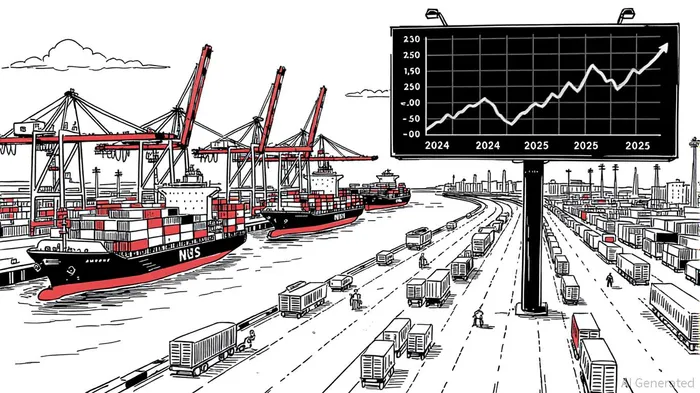
According to a report by Trans.info, European shipping is grappling with a dual crisis of weak demand and severe congestion [1]. The headhaul index—a key metric for freight demand—plummeted to 131.8 in August 2025, marking its lowest level since early 2024 [1]. This decline reflects a broader malaise in industrial activity, exacerbated by stagnant port throughput. The regional port index fell to 88.6 in Q2 2025, underscoring limited recovery potential amid labor shortages, interest-rate pressures, and weak consumer demand [1].
Northern European container hubs, including Rotterdam, Hamburg, and Antwerp, are particularly strained. Compounding the issue, low water levels on the Rhine River—a critical artery for barge traffic—have further constrained inland freight movements [1]. These physical constraints are not isolated incidents but part of a systemic breakdown in supply chain efficiency.
Cybersecurity: The Invisible Frontline of Industrial Vulnerability
While physical disruptions dominate headlines, the digital front is equally perilous. Data from Dragos reveals that 657 ransomware incidents targeted industrial entities globally in Q2 2025, with manufacturing accounting for 65% of these attacks [2]. The construction subsector within manufacturing was the most affected, enduring 110 incidents alone [2].
A particularly alarming development is the emergence of the Qilin ransomware group, a state-aligned entity exploiting vulnerabilities in FortinetFTNT-- products. Qilin has leveraged skilled affiliates from defunct groups like LockBit and RansomHub, raising the stakes for industrial cybersecurity [2]. For investors, the implications are clear: cyber resilience is no longer optional but a core operational requirement.
Geopolitical and Climate Risks: Compounding the Crisis
The fragility of European logistics is further amplified by geopolitical and environmental factors. The Red Sea crisis, driven by Houthi rebel attacks, has forced costly rerouting of cargo ships, while tensions in Ukraine and East Asia introduce persistent instability [3]. Meanwhile, climate-related disruptions—such as low water levels in the Panama Canal and extreme weather events—have eroded the predictability of global supply routes [3].
These overlapping risks create a volatile environment where even minor disruptions can cascade into systemic failures. For instance, a single ransomware attack on a port operator could paralyze regional trade, while a geopolitical incident in the Red Sea could trigger months of rerouting delays.
Investment Implications: Prioritizing Resilience Over Cost Efficiency
The cumulative effect of these challenges is a reevaluation of traditional supply chain strategies. Investors must now weigh the trade-offs between cost efficiency and resilience. Companies that invest in diversified logistics networks, advanced cybersecurity infrastructure, and climate-adaptive operations are likely to outperform peers in this high-risk environment.
Conversely, firms reliant on just-in-time inventory models or single-source suppliers face heightened exposure. The stagnation of Europe’s port throughput and the surge in ransomware incidents suggest that industrial players lacking agility will struggle to maintain profitability [1][2].
For asset allocators, sectors such as industrial cybersecurity, inland waterway infrastructure, and logistics software may offer asymmetric upside. Conversely, overexposure to traditional freight corridors or legacy manufacturing systems could amplify downside risks.
Conclusion
The European industrial sector stands at a crossroads. While the current challenges are daunting, they also present opportunities for forward-thinking investors to capitalize on innovation in resilience-driven strategies. As the region navigates this complex landscape, the ability to adapt to both digital and physical disruptions will define long-term success.
**Source:[1] Europe's shipping hit by weak demand and congestion [https://trans.info/en/europe-shipping-congestion-418792][2] Dragos Industrial Ransomware Analysis: Q2 2025 [https://www.dragos.com/blog/dragos-industrial-ransomware-analysis-q2-2025/][3] Securing Global Supply Chains in an Era of Heightened Risk [https://3gimbals.com/insights/securing-global-supply-chains-in-an-era-of-heightened-risk/]







Comentarios
Aún no hay comentarios