
Could an Eagles Super Bowl Victory Tank the Stock Market? History Says Yes, But Logic Says No
Generado por agente de IATheodore Quinn
sábado, 8 de febrero de 2025, 9:21 am ET2 min de lectura
NYT--
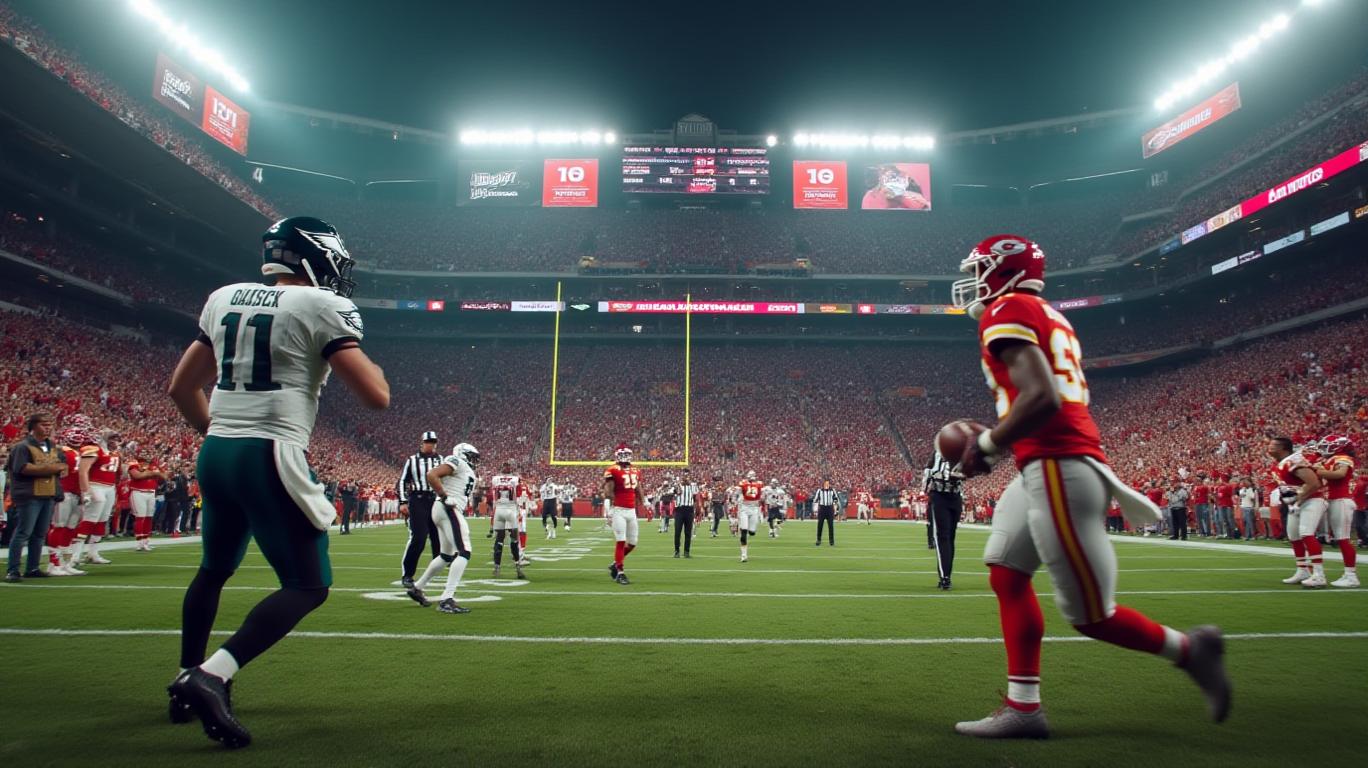
As the 59th Super Bowl approaches, fans eagerly anticipate not just the game itself or even Kendrick Lamar’s halftime performance, but the potential impact on their stock market portfolios. A Philadelphia Eagles win this Sunday would bode well for the stock market, while a Kansas City Chiefs win might suggest a downturn, according to a theory known as The Super Bowl Indicator.
Introduced by New York Times sportswriter Leonard Koppett in the 1970s, the Super Bowl Indicator suggests that a win by a team from the National Football Conference (NFC) boosts the stock market, while a win from an American Football Conference Team (AFC) signals a potential decline. This theory has been correct approximately 72% of the time. However, the reliability of the indicator has been challenged in recent years.
The stock market was in bull territory following last year's Super Bowl, despite the Super Bowl Indicator suggesting otherwise. The S&P 500 gained 24.2% even though the Kansas City Chiefs, an AFC team, defeated the Eagles to win the championship. From 2004 to 2023, the indicator was correct only six times out of 20. Since 2016, it has been wrong seven out of eight times.

The indicator's accuracy has been called into question, with some experts arguing that it is purely coincidental. The stock market's performance is influenced by a multitude of factors, including economic conditions, geopolitical events, and investor sentiment. A single sporting event, such as the Super Bowl, is unlikely to have a significant impact on the overall market performance.
Moreover, the indicator's historical accuracy may be skewed by the fact that the Pittsburgh Steelers, a team with an NFL-leading six Super Bowl wins, are counted as an NFC team due to their original NFL franchise status. This anomaly could potentially bias the results and undermine the credibility of the indicator.
In conclusion, while the Super Bowl Indicator has shown some historical correlation between the outcome of the Super Bowl and the subsequent performance of the stock market, it is not a reliable predictor of market trends. The indicator's accuracy has been challenged in recent years, and its historical data may be biased by the classification of the Pittsburgh Steelers. Investors should not base their investment decisions solely on the outcome of the Super Bowl, but rather consider a variety of factors and maintain a diversified portfolio to mitigate risk.
As the Eagles and the Chiefs face off in Super Bowl LIX, investors should not be overly concerned about the potential impact on the stock market. Instead, they should focus on their long-term investment goals and maintain a balanced and diversified portfolio. While the Super Bowl Indicator may provide some entertainment and conversation, it should not be considered a reliable indicator of market performance.
As the 59th Super Bowl approaches, fans eagerly anticipate not just the game itself or even Kendrick Lamar’s halftime performance, but the potential impact on their stock market portfolios. A Philadelphia Eagles win this Sunday would bode well for the stock market, while a Kansas City Chiefs win might suggest a downturn, according to a theory known as The Super Bowl Indicator.
Introduced by New York Times sportswriter Leonard Koppett in the 1970s, the Super Bowl Indicator suggests that a win by a team from the National Football Conference (NFC) boosts the stock market, while a win from an American Football Conference Team (AFC) signals a potential decline. This theory has been correct approximately 72% of the time. However, the reliability of the indicator has been challenged in recent years.
The stock market was in bull territory following last year's Super Bowl, despite the Super Bowl Indicator suggesting otherwise. The S&P 500 gained 24.2% even though the Kansas City Chiefs, an AFC team, defeated the Eagles to win the championship. From 2004 to 2023, the indicator was correct only six times out of 20. Since 2016, it has been wrong seven out of eight times.
The indicator's accuracy has been called into question, with some experts arguing that it is purely coincidental. The stock market's performance is influenced by a multitude of factors, including economic conditions, geopolitical events, and investor sentiment. A single sporting event, such as the Super Bowl, is unlikely to have a significant impact on the overall market performance.
Moreover, the indicator's historical accuracy may be skewed by the fact that the Pittsburgh Steelers, a team with an NFL-leading six Super Bowl wins, are counted as an NFC team due to their original NFL franchise status. This anomaly could potentially bias the results and undermine the credibility of the indicator.
In conclusion, while the Super Bowl Indicator has shown some historical correlation between the outcome of the Super Bowl and the subsequent performance of the stock market, it is not a reliable predictor of market trends. The indicator's accuracy has been challenged in recent years, and its historical data may be biased by the classification of the Pittsburgh Steelers. Investors should not base their investment decisions solely on the outcome of the Super Bowl, but rather consider a variety of factors and maintain a diversified portfolio to mitigate risk.
As the Eagles and the Chiefs face off in Super Bowl LIX, investors should not be overly concerned about the potential impact on the stock market. Instead, they should focus on their long-term investment goals and maintain a balanced and diversified portfolio. While the Super Bowl Indicator may provide some entertainment and conversation, it should not be considered a reliable indicator of market performance.

Divulgación editorial y transparencia de la IA: Ainvest News utiliza tecnología avanzada de Modelos de Lenguaje Largo (LLM) para sintetizar y analizar datos de mercado en tiempo real. Para garantizar los más altos estándares de integridad, cada artículo se somete a un riguroso proceso de verificación con participación humana.
Mientras la IA asiste en el procesamiento de datos y la redacción inicial, un miembro editorial profesional de Ainvest revisa, verifica y aprueba de forma independiente todo el contenido para garantizar su precisión y cumplimiento con los estándares editoriales de Ainvest Fintech Inc. Esta supervisión humana está diseñada para mitigar las alucinaciones de la IA y garantizar el contexto financiero.
Advertencia sobre inversiones: Este contenido se proporciona únicamente con fines informativos y no constituye asesoramiento profesional de inversión, legal o financiero. Los mercados conllevan riesgos inherentes. Se recomienda a los usuarios que realicen una investigación independiente o consulten a un asesor financiero certificado antes de tomar cualquier decisión. Ainvest Fintech Inc. se exime de toda responsabilidad por las acciones tomadas con base en esta información. ¿Encontró un error? Reportar un problema


SOBRE NOSOTROS
Nuestra historiaAutores de noticiasBase de conocimientosPolítica de privacidadTérmino de usoDescargo de responsabilidad de corretaje de tercerosTérminos de uso de AIMEDivulgaciones de riesgos de AInvest AICarrerasCONTÁCTENOS
Email: support@ainvest.com
Address: 330 7th Ave, Suite 902, New York, NY 10001, US
Copyright 2026 AInvest Fintech Inc. All rights reserved.


Comentarios
Aún no hay comentarios