
Dynacor’s Renewed Buyback Plan: A Strategic Move Amid Strong Gold Performance?
Dynacor Group Inc. (DNG.TO) has once again extended its share buyback program, signaling confidence in its financial health and long-term strategy. With gold prices surging and the company reporting record sales in early 2025, the renewed normal course issuer bid (NCIB) offers investors a mix of optimism and caution. But how does this move align with Dynacor’s recent performance, and what risks lie ahead?
The Buyback Plan: Terms and Rationale
Dynacor’s latest NCIB, approved on May 6, 2025, authorizes the repurchase of up to 10% of its public float, or 3.85 million shares, through the Toronto Stock Exchange. This extends a strategy that has been renewed since 2022, with the explicit goals of optimizing capital structure, reducing dilution, and enhancing shareholder value. Crucially, the buyback is not mandatory—management retains discretion to act based on market conditions.
The rationale for the buyback has evolved alongside Dynacor’s growth. Initially focused on maintaining liquidity, the program now emphasizes balancing surplus capital with strategic opportunities, such as debt reduction or acquisitions. Recent filings highlight concerns about share price undervaluation, suggesting the buyback aims to close the gap between intrinsic value and market perception.
Strong Financial Performance Fuels the Strategy
Dynacor’s renewed confidence stems from its Q1 2025 financial results, which set records for the company. March 2025 alone saw gold sales hit $28.8 million (CAD $41.3 million)—a 39.1% year-over-year jump—driven by a 38% rise in average gold prices to $3,020/ounce. Year-to-date sales for Q1 reached $80 million, up 18.2% from 2024, while the Veta Dorada plant maintained full capacity utilization, processing 15,000 tonnes of ore monthly.
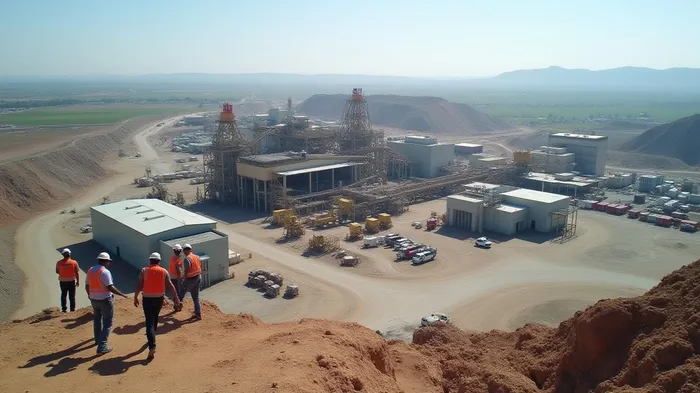
The company’s PX Impact® gold initiative, which traces supply chains from artisanal miners and funds social projects, has also bolstered its sustainability credentials. This model allows Dynacor to command premiums from luxury buyers, further underpinning its financial resilience.
Technicals Paint a Mixed Picture
While fundamentals are strong, the stock’s technical outlook is less rosy. As of May 2025, Dynacor’s share price had fallen to $4.63, down 2.5% from the prior session and part of a four-day losing streak. Technical models project a -18.9% decline over the next three months, with the stock likely to trade between $3.12 and $3.95 by August.
Bearish signals dominate:
- Moving averages are in a “death cross” (50-day MA above 10-day MA), signaling short-term weakness.
- Resistance levels at $4.72 and $4.85 have held firm, while critical support at $4.41 faces tests.
- The ex-dividend date on May 8 risks further downward pressure as investors sell to capture the CAD $0.01333 dividend.
Strategic Expansion and Risks
Beyond buybacks, Dynacor’s growth hinges on global expansion. A pilot plant in Senegal aims to replicate its Peruvian success in West Africa, while Latin American markets remain a key focus. These moves align with its mission to formalize artisanal mining supply chains, a sector valued at $50 billion annually but often riddled with informality and exploitation.
Yet risks persist:
- Gold price volatility: While recent gains have boosted sales, a sudden drop could undermine margins.
- Operational execution: Scaling into new regions demands capital and regulatory approvals.
- Technical headwinds: The stock’s bearish trend could persist unless it breaks resistance levels.
Key Dates to Watch
- May 15: Q1 financial results release. A strong report could stabilize the stock, especially if cost controls or new contracts are highlighted.
- May 22: The NCIB’s launch may provide short-term support as buybacks reduce supply.
Conclusion: A Long-Term Play with Near-Term Uncertainties
Dynacor’s renewed buyback plan reflects confidence in its ability to capitalize on gold’s bullish trajectory and operational efficiency. With $345–$375 million in annual sales guidance within reach and expansion plans underway, the company appears positioned for growth. However, investors must weigh this against technical risks, including a projected 18.9% near-term decline and dividend-related volatility.
For long-term investors, the buyback underscores management’s belief that shares are undervalued—a compelling argument if gold prices hold above $2,800/ounce and Senegal operations succeed. Short-term traders, however, may wait for the stock to rebound above $4.72 or stabilize at $4.41 before taking positions.
Ultimately, Dynacor’s story hinges on execution: Can it translate record sales into sustained profitability while navigating market headwinds? The answer could determine whether this buyback becomes a strategic win—or a premature bet on resilience.







Comentarios
Aún no hay comentarios