
Dyna Robotics' $120M Raise: A Strategic Inflection Point for Industrial Automation and Robotics
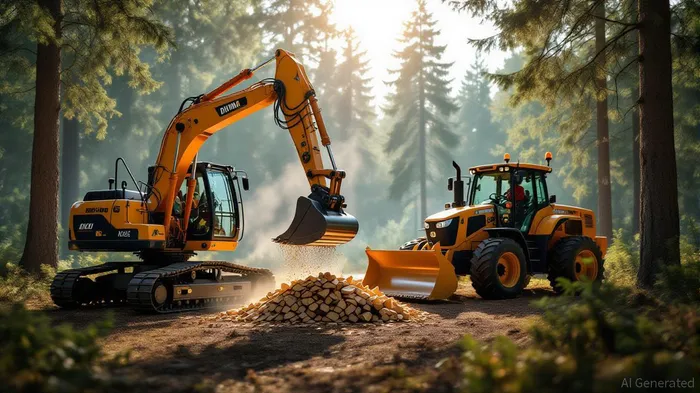
The recent $120 million funding raise by Dyna Robotics marks a pivotal moment in the convergence of industrial automation and sustainable forestry. As global demand for efficient resource management intensifies, Dyna's strategic focus on robotics-enabled equipment positions it to capitalize on a sector poised for transformative growth. By analyzing the company's technological innovations, market strategies, and alignment with industry-wide trends, this article assesses Dyna's potential to emerge as a leader in the robotics-enabled forestry and industrial equipment space.
Industry Trends: Robotics as a Catalyst for Forestry Modernization
The integration of robotics into forestry is accelerating, driven by advancements in AI, machine learning, and adaptive control systems. According to a report by the Robotics and AI Institute, reinforcement learning techniques have enabled robots like Boston Dynamics' Spot to navigate complex terrains at speeds exceeding initial design specifications[5], a capability critical for unpredictable forest environments. Similarly, MIT's development of the CrossFormer model—a single AI system capable of operating diverse robotic platforms—demonstrates the potential for scalable, cost-effective solutions in tasks such as tree planting and harvesting[3].
While specific growth projections for the forestry sector remain elusive, broader industry data suggests a surge in automation adoption. The Future of Jobs Report 2025 notes that 58% of businesses will be transformed by robotics and automation, with AI-driven roles expected to grow significantly by 2030[1]. These trends underscore a shift toward labor efficiency and sustainability, aligning with Dyna's mission to modernize forestry through precision engineering.
Dyna Robotics: Technological Innovation and Market Positioning
Dyna's product portfolio exemplifies its commitment to innovation. The DYNA SC-14 Firewood Processor, for instance, combines a 38 HP EFI Kohler engine with ergonomic joystick controls, enabling operators to process up to 2 cords per hour with minimal physical strain[5]. Meanwhile, the VORTEX® V12-31 Wood Chipper leverages a patented chamber design to separate chipping and throwing functions, optimizing engine torque and reducing maintenance demands[4]. These advancements not only enhance operational efficiency but also address pain points in traditional forestry workflows, such as labor shortages and equipment downtime.
The company's market strategies further reinforce its competitive edge. By expanding through a network of authorized rental centers and dealers across North America, Dyna offers flexible access to its equipment via purchase, rental, or rent-to-own models[2]. This approach lowers barriers to entry for customers, particularly small-to-midsize operators, while fostering long-term customer relationships through direct factory sales and service centers[3]. Such a customer-centric model is critical in an industry where equipment reliability and support are paramount.
Competitive Landscape and Leadership Potential
Dyna's niche focus on forestry-specific robotics distinguishes it from broader industrial automation players. While companies like Boston Dynamics and AmazonAMZN-- prioritize logistics and manufacturing, Dyna's tailored solutions—such as gravity-assisted feed systems in its V12-31 chipper—address the unique challenges of forested environments[4]. This specialization, coupled with its recent $120M raise, positions Dyna to invest in R&D for AI-integrated systems, potentially leveraging technologies like MIT's Diffusion Forcing method to enhance robotic adaptability in noisy, dynamic settings[5].
Moreover, the funding enables Dyna to accelerate its expansion into international markets, where sustainable forestry practices are gaining regulatory and consumer traction. By aligning with global sustainability goals, the company can tap into growing demand for eco-friendly resource management, a trend expected to drive long-term value creation.
Strategic Implications of the $120M Raise
The $120M raise is not merely a financial milestone but a strategic lever for scaling Dyna's impact. A portion of the funds is likely allocated to refining AI-driven automation in its equipment, such as integrating real-time data analytics for optimized tree monitoring and harvesting[5]. Additionally, the capital supports the development of a robust service ecosystem, including training programs and remote diagnostics, which are essential for maintaining customer loyalty in a capital-intensive industry.
From an investment perspective, Dyna's ability to balance technological innovation with operational scalability—while navigating a fragmented market—positions it as a high-potential player. The company's focus on reducing environmental impact through efficient resource utilization also aligns with ESG (Environmental, Social, and Governance) investing trends, a factor increasingly influencing capital allocation in industrial sectors.
Conclusion: A Defensible Position in a High-Growth Sector
Dyna Robotics' $120M raise represents a strategic inflection pointIPCX--, enabling the company to accelerate its leadership in robotics-enabled forestry. By leveraging cutting-edge AI and machine learning advancements, expanding its market reach, and prioritizing customer-centric innovation, Dyna is well-positioned to capitalize on the sector's projected growth. As automation becomes a cornerstone of sustainable industrial practices, investors who recognize the company's unique value proposition may find themselves at the forefront of a transformative industry shift.







Comentarios
Aún no hay comentarios