
Is Dycom Industries (NYSE:DY) a Hidden Gem Trading 21% Below Its Intrinsic Value?
In a market increasingly skeptical of overvalued tech stocks, investors are turning to overlooked sectors like telecom infrastructure. Dycom IndustriesDY-- (NYSE:DY), a leading contractor for wireless and utility projects, has sparked interest after a recent valuation analysis suggested it trades at a 21% discount to its intrinsic value. Is this undervaluation a buying opportunity—or a red flag? Let’s dissect the data.
The Case for Undervaluation: Strong Financials and Strategic Repurchases
Dycom’s Q1 2025 results reveal robust performance. Contract revenues hit $1.142 billion, a 9.3% year-over-year jump, driven by organic growth of 2.5% and contributions from acquired businesses. Non-GAAP Adjusted EBITDA rose to $130.9 million, or 11.5% of revenue, up from 10.9% a year earlier. This margin expansion suggests operational efficiency, a key driver of long-term value.
The company’s share repurchases further underscore confidence. In Q1 alone, Dycom bought back 210,000 shares at an average price of $141.84, totaling $29.8 million. This move aligns with its strategy of returning capital to shareholders while signaling management believes the stock is undervalued.
Valuation Metrics: A 21% Discount Supported by DCF Analysis
A third-party discounted cash flow (DCF) analysis cited in recent reports estimates Dycom’s fair value at $238 per share, compared to its May 2024 price of $188. This implies a 21% undervaluation, even as analyst consensus targets a $210 price, 12% below the DCF estimate.
The DCF model assumes:
- A 7.6% cost of equity (reflecting Dycom’s levered beta of 1.117).
- A 2.8% terminal growth rate (aligned with historical U.S. GDP growth).
- Steady margin improvements and $70 million in annualized acquired revenue contributions.
These assumptions are conservative given Dycom’s track record of margin expansion and its role in critical telecom infrastructure projects.
Growth Drivers: Organic Momentum and Strategic Acquisitions
Dycom’s valuation thesis hinges on its dual growth engines:
1. Organic Revenue Growth: Management expects high-single-digit organic expansion in Q2 2025, supported by rising demand for 5G deployments and utility upgrades.
2. Acquisition Synergies: The $71.2 million in Q1 2025 revenue from acquired businesses highlights its ability to scale through M&A.
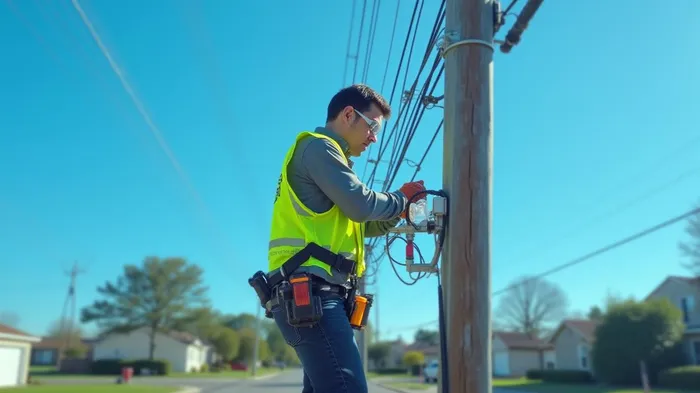
The telecom infrastructure sector is booming. Global fiber-optic M&A deals surged to $11 billion in late 2024, and Dycom’s expertise in wireless deployment and utility maintenance positions it to capture this demand.
Risks and Challenges
Despite the positives, risks linger:
- Debt Levels: Dycom’s long-term debt stands at $842.4 million, though its $1.08 billion equity and strong liquidity ($26.1 million cash, plus $1.627 billion in current assets) mitigate refinancing concerns.
- Project Delays: Economic slowdowns or supply chain disruptions could stall infrastructure projects, impacting revenue.
- Valuation Sensitivity: The DCF’s 21% discount assumes continued margin expansion and no major market shocks—both uncertain in a volatile economy.
Conclusion: A Compelling Risk-Adjusted Opportunity
Dycom Industries presents a compelling case for investors seeking exposure to telecom infrastructure growth at a discount. Key takeaways:
- Financial Strength: A 11.5% EBITDA margin, rising to 11.75–12.25% in Q2, supports its valuation.
- Shareholder Returns: Over $29 million in buybacks this quarter highlight capital discipline.
- Sector Tailwinds: Global fiber-optic and 5G spending is projected to grow, with Dycom’s niche positioning it as a beneficiary.
While risks like debt and macroeconomic headwinds exist, the 21% undervaluation—backed by a rigorous DCF—suggests a favorable risk-reward ratio. For investors willing to look beyond headline tech stocks, Dycom could be a hidden gem worth considering.
In sum, DY’s fundamentals and valuation gap align with a “buy” thesis, provided investors monitor execution risks and margin trends closely.





Comentarios
Aún no hay comentarios