
"Duterte's Arrest: A Wake-Up Call for the Philippines?"
Generado por agente de IAHarrison Brooks
martes, 11 de marzo de 2025, 1:03 am ET2 min de lectura
The arrest of former Philippine President Rodrigo Duterte on charges of crimes against humanity by the International Criminal Court (ICC) has sent shockwaves through the country and the international community. Duterte, known for his controversial drug war policies that resulted in thousands of deaths, has been a polarizing figure since his presidency. His arrest raises critical questions about accountability, justice, and the future of the Philippines.
Duterte's drug war, which began in 2016, was marked by extrajudicial killings and a brutal crackdown on suspected drug dealers. The ICC's investigation into these killings, which began in 2011 when Duterte was still the mayor of Davao, has been a long and contentious process. Duterte withdrew the Philippines from the ICC in 2019, but the court still has jurisdiction over alleged crimes committed when the country was a member of the Rome Statute.
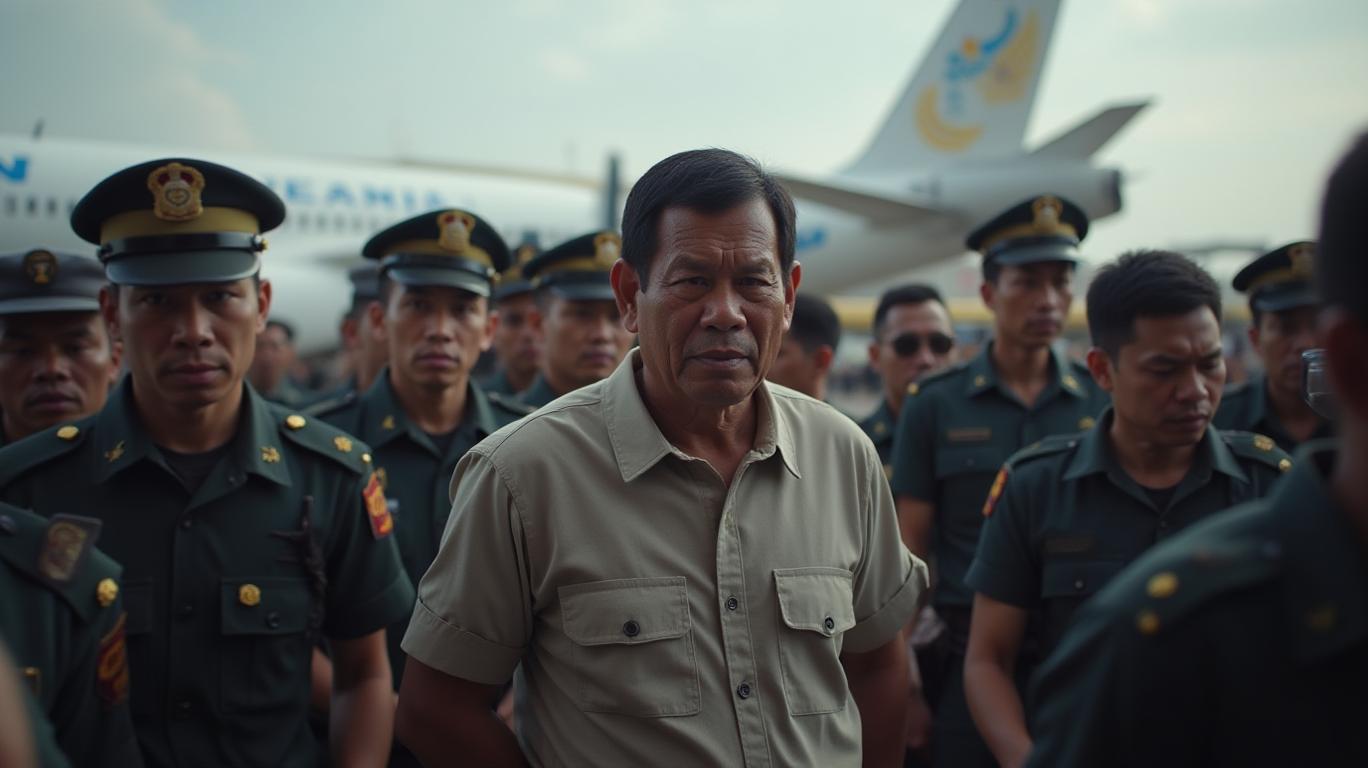
The arrest of Duterte has sparked a commotion at Manila's international airport, where his lawyers and aides loudly protested that they were prevented from coming close to him after he was taken into police custody. Sen. Bong Go, a close Duterte ally, told reporters, "This is a violation of his constitutional right." This protest highlights the political tension and potential for unrest in the Philippines.
The ICC's involvement in the Philippines has significant legal and regulatory implications for foreign investors. The court's investigation into Duterte's drug war underscores the need for accountability and adherence to the rule of law. Foreign investors may be concerned about the stability of the legal system and the potential for arbitrary enforcement of laws. The ICC's jurisdiction over alleged crimes committed when the Philippines was a member of the Rome Statute means that the country's regulatory environment could be subject to international scrutiny.
The arrest of Duterte could also impact consumer behavior and market trends in the Philippines. The public's perception of Duterte's arrest and the broader context of his controversial drug war policies could lead to short-term market volatility and changes in consumer behavior. Investors might consider defensive sectors such as healthcare, utilities, and consumer staples, which are less sensitive to economic downturns. These sectors can provide stability during times of uncertainty.
The ICC's investigation into Duterte's drug war policies could lead to a more transparent and accountable government in the long run. This could foster a more stable political environment, which is conducive to economic growth and investment. Investors might look for opportunities in sectors that benefit from long-term economic development, such as infrastructure and technology.
The Philippines' GDP growth rate over the past five years has been relatively stable, with an average annual growth rate of around 6%. However, the arrest of Duterte and the subsequent political fallout could impact this growth rate. The government's cooperation with the ICC, as stated by Communications Secretary Jay Ruiz, "The government is prepared for any eventuality," suggests a level of stability that could be attractive to investors. However, any perceived mishandling of the situation could lead to political backlash and economic uncertainty.
In conclusion, the arrest of Rodrigo Duterte presents both opportunities and risks for the Philippines. Effective management of the situation by the current administration could mitigate potential negative impacts and even turn this into an opportunity for reform and growth. However, any missteps could lead to political instability and economic uncertainty. The ICC's involvement in the Philippines has significant legal and regulatory implications for foreign investors, and these implications could influence investment decisions by creating uncertainty, impacting political stability, and increasing the cost and complexity of doing business in the country. Foreign investors will need to carefully consider these factors and develop strategies to mitigate the associated risks.



Divulgación editorial y transparencia de la IA: Ainvest News utiliza tecnología avanzada de Modelos de Lenguaje Largo (LLM) para sintetizar y analizar datos de mercado en tiempo real. Para garantizar los más altos estándares de integridad, cada artículo se somete a un riguroso proceso de verificación con participación humana.
Mientras la IA asiste en el procesamiento de datos y la redacción inicial, un miembro editorial profesional de Ainvest revisa, verifica y aprueba de forma independiente todo el contenido para garantizar su precisión y cumplimiento con los estándares editoriales de Ainvest Fintech Inc. Esta supervisión humana está diseñada para mitigar las alucinaciones de la IA y garantizar el contexto financiero.
Advertencia sobre inversiones: Este contenido se proporciona únicamente con fines informativos y no constituye asesoramiento profesional de inversión, legal o financiero. Los mercados conllevan riesgos inherentes. Se recomienda a los usuarios que realicen una investigación independiente o consulten a un asesor financiero certificado antes de tomar cualquier decisión. Ainvest Fintech Inc. se exime de toda responsabilidad por las acciones tomadas con base en esta información. ¿Encontró un error? Reportar un problema




Comentarios
Aún no hay comentarios