
Dutch Pension Fund Delays and Global Bond Market Liquidity Risks
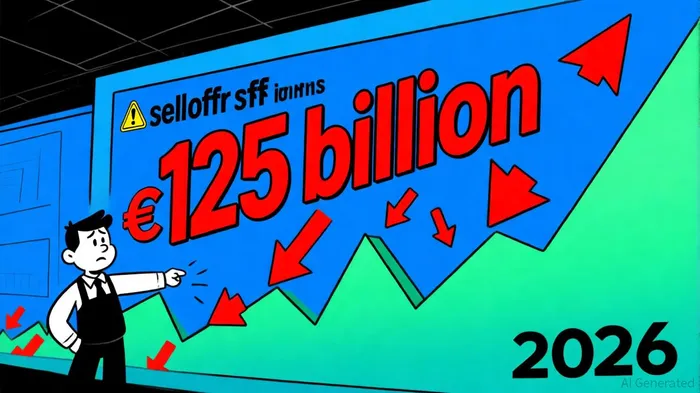
The Dutch pension system's transition from defined-benefit (DB) to defined-contribution (DC) models, mandated by the Wet Toekomst Pensioenen (WTP), has triggered a seismic shift in European bond markets. With €1.5 trillion in assets under management, Dutch pension funds historically relied on long-dated government bonds and interest rate swaps to hedge liabilities under the DB model. However, the reform has forced a strategic rebalancing, reducing demand for ultra-long-duration assets and creating liquidity risks for crowded fixed-income trades[1].
European Bond Market Dynamics: A €125 Billion Sell-Off
According to a report by Bloomberg, Dutch pension funds are projected to sell off approximately €125 billion in government bonds, with €69 billion directed at German, French, and Dutch sovereign debt[2]. This shift is driven by the elimination of precise liability-matching requirements under the DC model. As funds unwind long-dated hedges, the 30-year yield on Germany's Bunds has surged from below zero to over 3%, while the 10s30s swap curve has steepened to 75 basis points—up from 20 basis points in early 2025[3].
The liquidity implications are profound. Rabobank estimates that the reduction in demand for long-term bonds could flatten the yield curve if transition delays persist, undermining current steepener positions held by investors[4]. Delays by large funds like PFZW and PMT have already caused flattening pressures in the euro swap curve, raising concerns about market volatility during peak transition periods in early 2026[5].
Crowded Trades at Risk: Steepeners and Long-Dated Hedges
The unwinding of long-dated hedges has created a "hot potato" scenario for dealers, as liquidity in the ultra-long swap market (beyond 30 years) dwindles. A report by INGING-- Think highlights that Dutch pension funds' reduced participation in this segment could exacerbate transaction costs and amplify price swings during market stress[6]. For instance, the unwind of €125 billion in government bonds has already led to a flattening of the long-end of the swaps curve, with liquidity risks peaking when multiple funds transition simultaneously[7].
Investors who have bet on a steepening yield curve—such as those holding 10s30s steepeners—are now exposed to counter-movements. If delays persist, the potential for gains in these positions diminishes, as the market anticipates a slower transition. Asset managers like Aviva and BlackRockBLK-- have advised clients to shorten tenors and hedge steepener exposure, given the uncertainty around timing[8].
Global Implications: US Treasuries and Asian Bonds
The reallocation of Dutch pension assets is not confined to Europe. With €551 billion in US dollar-denominated investments, pension funds have faced significant foreign exchange losses as the dollar weakened against the euro in 2025[9]. These losses, partially offset by derivative gains, have prompted a reevaluation of US Treasury holdings. While the US market remains resilient, reduced foreign demand could strain liquidity in the $29 trillion Treasury market, particularly for longer-dated securities[10].
In Asia, the impact is more indirect but no less significant. As European investors divest long-dated bonds, capital is reallocating to higher-yielding Asian assets. The Asia Bond Monitor notes that local currency bond issuance in emerging East Asia grew by 3.1% in Q4 2024, with supportive regional policies and anticipated US rate cuts bolstering liquidity[11]. However, Dutch pension funds' reduced exposure to Asian markets—€28 billion slashed between 2021 and 2023—reflects a broader shift toward shorter-duration strategies[12].
Conclusion: Navigating a Shifting Landscape
The Dutch pension reforms are reshaping global bond markets, with liquidity risks concentrated in crowded trades like steepeners and long-dated hedges. For investors, the key challenge lies in timing the transition: delays in implementation could flatten yield curves, while orderly unwinding may stabilize markets. As the first wave of transitions approaches in early 2026, market participants must remain vigilant to liquidity bottlenecks and structural shifts in demand.







Comentarios
Aún no hay comentarios