
Dunamu and Naver: Strategic Consolidation in South Korea's Fintech and Crypto Sectors
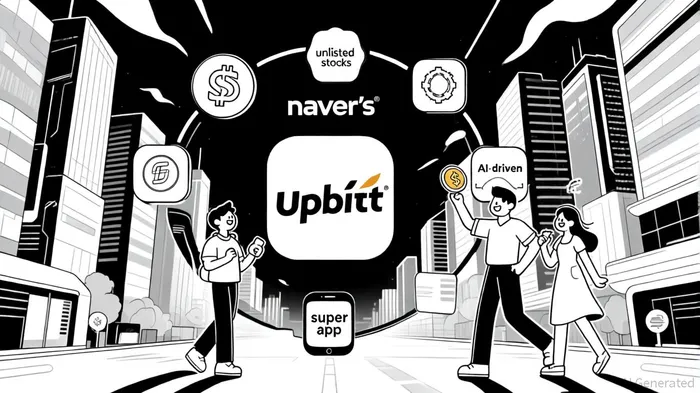
The reported discussions between Dunamu, operator of South Korea's leading cryptocurrency exchange Upbit, and Naver Group—a tech giant with a dominant presence in internet services—have sparked significant speculation about a potential strategic consolidation. If realized, this move could redefine the competitive landscape of South Korea's fintech and crypto markets, blending traditional financial services with digital assets in a manner that mirrors global trends toward integrated financial ecosystems.
Strategic Rationale: From Crypto to Financial Super App
Naver's interest in Dunamu appears rooted in its broader ambition to challenge Kakao and Toss in the investment brokerage sector. By acquiring a 70% stake in Dunamu's unlisted stock platform, Ustockplus, and negotiating full control of Securities Plus Unlisted, Naver is positioning itself to offer a comprehensive financial super app[3]. This aligns with the company's existing Naver Pay service, which already facilitates digital payments and could serve as a bridge to integrate crypto trading, stablecoins, and unlisted stock investments under one platform[1].
A stock-swap structure, rather than a traditional acquisition, would preserve both entities' operational autonomy while creating a parent-subsidiary relationship. This approach could mitigate regulatory scrutiny, particularly given Dunamu's recent administrative sanctions from the Korea Financial Intelligence Unit (KoFIU), which complicate its pursuit of a financial investment license. By consolidating under Naver's umbrella, Dunamu might gain access to Naver Financial's regulatory expertise and capital, enabling it to navigate compliance challenges more effectively.
Market Implications: Consolidation and Regulatory Evolution
South Korea's fintech and crypto sectors are undergoing a pivotal transformation in 2025. The Financial Services Commission (FSC) has relaxed investment rules for financial holding companies, allowing them to increase equity stakes in fintech businesses to 15% from 5%[2]. This regulatory shift is designed to foster collaboration between traditional institutions and innovative startups, a dynamic that could accelerate if Naver's acquisition of Dunamu materializes.
The FSC's second phase of crypto regulations, introduced in 2025, further underscores the government's push for transparency and investor protection. Stricter disclosure requirements for stablecoins and a temporary suspension of crypto lending services highlight the risks of leveraged trading, which could make institutional investors more cautious[4]. For Naver and Dunamu, however, these regulations present an opportunity to establish a trusted, regulated platform that aligns with global standards such as the EU's Markets in Crypto-Assets (MiCA) framework[4].
Competitive Dynamics: A New Era of Fintech Rivalry
The potential merger would intensify competition in South Korea's financial services market. Kakao and Toss have already established strong footholds in mobile banking and investment apps, leveraging AI-driven personalization and seamless user experiences[5]. Naver's entry into this arena, bolstered by Dunamu's crypto infrastructure, could disrupt the status quo by offering a hybrid model that combines the trust of traditional finance with the innovation of digital assets.
However, challenges remain. Dunamu's regulatory hurdles and the FSC's focus on mitigating market volatility could delay the consolidation. Additionally, the liquidation rate of 13% among crypto borrowers—highlighted in recent industry reports—underscores the fragility of leveraged trading, a risk that Naver would need to address to maintain user confidence[3].
Conclusion: A Path to Global Leadership?
If Naver and Dunamu succeed in their restructuring, the partnership could position South Korea as a global leader in integrated financial services. By aligning with the FSC's regulatory agenda and leveraging Naver's technological ecosystem, the combined entity might attract institutional investors and international partners, reinforcing the country's reputation as a hub for digital finance innovation[1].
Yet, the outcome hinges on navigating regulatory complexities and market risks. For investors, the key takeaway is clear: strategic consolidation in fintech and crypto is not just about scale but about creating resilient, adaptable platforms that meet evolving consumer and regulatory demands.







Comentarios
Aún no hay comentarios