
Duke Energy's Strategic Nuclear Expansion and Its Role in Powering the AI Revolution: A Dividend-Protected Entry Point into the AI Energy Boom
The artificial intelligence (AI) revolution is reshaping global energy demand, with data centers and high-consumption industries driving a surge in electricity needs. For investors seeking exposure to this transformative trend while prioritizing income stability, Duke EnergyDUK-- (DUK) presents a compelling case. The utility giant is leveraging its nuclear expansion projects to meet AI-driven energy demands while maintaining a robust dividend profile, offering a rare combination of growth potential and income security.
Nuclear Expansion: A Strategic Pillar for the AI Era
Duke Energy's 2025 strategic plan centers on advancing nuclear power as a cornerstone of its long-term energy strategy. The company recently submitted an application to the for the Belews Creek Steam Station in North Carolina, targeting the deployment of small modular reactors or advanced nuclear technologies by 2036. This initiative, over the next decade, aligns with the escalating energy needs of AI infrastructure, which is projected to consume a disproportionate share of global electricity in the coming years.
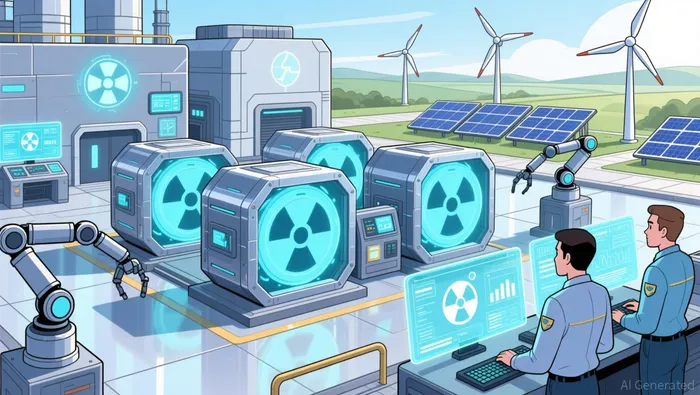 The Belews Creek project exemplifies Duke's "Coal-to-Nuclear" strategy, repurposing existing infrastructure to reduce costs and accelerate timelines. By pursuing a -allowing flexibility in reactor design selection, including NuScale Power's VOYGR design-the company ensures adaptability in a rapidly evolving energy landscape. Complementing this, DukeDUK-- is also evaluating large light water reactors at the W. S. Lee site in South Carolina, with potential in-service dates by 2037. These projects underscore Duke's commitment to scaling zero-carbon baseload power, a critical requirement for AI-driven industries that demand both reliability and sustainability.
Grid Modernization and Strategic Partnerships
Beyond nuclear, Duke is enhancing grid resilience through partnerships and diversified investments. to deploy up to 11 natural gas turbines addresses short-to-midterm energy needs while the nuclear projects mature. This hybrid approach ensures a balanced energy mix, mitigating risks from regulatory delays or technological uncertainties. Additionally, Duke's extension of existing nuclear plants, such as the , reinforces its capacity to deliver stable, low-cost power over decades.
The company's regulated utility model further strengthens its strategic position. By recovering capital investments through rate-based returns, Duke can sustain long-term growth while maintaining predictable cash flows for dividends. This structure is particularly advantageous in the AI era, where energy demand is expected to grow exponentially but requires significant upfront infrastructure investment.
Dividend Protection: A Shield for Income Investors
For income-focused investors, Duke Energy's dividend history and forward-looking projections offer a compelling value proposition. , supported by a regulated asset base that insulates it from the volatility of unregulated markets. , driven by its capital-intensive projects and favorable regulatory environment.
Duke's dividend trajectory reflects disciplined growth. In 2025, , . For 2026, analysts anticipate a continuation of this pattern, aligning with its historical trend of gradual dividend hikes. A forward-looking price target of $136.50 , suggesting strong confidence in its ability to balance reinvestment and shareholder returns.
Strategic Alignment and Long-Term Outlook
Duke Energy's nuclear expansion is not merely a response to AI-driven demand but a proactive bet on the future of energy. By securing long-term contracts and leveraging its regulated model, the company is positioning itself to capture value from the AI boom while maintaining a stable dividend. For investors, this represents a rare opportunity: a high-conviction play on a structural shift in energy demand, paired with the income security of a utility with a proven track record.
As AI reshapes industries, the energy sector will serve as its backbone. Duke Energy's strategic investments in nuclear, grid modernization, and partnerships ensure it is well-positioned to meet this challenge-and its dividend-protected model offers a low-risk entry point for those seeking to capitalize on the AI revolution.





Comentarios
Aún no hay comentarios