
Duke Energy's Energy Efficiency Initiatives: A Strategic Catalyst for Profitability and Investor Value
Financial Performance and Strategic Capital Allocation
Duke Energy's Q3 2025 results underscore its financial strength, with adjusted earnings per share (EPS) reaching $1.81, a 13% year-over-year increase, according to a GuruFocus earnings call. This growth is underpinned by a robust capital expansion plan, with the company projecting $95 billion to $105 billion in investments from 2026 to 2030, as detailed in the Investing.com slides. These funds will be directed toward modernizing infrastructure, expanding dispatchable generation capacity, and meeting surging demand from data centers and manufacturing hubs. For instance, Duke Energy has secured energy contracts with major enterprises like Digital Realty and Edged, signaling strong customer retention and forward-looking demand, according to a Marketscreener report.
Sustainability-Driven Cost-Saving Programs and Customer Loyalty
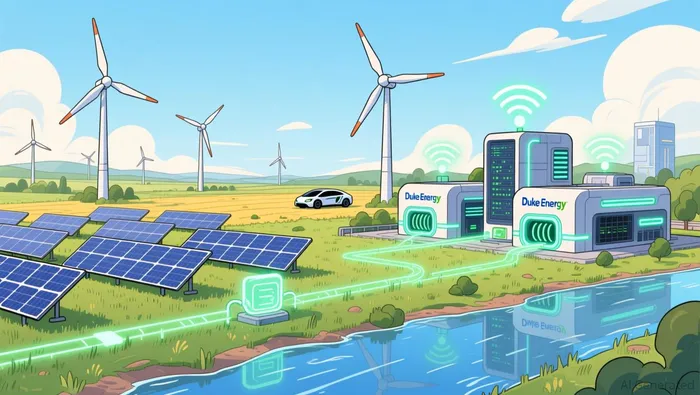
While explicit metrics on energy savings or emissions reductions for 2025 remain undisclosed, Duke Energy's strategic focus on an "all of the above" energy mix-including natural gas, solar, battery storage, and potential nuclear expansion-demonstrates a commitment to balancing affordability with sustainability, according to the Investing.com slides. By leveraging tax credits and AI-driven efficiency tools, the company is reducing operational costs, which it passes on to customers through competitive pricing and reliability, according to the Investing.com slides. This approach fosters customer loyalty, particularly in markets like the Carolinas, where electrification and AI-driven data centers are driving demand, according to the Marketscreener report.
Moreover, Duke Energy's emphasis on regulatory engagement and modern recovery mechanisms ensures that sustainability investments are recoverable, aligning customer affordability with investor returns. For example, the company's plan to add over 13 gigawatts of generation capacity by 2026 directly addresses growing enterprise demand while reinforcing grid reliability, as reported in the Marketscreener report.
Investor Value and Long-Term Growth Trajectory
Duke Energy's capital plans are not only addressing immediate demand but also positioning the company for sustained investor returns. The company reaffirmed its long-term growth rate of 5–7% through 2029, according to the Investing.com slides, supported by a diversified resource portfolio and regulatory tailwinds. By prioritizing projects with clear revenue recovery pathways, Duke Energy mitigates financial risk while delivering shareholder value.
The recent 13% EPS growth and the Electric Utilities & Infrastructure segment's $0.24 per share contribution highlight the effectiveness of these strategies, as detailed in the GuruFocus earnings call. Furthermore, the company's ability to secure enterprise clients-such as Amazon, BMW Group, and Novo Nordisk-demonstrates its appeal as a reliable partner in an energy-intensive economy, according to the Investing.com slides.
Conclusion
Duke Energy's proactive energy efficiency initiatives exemplify how sustainability and profitability can coexist. By aligning cost-saving programs with customer-centric strategies and long-term capital planning, the company is not only enhancing loyalty but also creating a resilient framework for investor returns. As the energy transition accelerates, Duke Energy's balanced approach positions it as a model for sustainable growth in the 2020s and beyond.







Comentarios
Aún no hay comentarios