
A Dual Challenge for the Battery Industry: Ramping Up Production While Innovating Game-Changing Chemistries for the Future
Generado por agente de IACyrus Cole
jueves, 27 de febrero de 2025, 11:53 am ET1 min de lectura
AENT--
The battery industry faces a dual challenge in the coming years: ramping up production to meet surging demand while simultaneously innovating game-changing chemistries to drive the future of energy storage. As the world transitions towards electric vehicles (EVs) and renewable energy, the need for batteries has never been greater. However, the industry must overcome significant hurdles to ensure high-quality and safe batteries at a global scale.
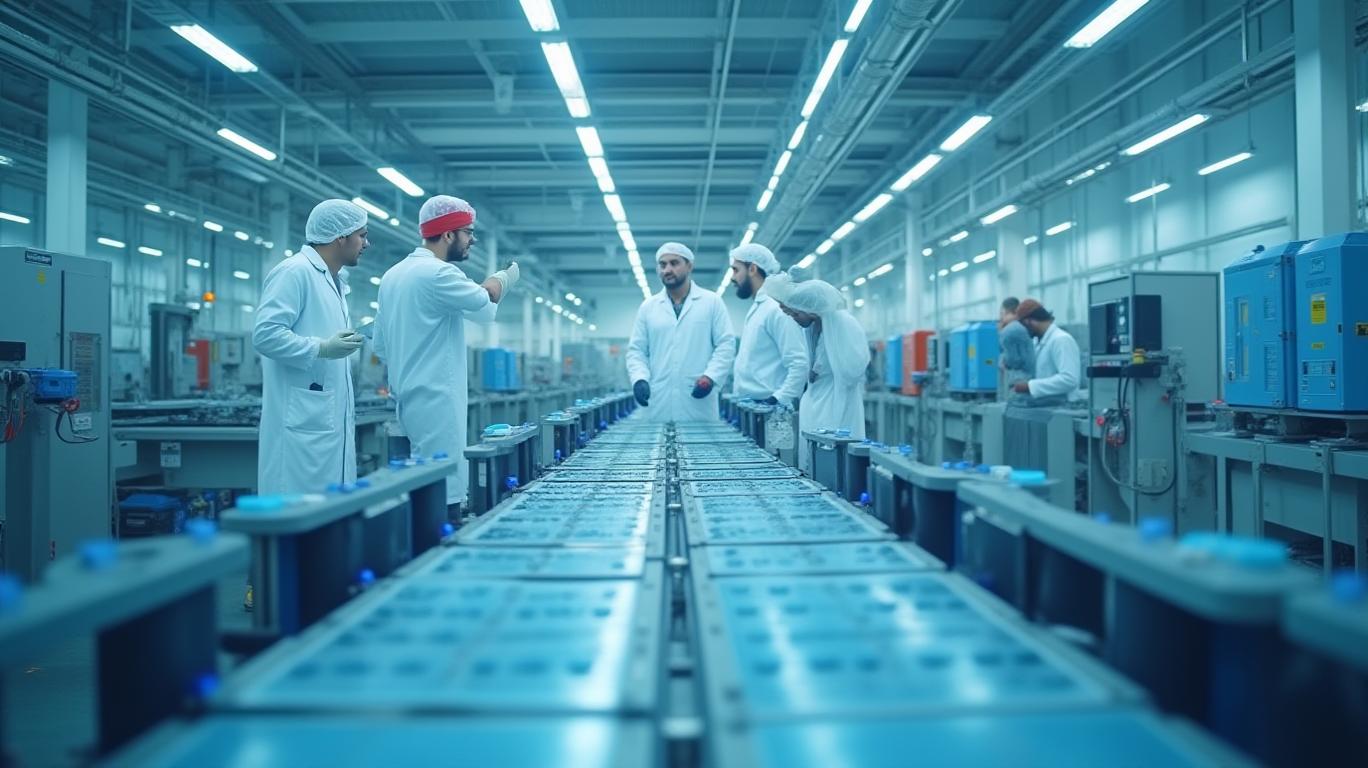
One of the key challenges in scaling up battery production is managing and improving battery quality during production. Batteries are sensitive to minor manufacturing variations, which can lead to both safety incidents and reliability issues. To address this, it is crucial to understand the interplay between various battery failure modes and their root causes. By managing and improving battery quality during production, the industry can enable safe global electrification.
In addition to ramping up production, the battery industry is actively exploring alternative chemistries to support electric mobility and accelerate energy storage. While lithium-ion batteries (LIBs) currently dominate the market due to their proven performance, scalability, and well-established supply chain, next-generation batteries are gaining traction. Solid-state batteries (SSBs) and sodium-ion batteries (SIBs) represent major shifts in battery technology, with the potential for higher energy densities, faster charging times, and improved safety compared to traditional LIBs.

However, the transition to these new chemistries is not without challenges. SSBsSSB-- are still in the development phase, and their cost is currently higher than LIBs. SIBsSIBN-- may not improve performance compared to LIBs but could offer cost savings. To overcome these challenges, the industry must invest in research and development, collaborate with key stakeholders, and optimize production processes.
Government policies and regulations play a crucial role in supporting the development and adoption of new battery technologies. Incentives for EV purchases and battery manufacturing, such as those provided by the Inflation Reduction Act in the United States, can boost EV sales and encourage investment in battery production. Additionally, battery standards and regulations, such as those developed by the United Nations' Global Battery AllianceAENT--, can help drive innovation and adoption.
In conclusion, the battery industry faces a dual challenge of ramping up production and innovating game-changing chemistries for the future. By managing battery quality during production, exploring alternative chemistries, and leveraging government policies and regulations, the industry can overcome these challenges and drive the transition towards a sustainable and electrified future. As the world electrifies, the battery industry must rise to the occasion and deliver high-quality, safe, and innovative energy storage solutions at a global scale.
SIBN--
SSB--
The battery industry faces a dual challenge in the coming years: ramping up production to meet surging demand while simultaneously innovating game-changing chemistries to drive the future of energy storage. As the world transitions towards electric vehicles (EVs) and renewable energy, the need for batteries has never been greater. However, the industry must overcome significant hurdles to ensure high-quality and safe batteries at a global scale.
One of the key challenges in scaling up battery production is managing and improving battery quality during production. Batteries are sensitive to minor manufacturing variations, which can lead to both safety incidents and reliability issues. To address this, it is crucial to understand the interplay between various battery failure modes and their root causes. By managing and improving battery quality during production, the industry can enable safe global electrification.
In addition to ramping up production, the battery industry is actively exploring alternative chemistries to support electric mobility and accelerate energy storage. While lithium-ion batteries (LIBs) currently dominate the market due to their proven performance, scalability, and well-established supply chain, next-generation batteries are gaining traction. Solid-state batteries (SSBs) and sodium-ion batteries (SIBs) represent major shifts in battery technology, with the potential for higher energy densities, faster charging times, and improved safety compared to traditional LIBs.
However, the transition to these new chemistries is not without challenges. SSBsSSB-- are still in the development phase, and their cost is currently higher than LIBs. SIBsSIBN-- may not improve performance compared to LIBs but could offer cost savings. To overcome these challenges, the industry must invest in research and development, collaborate with key stakeholders, and optimize production processes.
Government policies and regulations play a crucial role in supporting the development and adoption of new battery technologies. Incentives for EV purchases and battery manufacturing, such as those provided by the Inflation Reduction Act in the United States, can boost EV sales and encourage investment in battery production. Additionally, battery standards and regulations, such as those developed by the United Nations' Global Battery AllianceAENT--, can help drive innovation and adoption.
In conclusion, the battery industry faces a dual challenge of ramping up production and innovating game-changing chemistries for the future. By managing battery quality during production, exploring alternative chemistries, and leveraging government policies and regulations, the industry can overcome these challenges and drive the transition towards a sustainable and electrified future. As the world electrifies, the battery industry must rise to the occasion and deliver high-quality, safe, and innovative energy storage solutions at a global scale.

Divulgación editorial y transparencia de la IA: Ainvest News utiliza tecnología avanzada de Modelos de Lenguaje Largo (LLM) para sintetizar y analizar datos de mercado en tiempo real. Para garantizar los más altos estándares de integridad, cada artículo se somete a un riguroso proceso de verificación con participación humana.
Mientras la IA asiste en el procesamiento de datos y la redacción inicial, un miembro editorial profesional de Ainvest revisa, verifica y aprueba de forma independiente todo el contenido para garantizar su precisión y cumplimiento con los estándares editoriales de Ainvest Fintech Inc. Esta supervisión humana está diseñada para mitigar las alucinaciones de la IA y garantizar el contexto financiero.
Advertencia sobre inversiones: Este contenido se proporciona únicamente con fines informativos y no constituye asesoramiento profesional de inversión, legal o financiero. Los mercados conllevan riesgos inherentes. Se recomienda a los usuarios que realicen una investigación independiente o consulten a un asesor financiero certificado antes de tomar cualquier decisión. Ainvest Fintech Inc. se exime de toda responsabilidad por las acciones tomadas con base en esta información. ¿Encontró un error? Reportar un problema


SOBRE NOSOTROS
Nuestra historiaAutores de noticiasBase de conocimientosPolítica de privacidadTérmino de usoDescargo de responsabilidad de corretaje de tercerosTérminos de uso de AIMEDivulgaciones de riesgos de AInvest AICarrerasCONTÁCTENOS
Email: support@ainvest.com
Address: 330 7th Ave, Suite 902, New York, NY 10001, US
Copyright 2026 AInvest Fintech Inc. All rights reserved.


Comentarios
Aún no hay comentarios