
DTE Energy's Strategic Transition to Clean Energy: Balancing Grid Modernization and Decarbonization for Shareholder Value
In the evolving landscape of energy transition, DTE EnergyDTE-- stands at a pivotal crossroads. The company's aggressive investments in grid modernization and decarbonization-backed by a $4.4 billion annual capital plan in 2025, according to an OilPrice report-underscore its commitment to aligning with global climate goals while safeguarding long-term shareholder value. However, the path to net-zero emissions by 2050, according to DTE's CleanVision IRP, and a 65% reduction in utility carbon emissions by 2028, per the Q2 2025 earnings summary, is not without financial and operational risks. This analysis examines how DTE's strategic pivot to clean energy could drive resilience and profitability, even as it navigates significant debt and regulatory uncertainties.
Grid Modernization: A Foundation for Reliability and Revenue
DTE's $10 billion smart grid initiative, spanning five years, has already demonstrated tangible benefits. By deploying 675 new reclosing devices-doubling system capacity since 2023-the company prevented over 16,000 outages in 2025 alone, according to a DTE press release. These investments, which include vegetation management and infrastructure upgrades, have reduced outage durations by 75% compared to 2023, as reported in the Q2 2025 earnings summary, enhancing customer satisfaction and operational efficiency.
Such reliability improvements are critical for shareholder value. A resilient grid minimizes revenue losses from service disruptions and positions DTEDTE-- to capitalize on Michigan's growing demand for clean energy. For instance, the OilPrice report notes the company's $1.8 billion 2025 allocation to grid upgrades is part of a broader $30 billion infrastructure plan over five years, per the Q2 2025 earnings summary, signaling confidence in long-term returns from modernization.
Decarbonization: From Coal to Renewables
DTE's CleanVision Integrated Resource Plan (IRP) outlines a clear roadmap to end coal use by 2032 and achieve net-zero emissions by 2050. Key milestones include converting the Belle River coal plant to a natural gas peaking resource and developing large-scale solar projects like the 80-MW Pine River Solar Park and the 100-MW Cold Creek Solar Park, detailed in the Q2 2025 earnings summary. By 2032, the company aims to add 5,400 MW of solar and wind and 780 MW of energy storage, enough to power 1.5 million homes (per the CleanVision IRP).
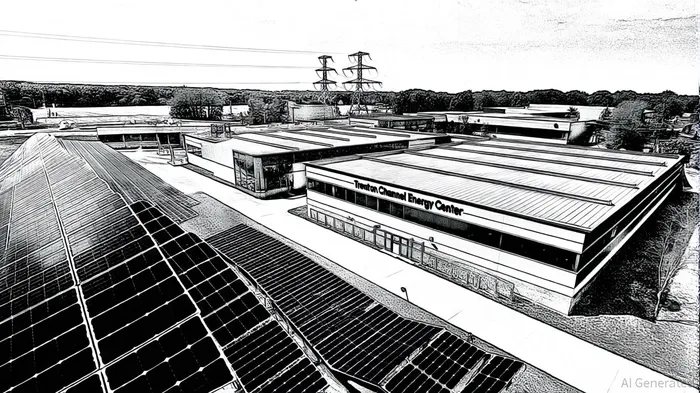
These transitions align with state mandates and consumer preferences for cleaner energy, potentially insulating DTE from regulatory penalties and fostering brand loyalty. However, the shift requires careful capital allocation. For example, the Trenton Channel Energy Center-a major battery storage facility-represents a strategic bet on energy storage to balance intermittent renewables, a sector projected to grow rapidly.
Financial Implications: Growth vs. Debt
While DTE's clean energy investments are ambitious, its financial health raises concerns. As of June 2025, the company's long-term debt stood at $22.94 billion, far exceeding its $0.08 billion in cash equivalents, according to the Q2 2025 earnings summary. This solvency risk is compounded by the Energy Trading business, which faces volatility from commodity price swings, as noted in the same earnings summary.
Yet, DTE's management remains optimistic. The company projects that utility capital investments-despite a 50% drop in DTE Gas segment earnings in Q2 2025-will enhance future revenue streams. For instance, the $10 billion clean energy transition over the next decade, outlined in the Q2 2025 earnings summary, includes an average of 900 MW of annual renewable additions, which could drive earnings growth through regulated returns on investment.
DTE's reaffirmed 2025 operating EPS guidance of $7.09–$7.23, cited in the Q2 2025 earnings summary, suggests confidence in navigating short-term financial headwinds. However, historical market reactions to DTE's earnings surprises reveal a nuanced pattern. When DTE has exceeded earnings expectations since 2022, the stock has seen an average 30-day cumulative return of approximately -1.8%, indicating a tendency for the market to "sell the news." Conversely, instances where DTE missed expectations were followed by a notable rebound, with a statistically significant 3.7% average return over 10 days. This suggests that the market may overcorrect on negative surprises, offering potential buying opportunities for patient investors.
Risk Mitigation and Shareholder Value
DTE's strategy hinges on balancing upfront costs with long-term gains. The Michigan Public Service Commission's approval of its CleanVision IRP provides regulatory certainty, while the 70% reduction in outage duration in 2024 highlighted by the OilPrice report demonstrates operational improvements that can offset debt. Additionally, the company's reaffirmed 2025 operating EPS guidance of $7.09–$7.23 indicates management confidence in navigating short-term financial headwinds.
However, investors must weigh these positives against the risk of overleveraging. DTE's $24 billion total investment plan-while ambitious-requires disciplined execution to avoid eroding credit ratings or shareholder returns.
Conclusion
DTE Energy's strategic transition to clean energy represents a high-stakes bet on the future of power generation. By modernizing its grid, retiring coal assets, and expanding renewables, the company is positioning itself to meet decarbonization mandates and customer expectations. Yet, the path to long-term shareholder value will depend on its ability to manage debt, optimize capital spending, and leverage regulatory support. For investors, DTE's journey offers both promise and caution-a testament to the complexities of aligning climate action with financial performance in the energy sector.





Comentarios
Aún no hay comentarios