
DTE Energy: A Strategic Energy Transition Play with Resilient Utility Fundamentals
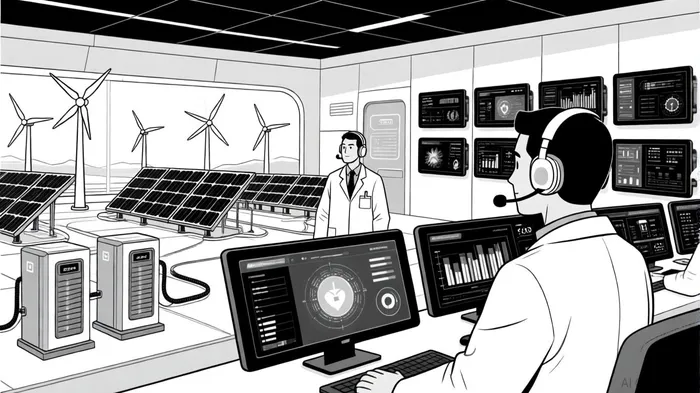
In the evolving landscape of the U.S. utility sector, DTE EnergyDTE-- (DTE) stands at a critical juncture, balancing its legacy as a traditional energy provider with its ambitious clean energy transition goals. With a $30 billion investment plan for 2023–2025—a 20% increase from prior commitments—the company is accelerating its shift toward renewables while navigating regulatory uncertainties and financial leverage risks. For investors, DTE's long-term value proposition hinges on its ability to harmonize decarbonization with grid resilience and profitability.
Strategic Energy Transition: Clean Energy as a Growth Engine
DTE's CleanVision Integrated Resource Plan (IRP) aims for net-zero carbon emissions by 2050, with immediate milestones including 2,300 MW of renewable energy online by March 2025 and an additional 1,000 MW by 2026 [3]. The company's subsidiary, DTEDTE-- Vantage, plans to invest $1.5–$2 billion in renewable energy and tailored solutions from 2025–2029, signaling a strategic pivot toward diversified clean energy offerings [2]. These investments align with broader industry trends, such as the 34 GW of solar and wind capacity contracted to U.S. data centers in 2024, which are projected to grow to 41 GW by 2030 [1].
However, DTE's transition is not without challenges. Regulatory shifts in Michigan, including the replacement of a clean energy advocate on the state's Public Service Commission (MPSC) with an industry ally, have raised concerns about cost recovery and policy consistency [2]. The MPSC recently disallowed $33 million in power supply costs in 2025, underscoring the financial risks of regulatory scrutiny [3]. Despite this, DTE's expedited pilot programs under the MI Power Grid initiative demonstrate its commitment to innovation, with a focus on distributed energy resource (DER) integration and grid decarbonization [1].
Financial Resilience: Leveraging Debt for Growth, but at a Cost
DTE's financial track record reveals a mixed picture. While the company reaffirmed its 2025 operating EPS guidance of $7.09–$7.23, Q2 2025 results showed revenue rising to $3.42 billion alongside a net income decline to $229 million [3]. Over 2023–2025, total revenue fell from $12.745 billion to $4.44 billion (through Q2 2025), though net income remained relatively stable at $1.4 billion annually [1]. The company's debt management strategy has involved issuing $3.167 billion in debt in 2024 while repaying $1.532 billion, reflecting efforts to fund its capital-intensive clean energy and grid modernization plans [1].
DTE's financial leverage is evident in its debt-to-equity ratio of 3.16 as of March 2025, a figure that has fluctuated between 2.03 and 3.67 over the past decade [2]. While this high leverage supports growth, it also amplifies vulnerability during periods of reduced profitability. A Return on Equity (ROE) of 12%—well above the industry average of 8.6% for integrated utilities—highlights DTE's efficiency in generating returns but is partially driven by its aggressive debt usage [1].
Historically, DTE's stock performance around quarterly earnings releases has shown limited consistency. A backtest of 14 earnings events from 2022 to 2025 reveals modest average post-event returns, with short-term (±1-5 trading-day) reactions yielding win rates near 50% and longer holding windows (10-20 days) showing slightly higher cumulative returns, though without strong statistical significance. This suggests that while earnings announcements may not reliably drive alpha, investors might consider broader timeframes to capture potential post-event drift.
Grid Resilience: Smart Investments to Mitigate Outage Risks
DTE's $10 billion, five-year grid modernization plan is a cornerstone of its resilience strategy. By 2025, the company had already invested $370 million in smart grid technology, preventing over 16,000 outages through automated devices like reclosers [3]. These investments aim to reduce outages by 30% and cut outage duration in half by 2029. Additionally, DTE's Slocum Energy Center—a 14 MW battery storage pilot—positions the company to scale energy storage solutions, with a 220 MW facility slated for 2026 [2].
Regulatory tailwinds, such as the MPSC's $153.8 million rate increase for grid reliability improvements, further support DTE's resilience initiatives [1]. However, the aging grid infrastructure and rising electricity demand from electric vehicles and home electrification pose ongoing challenges [2].
Credit Profile and Industry Comparisons
DTE's credit ratings remain a key strength. Fitch and S&P Global affirmed its investment-grade ratings at 'BBB' and 'BBB+', respectively, in Q3 2025, citing a stable outlook despite its high leverage [1]. These ratings reflect confidence in DTE's ability to manage its debt while pursuing growth.
Compared to peers, DTE's clean energy adoption is aggressive but not unique. Utilities like Duke EnergyDUK-- and Georgia Power are similarly investing in renewables and grid modernization, though DTE's focus on battery storage and DER integration sets it apart [1]. However, DTE's regulatory risks—particularly in Michigan—contrast with the more stable environments of some competitors, such as those in states with entrenched clean energy mandates.
Conclusion: Balancing Opportunity and Risk
DTE Energy's long-term value proposition rests on its dual focus on clean energy innovation and grid resilience. Its $30 billion investment plan and strategic partnerships with tech firms position it to capitalize on the decarbonization wave, while its smart grid initiatives address critical reliability concerns. However, regulatory uncertainties in Michigan and its heavy reliance on debt financing introduce risks that could impact profitability and cost recovery.
For investors, DTE represents a compelling but nuanced opportunity. The company's alignment with national energy transition trends and its proactive regulatory engagement suggest a path to sustained growth. Yet, its success will depend on navigating political headwinds and maintaining financial discipline in a sector increasingly shaped by climate policy and technological disruption.





Comentarios
Aún no hay comentarios