
DTE Energy's Interruptable Service: Balancing Cost Efficiency and Grid Reliability for Sustainable Growth
In an era of escalating energy demands and climate-driven grid vulnerabilities, demand response programs have emerged as critical tools for balancing cost efficiency and reliability. DTE Energy's interruptable service program, which allows customers to trade temporary service interruptions for reduced electricity rates, exemplifies this approach. By incentivizing voluntary load reductions during peak periods, the program aims to stabilize the grid while offering financial benefits to participants. However, its success hinges on nuanced infrastructure management and customer tolerance for operational trade-offs.
The Mechanics of DTE's Interruptable Service
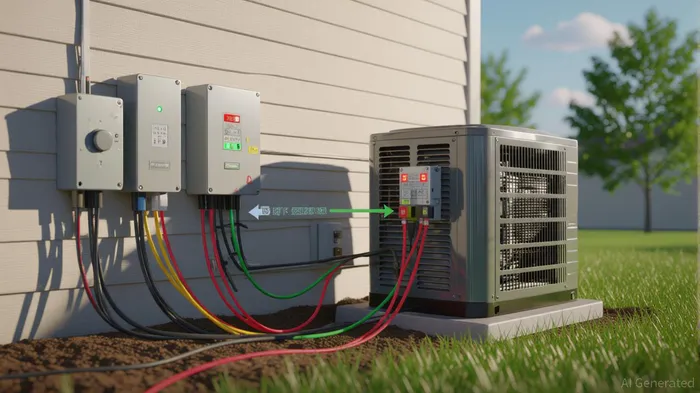
DTE's program targets high-load appliances such as central air conditioning and electric water heaters, which are separately metered and subject to temporary disconnection during grid stress events. Participants receive discounted rates in exchange for allowing DTE to curtail power to these devices for short durations. According to customer reports on the Michigan Sportsman Forum, the system employs a control box with LED indicators: green for normal operation or testing, and red for active interruptions[1]. While most users describe the interruptions as infrequent and brief—often imperceptible in terms of comfort—others have reported extended outages or malfunctioning control units, necessitating DTE intervention[1].
This duality underscores a key challenge: ensuring technical reliability while maintaining cost advantages. DTE is responsible for maintaining service wires and meters but delegates responsibility for customer-side infrastructure, such as weather heads and meter boxes, to participants[2]. This division of labor reduces operational costs for the utility but shifts maintenance burdens to households, potentially affecting service continuity.
Cost Efficiency and Grid Reliability: A Delicate Equilibrium
The program's cost-saving potential is most pronounced for high-energy users. One participant noted a "much better rate for A/C usage," emphasizing that the savings outweigh the inconvenience of occasional interruptions[1]. However, the financial benefits are contingent on adherence to usage thresholds; exceeding kilowatt limits can negate savings, leading to higher billing rates[1]. This dynamic creates a behavioral incentive for participants to optimize energy consumption, aligning individual and systemic efficiency goals.
From a grid reliability perspective, the program mitigates peak demand pressures, reducing the risk of blackouts during heatwaves or cold snaps. By curtailing non-essential loads, DTE can avoid costly infrastructure upgrades or emergency power purchases. Yet, the program's effectiveness depends on consistent customer participation and reliable infrastructure. For instance, a malfunctioning control box or damaged meter—often beyond DTE's maintenance scope—can undermine grid stability and erode trust in the program[1].
Implications for Investors
For investors, DTE's interruptable service represents a strategic innovation in demand-side management. Its ability to lower grid stress and defer capital expenditures enhances long-term profitability, particularly as climate change intensifies load volatility. However, risks persist. Variability in customer experiences—ranging from seamless savings to disruptive outages—could deter adoption or trigger regulatory scrutiny. Additionally, the reliance on customer-side infrastructure maintenance introduces operational complexity, as DTE's support for troubleshooting may strain resources during peak service periods[1].
A critical metric for investors is the program's scalability. If DTE can standardize control unit reliability and clarify maintenance responsibilities, it could expand participation without compromising grid performance. Conversely, unresolved technical issues or customer dissatisfaction may limit growth.
Conclusion
DTE Energy's interruptable service program embodies the tension between cost efficiency and grid reliability in modern energy systems. While it offers tangible benefits for both customers and the utility, its success depends on addressing technical inconsistencies and aligning maintenance responsibilities. For investors, the program's potential to reduce infrastructure costs and enhance grid resilience is compelling—but not without caveats. As DTE navigates these challenges, its ability to refine the program will be a key indicator of its broader strategic agility in a decarbonizing energy landscape.





Comentarios
Aún no hay comentarios